China rolls out action plan to scale up AI integration across transport sectors
China’s Ministry of Transport and other authorities have issued the Action Plan for Innovative Pilot Scenarios of “AI + Transport”. The document outlines ten priority areas including intelligent driving, smart highways, smart shipping and digital safety supervision. More than one hundred pilot projects will be carried out with over a thousand innovators participating, delivering scenario-specific solutions and steering smart transport development from technology research towards large-scale real-world deployment.
Autonomous technological breakthroughs form the foundation of intelligent transport and a prerequisite for rolling out operational use cases. Artificial intelligence has steadily advanced transport services in recent years, covering vehicle driver assistance, automatic parking, automated mail sorting and high-speed rail autonomous operation. These innovations accelerate the formation of new smart transport models and deliver tangible improvements to public travel.
Transport spans highways, railways, waterways, civil aviation and postal services, linking industrial activity and public livelihoods with complex operating environments, diverse demands and stringent safety standards. The value of artificial intelligence is not measured purely by technical sophistication, but by its capacity to operate reliably within real scenarios, lift operational efficiency and boost public wellbeing.
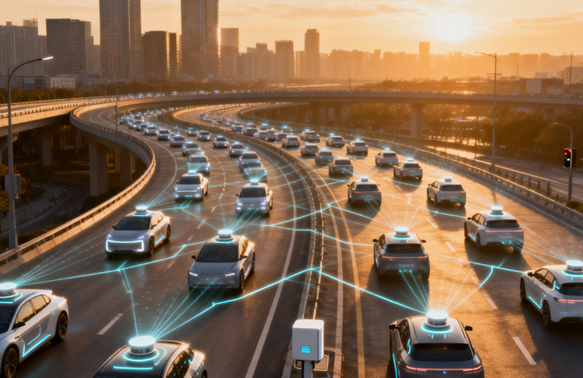
The Action Plan sets out a structured pathway of “technology breakthrough – scenario verification – industrial adoption – system upgrading” to support orderly, large-scale innovation for AI-enabled transport. The framework targets integrated transport operations, enhanced safety, digital transformation and low-carbon transition.
Advances in core technologies remain essential. Research initiatives will focus on shared enabling capabilities such as dynamic scene perception and interpretation, high-precision real-time positioning and navigation, autonomous decision-making and swarm intelligence coordination for complex environments. Work will continue on innovative intelligent hardware, directing innovation resources to priority fields to build self-reliant technological foundations and address gaps across sub-sectors.
Technical merit must be validated through practical deployment. Travel services, freight logistics and safety supervision present strong demand for AI-powered upgrades and offer mature conditions for field trials. AI inspection systems can replace manual highway maintenance patrols to identify pavement defects and hazards accurately and raise maintenance efficiency. Intelligent scheduling and passenger flow forecasting can optimise public transport resource allocation and ease road congestion within smart mobility frameworks.
Building complete industrial ecosystems stands as the ultimate objective of the policy. By 2030, a series of high-value open application scenarios will be established alongside high-performance algorithm models. New digital infrastructure, intelligent equipment, service formats and industrial models linked to “AI + Transport” will emerge.
Collaboration is required among artificial intelligence firms, universities and research institutions to accelerate research, prototype testing, systematic integration and commercial rollout of proven technologies. Faster translation of research outcomes into market applications will support the development of a modern, integrated transport network that is secure, efficient, green and accessible.
热门内容推荐