Systemic Competition Takes Hold in AI Industry as Cross-layer Collaboration Becomes Critical
Can China’s artificial intelligence sector forge an alternative development path separate from the full-stack strategies pursued by major United States technology groups? Participants at the Forum on Future AI Development: Deep Industry-Academia-Research Integration, held as part of the 2026 World Artificial Intelligence Conference, argue rivalry within the sector has shifted from discrete technical contests to competition across complete systems. No single layer spanning energy, chips, infrastructure, models and applications can achieve breakthroughs in isolation, making cross-sector collaboration both essential and urgent.
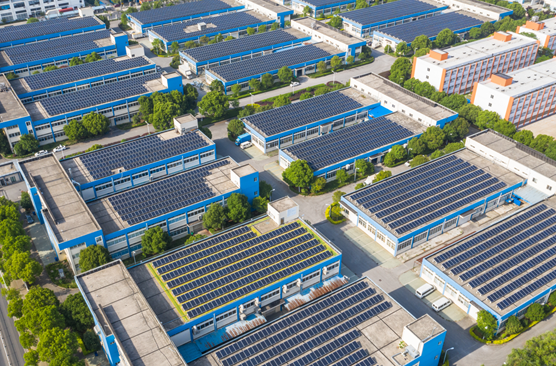
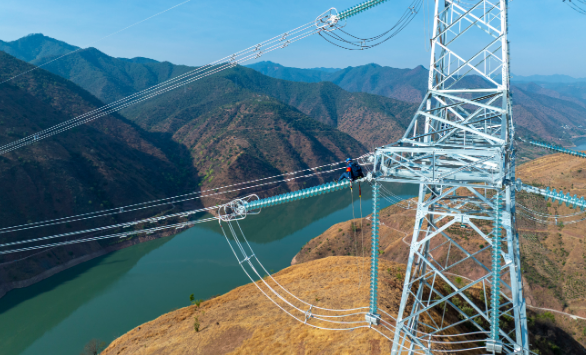
A widely accepted analogy frames the AI industrial chain as a five-tier structure. Energy forms the base, followed by chips, computing infrastructure and foundational models, with end applications sitting at the top. Capital and financial resources run through every tier of this framework. Even with this shared understanding, many established assumptions within the industry face growing scrutiny.
Computing power is evolving into a universal utility comparable to water and electricity. Discussions at the forum raised questions over energy efficiency constraints that will shape long-term industrial sustainability. Rapid expansion of AI data centres has already created grid stability strains in the United States. Intense global competition to build larger models and boost raw computing capacity cannot overlook overall power consumption limits. Aggressive roll-out across eight billion people worldwide would place unprecedented pressure on energy supplies.

Benchmarks used to evaluate large language models have shifted dramatically within just three years. Performance metrics centred on knowledge retention and conversational capability in 2024, before moving to coding and mathematical reasoning in 2025. Assessments in 2026 now prioritise the capacity of AI agents to execute complex tasks. Artificial general intelligence remains distant. Shifting evaluation criteria risk concentrating industrial resources on fashionable performance indicators, distracting developers from coordinated refinement linking models, physical infrastructure and real-world use cases.
Challenges also surround the belief that abundant datasets represent a precondition for viable AI deployment. Artificial intelligence can deliver the greatest value in settings where data remains scarce. Diagnostics for rare diseases serve as one clear example; limited clinical case records restrict human medical judgement, creating distinct scope for AI intervention.
Critical reflection on prevailing industry assumptions points to a shared reality in the era of systemic competition. Consensus-driven priorities within any single tier of the industrial stack risk obstructing cross-layer coordination. Technical advances carry limited impact unless different segments of the value chain operate in tight alignment, preventing waste of innovation resources on isolated technical targets.
Universities are positioned to take on a new role as organisers of cross-tier collaboration, alongside their established function as providers of research outputs and skilled talent. Boundaries separating academic institutions and commercial operators continue to blur. Universities excel at long-term, disruptive fundamental research covering model architecture innovation and explainable artificial intelligence. Industry participants meanwhile access live operating scenarios, substantial computing resources and operational datasets. Technology firms can supply real-world testing platforms and structured training curricula, while joint vertical laboratories built with universities accelerate technical roll-out targeted at defined application scenarios.
Wide gaps persist between laboratory research and commercial deployment. Academic teams focus on identifying scientific laws and delivering technical breakthroughs, yet businesses must weigh manufacturing scalability, cost structures and market competitiveness when settling technical roadmaps. Smooth technology transfer requires coherent mechanisms covering scientific discovery, mathematical modelling, control engineering, product development and commercialisation.
Talent development remains the core mission for higher education institutions. Initiatives to build shared platforms, facilitate technology transfer and participate in industrial projects all serve this ultimate objective. Academic researchers operate within an environment where industrial progress frequently outpaces pure technical research. Universities must break down internal institutional barriers and accelerate training for multidisciplinary professionals to satisfy evolving industrial and social demands.
Coordinated alignment between all layers of the AI industrial ecosystem will determine how effectively technologies translate into usable products. Ongoing dialogue between academic researchers and industrial practitioners will continue to shape collaborative frameworks across the full innovation pipeline.
热门内容推荐