China’s unified national power market matures, enabling efficient cross-regional electricity allocation
China has built an initially completed unified national power market system by the end of 2025, marking a fundamental shift from planned power dispatching to market-oriented power allocation. Driven by maturing market mechanisms, cross-regional electricity trading has delivered solid support for peak summer power supply, enabling optimal deployment of clean power resources across the country.
According to official industry data, China’s market-based electricity trading volume maintained steady expansion during the 14th Five-Year Plan period, with an average annual growth rate of 16.0 per cent. The 2025 full-year market-oriented trading volume more than doubled compared with the end of the 13th Five-Year Plan period. The proportion of market-traded electricity in total social power consumption has stayed above 60 per cent for four consecutive years. All provincial-level spot power markets have achieved full coverage, forming a multi-level, multi-category and multi-functional power market framework.
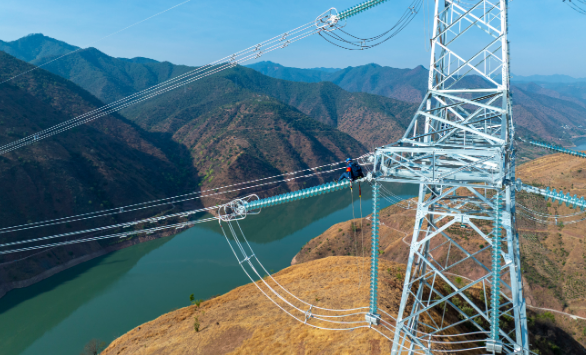
Facing sustained high temperatures and rising power demand, China’s national maximum electricity load hit a record 1.551 billion kilowatts on July 14. Cross-grid power transmission reached 278 million kilowatts on the same day, effectively balancing power supply and demand nationwide. Cross-grid normalised trading mechanisms have unlocked the potential of power transmission channels, making full use of temporal and spatial differences in regional power demand and supply.
Cross-regional power transactions have achieved stable and regular operation under institutional improvements. Approved by national authorities in July 2025, the cross-grid regular trading mechanism has facilitated 3.4 billion kilowatt-hours of cross-regional power trading for the whole year. Power transmission projects connecting major grid operating areas have maintained full-capacity operation, completing 1.08 billion kilowatt-hours of cross-regional power delivery from central and eastern regions to southern load centres.

Market-oriented electricity pricing mechanisms have taken initial shape across the country, replacing the traditional fixed-price model with a flexible pricing system that adjusts dynamically to market supply and demand. Shandong’s provincial spot power market, which has operated stably for 55 consecutive months, generates real-time market clearing prices every 15 minutes, accurately reflecting instantaneous power supply and demand changes. The flexible pricing mechanism guides power generators to adjust output actively and encourages power users to optimise electricity consumption schedules.
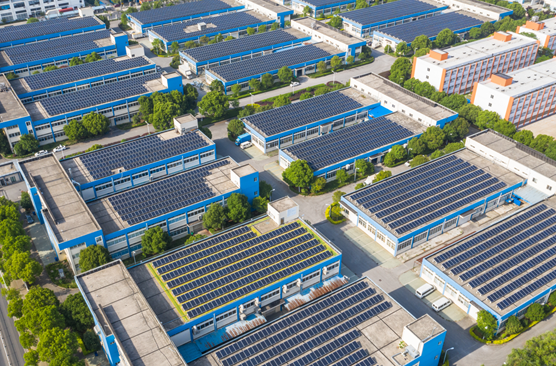
Thermal power units adjust operational strategies based on real-time price signals, reducing output during periods of abundant new energy power supply and ramping up generation during peak demand to complement renewable energy output fluctuations. Industrial power users with adjustable production processes shift high-energy-consuming operations to low-price periods with sufficient photovoltaic power generation, lowering operational costs and boosting new energy consumption.
New market participants are increasingly active in power market transactions, diversifying the market structure and fostering a multi-buyer and multi-seller trading ecosystem. In Guangdong, three large data centre clusters have completed electricity spot market transactions via virtual power plant platforms, marking the first participation of large data centres in China’s provincial spot power market as adjustable load resources.
Virtual power plants integrate distributed energy resources including energy storage facilities and charging piles to participate in grid operation and market trading. By the end of 2025, more than 400 new market entities covering virtual power plants and independent energy storage providers have registered in domestic power markets. These emerging participants enrich trading varieties and enhance the overall operational efficiency of the new power system.
China’s cross-provincial and cross-regional power trading volume reached 1.6 trillion kilowatt-hours in 2025, a more than tenfold increase compared with a decade ago. Authorities will continue to optimise cross-grid regular trading mechanisms in the next stage, improving peak load shifting, resource mutual supplementation and emergency support capabilities across regions to adapt to the rapid development of new energy and secure stable power supply for economic and social operation.
热门内容推荐