AI transforms precision optical fibre manufacturing, empowering China’s advanced manufacturing upgrade
High-precision optical fibre production in China is undergoing profound transformation driven by artificial intelligence, replacing traditional experience-dependent manual operations with intelligent, data-powered precision control. Ultra-fine manufacturing standards define optical fibre production, where a tiny deviation of one micrometre in preform drawing can lead to scrapped batches. Production environments maintain extreme temperatures of up to 2,000 degrees Celsius, creating harsh operational conditions that make micro-level precision regulation extremely challenging.
For decades, optical fibre manufacturing relied heavily on veteran workers who judged production status through empirical observation and manual parameter recording at frequent intervals. Manufacturers faced persistent contradictions between growing demand for high-end customised orders and unstable manual craftsmanship, restricting consistent quality output of sophisticated optical fibre products.
According to People’s Network industry reports, Chinese optical fibre manufacturers have pushed forward comprehensive intelligent factory upgrading in recent years. The industry-wide transformation encountered initial doubts and resistance regarding massive investment returns and technical adaptation thresholds among frontline practitioners.
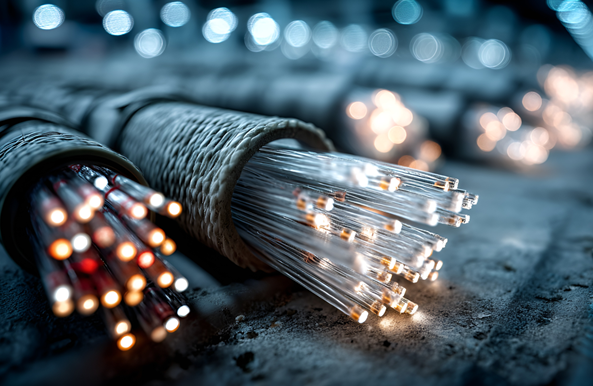
The early stage of intelligent system deployment saw unstable AI recognition accuracy and mismatched equipment coordination. Production practitioners collaborated with technical teams to optimise algorithms, feeding decades of on-site operational experience into intelligent models. Systematic equipment rectification and intensive system debugging solved persistent operational flaws. Single parameter calibration sometimes required one month of repeated optimisation to achieve qualified industrial standards.
Stable intelligent factory operation has delivered comprehensive improvements in production efficiency, product quality and energy conservation. AI systems sustain ultra-precise temperature and parameter control that surpasses manual capability under extreme high-temperature environments. Intelligent production lines now achieve stable mass output of high-end custom optical fibre products previously difficult to manufacture through traditional processes, while product yield rates rise comprehensively and overall energy consumption decreases effectively.
High-performance optical fibre products manufactured through intelligent workshops support the construction of national computing power networks and large-scale data centre infrastructure. The deep integration of artificial intelligence and traditional optical fibre manufacturing opens new development space for the optoelectronic industry.
Continuous technological innovation and practical industrial upgrading will further unlock the vitality of traditional manufacturing sectors. AI-enabled intelligent transformation will accelerate the iterative upgrading of China’s advanced manufacturing industry, laying solid industrial foundations for the high-quality development of digital infrastructure and digital economy.
热门内容推荐