State Council Unveils 15th Five-Year Carbon Peaking Roadmap Focused on Industrial Energy Retrofits
According to Xinhua News Agency, the State Council has released the official Action Plan for Carbon Peaking during the 15th Five-Year Plan period, laying out comprehensive arrangements for carbon reduction work across 2026 to 2030. The document prioritises energy-saving and low-carbon retrofits for traditional manufacturing sectors, framing such upgrades as both a core lever to deliver carbon peaking and carbon neutrality targets and an internal driver for industrial cost optimisation and competitive edge growth.
Traditional manufacturing forms the backbone of China’s industrial output, accounting for roughly 80 per cent of total manufacturing value added. National authorities have rolled out widespread green transformation initiatives across power, steel, non-ferrous metals, construction materials and chemical sectors over recent years, delivering tangible progress in decarbonisation upgrades with three distinct development trajectories taking shape.
Technological innovation stands as a primary enabler of industrial decarbonisation. By the close of 2025, artificial intelligence penetration among large-scale manufacturing firms surpassed 30 per cent, while industrial internet infrastructure extended across all 41 industrial categories. Enterprises deploy smart sensors and connected industrial platforms to collect, analyse and optimise real-time energy and carbon emission data, creating data-backed foundations for efficiency gains and emission cuts. The national carbon emissions trading scheme has expanded its remit to include steel, cement and aluminium smelting, bringing more than 60 per cent of the country’s total carbon output under market regulation. This expanded trading framework unlocks broader commercial space for green technology innovation, accelerating the phase-out of outdated production capacity and scaling up low-carbon technical solutions.
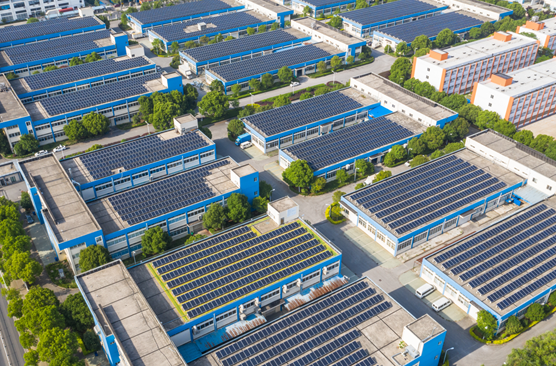
All industrial transition measures balance economic, ecological and social outcomes in tandem. On energy restructuring, policy frameworks support clean and efficient fossil fuel utilisation alongside accelerated substitution with renewable power to lift the share of green electricity in end-user consumption. Resource circularity targets higher substitution rates of scrap steel, copper and aluminium for virgin ores, alongside expanded comprehensive utilisation of bulk industrial solid waste. R&D pipelines advance transformative process technologies including green hydrogen metallurgy and near-zero emission electric arc furnace steelmaking to redefine carbon footprints across heavy industry.
Domestic industrial decarbonisation programmes align closely with global climate governance frameworks. Cross-border standard recognition streamlines green commodity trade, aligned international regulatory rules catalyse industrial upgrading, and cross-border technical exchanges lift domestic industrial capabilities, securing more competitive positioning for Chinese traditional manufacturers within global supply chains.
Multiple structural barriers persist to widespread rollout of industrial decarbonisation retrofits, including insufficient benchmark standards, constrained access to advanced technical solutions, limited dedicated green finance instruments and muted voluntary uptake from industrial operators. Targeted coordinated interventions across four workstreams will resolve these bottlenecks and position energy-saving retrofits as a catalyst for high-quality industrial expansion.
Regulatory benchmark frameworks will be reinforced to deliver clear performance thresholds. National energy and carbon intensity standards will undergo regular iterative revisions with shortened update cycles, aligned against leading international benchmarks. Tiered constraint thresholds covering benchmark performance, baseline compliance and mandatory elimination limits will be enforced for high-emission sectors. Fixed asset projects operating below baseline efficiency standards will receive fixed upgrade deadlines, with permanent shutdowns enforced for facilities failing to meet remediation timelines. Carbon emission intensity metrics will be embedded as binding entry criteria for new industrial projects and capacity swaps, limiting the rollout of low-efficiency production capacity at source. Rigorous compliance monitoring will ensure industrial standards operate as enforceable regulatory constraints.
Specialised service ecosystems will be nurtured to expand accessible technical support. State backing will grow the cohort of third-party diagnostic service providers delivering end-to-end energy efficiency audits. Standardised diagnostic and consulting service workflows will be rolled out to raise the quality of industrial decarbonisation advisory support, with full-lifecycle integrated service packages developed to address technical uncertainty among manufacturing operators. A two-way matching mechanism will connect enterprise technical demand registers with national green technology supply catalogues. Joint research platforms backed by government, research institutes, industrial operators and end users will de-risk prototype verification, generic technology breakthroughs and pilot scaling, shortening the timeline for lab-developed low-carbon technologies to enter mass production lines.
Market and financial mechanisms will be refined to expand affordable transition capital. Top-level institutional design for the national carbon trading system will be deepened, with further sectoral expansion planned to build a more liquid, efficient and globally influential carbon marketplace calibrated to diverse enterprise operational conditions. New green financial instruments will be developed to fund process overhauls, equipment replacement and clean energy substitution projects across traditional manufacturing. Lending institutions will scale concessional credit facilities for eligible low-carbon transition projects to reduce financing barriers for industrial operators. Transition bonds and sustainability-linked debt instruments will be scaled up, alongside pilot carbon emission allowance collateralised loans to diversify carbon finance offerings.
Enterprise-level incentives will drive organic uptake of decarbonisation works to lift operational efficiency. Linked incentive and constraint frameworks will tie retrofit delivery to operational costs, with differentiated electricity and gas pricing regimes offering discounted utility tariffs for facilities meeting energy efficiency benchmarks. Core supply chain operators will coordinate collective decarbonisation action across upstream and downstream partners, with regular publication of benchmark enterprise rosters and advanced technology catalogues fostering cross-industry low-carbon operational norms. Enterprises will be encouraged to deploy integrated energy metering and carbon monitoring platforms, using granular operational data to deliver precise emissions control and evidence-based operational decision-making. Systematic energy-saving and decarbonisation upgrades will sustain steady industrial productivity growth while advancing national carbon peaking and neutrality objectives.
热门内容推荐