Zhengzhou National General Aviation Demonstration Zone Builds Integrated Low-Altitude Industrial Cluster with Diverse Commercial Flight Use Cases
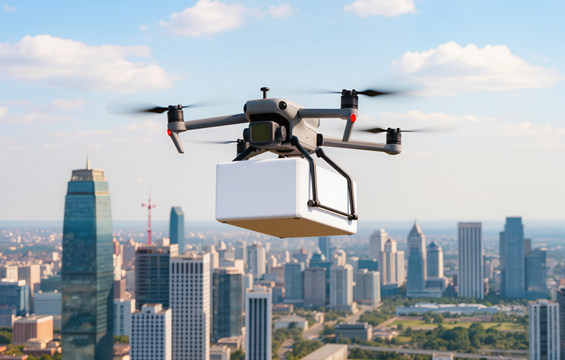
Across Zhengzhou, drones deliver takeaway meals to urban neighbourhoods, helicopter tours carry sightseers over the Yellow River, and single unmanned aerial vehicles complete crop protection tasks covering hundreds of mu of farmland. As one of China’s first national comprehensive demonstration zones for the general aviation sector, Zhengzhou has translated national policy support into tangible industrial progress over recent years.
Establishing a Leading National Low-Altitude Industrial Hub
Workers assemble various unmanned aircraft inside the factory compound of Sanhe Aviation Industry. The firm operated as a fledgling micro-enterprise focusing on autogyro manufacturing when it settled in the zone back in 2013. Supported by the concentrated industrial ecosystem within the demonstration zone, improved upstream and downstream supply chain capabilities have fuelled its rapid expansion, enabling full-scale entry into the heavy-lift industrial drone market. Its annual output value hit 150 million yuan last year.
Zhengzhou stands as the earliest city in Henan Province to roll out low-altitude economic planning. Administrative bodies for the general aviation test area were set up in 2013, alongside the first phase expansion and reconstruction project for Shangjie Airport. Years of targeted development have forged a resilient, fully integrated industrial chain. Granted official approval by the National Development and Reform Commission in 2017, the national demonstration zone now hosts 59 general aviation and drone enterprises with a combined fleet of 176 aircraft. It has built a complete industrial ecosystem covering infrastructure, aircraft manufacturing and maintenance, flight operation services and comprehensive support systems, securing a place among the country’s top tier of low-altitude economic development zones.
Four editions of the Zhengzhou Airshow and two Central Plains Agricultural Aviation Exhibitions have been hosted within the zone. The agricultural aviation expos have secured intended business orders worth a total of 380 million yuan, charting a path of integrated growth linking general aviation operations with national food security priorities. Fourteen aviation crop protection firms operate from the demonstration zone, carrying out aerial pest control covering 12 million mu of farmland every year. These operators have repeatedly won national honours for standardised unified crop protection services.
Low-altitude economy constitutes a strategic emerging industry, combining conventional general aviation operations with new low-altitude production and service models centred on unmanned aircraft. General aviation and drone manufacturing form the core growth engine of this sector. The demonstration zone has drawn together a cohort of aviation manufacturers including Sanhe, Haiwang and Hongru. Sanhe Aviation’s Sun Eagle autogyro fills a gap in domestic independent research and development, while Zhengzhou Haiwang Industrial holds the country’s first official construction permit for ground-effect wing craft. Leading national general aviation operator China Dragon General Aviation has also set up local bases, forming a collaborative operational framework led by core anchor manufacturers supported by a full network of ecological partners. Ten drone training institutions and five manned aircraft training providers operate within the zone, having trained more than 30,000 professional drone pilots and aviation crew to date.
Expanding Real-World Low-Altitude Flight Application Scenarios
A Robinson R44 helicopter with blue and white livery lifts off from Shangjie Airport for sightseeing tours. Passengers taking aerial excursions over the Taihang Mountains and Yellow River record their flight experiences for social media platforms in growing numbers. A steady stream of visitors has sampled the low-altitude sightseeing routes run by the demonstration zone this year, with total participant numbers surpassing 2,826. The zone recorded more than 800 flight movements last year, welcoming close to 20,000 sightseeing visitors. New business lines including aviation science education camps and short film aerial shooting have also taken shape alongside established tourist flights.
Shangjie Airport houses a 2,000-metre by 45-metre runway and twelve standard aircraft hangars, ranking among the country’s best-equipped general aviation airfields and serving as the core operational base for Zhengzhou’s low-altitude transport network. In March 2026, the domestically developed 7-tonne Changying-8 large fixed-wing cargo drone, the largest freight UAV to complete maiden flight globally to date, carried out its debut test flight at the airport.
Flight service capabilities at the airfield continue broadening to accommodate diverse operational demands. The site now facilitates drone test flights, aerial mapping, weather modification operations, sightseeing tours, emergency rescue, aerial geophysical prospecting, aviation sports, science outreach and agricultural plant protection missions.
A DJI M400 drone fitted with hydrogen fuel cell powertrains recently completed a series of rigorous test manoeuvres over the demonstration zone, including stable hovering, fixed-route cruising and simulated power grid inspection tasks. All assessment targets were met with zero carbon emissions throughout the flight cycle. The trial verifies the operational reliability of hydrogen fuel cell systems on industrial unmanned aircraft and addresses a blank in practical hydrogen-powered low-altitude equipment deployment across Henan Province. The successful maiden flight diversifies the zone’s industrial portfolio and delivers practical technical experience for building a province-wide hydrogen aviation industrial cluster.
Optimising End-to-End Low-Altitude Industrial Infrastructure
Authorities overseeing the general aviation test area plan to capitalise on the current phase of intensive innovation and rapid expansion within the low-altitude economy. Construction will accelerate to build central China’s largest concentrated low-altitude economic zone and a national benchmark for low-altitude industrial development, forming a core growth engine for Henan’s low-altitude sectors and generating new productive forces. Investment and policy support will target reinforcing, supplementing and extending local industrial chains, encouraging central state-owned enterprises, leading aviation operators and major airlines to build production and manufacturing bases within the zone, driving concentrated industrial growth through anchor enterprises.
Safe and efficient integration of manned and unmanned aircraft within national airspace systems hinges on continuous upgrades to low-altitude flight service and support infrastructure. Phase one of the low-altitude industrial park within the demonstration zone is fully operational, with phase two construction due to finish by the end of the current year. Purpose-built rooftop automated drone landing pads have been installed on several park buildings, enabling unmanned craft to take off autonomously, complete assigned missions and return for automatic charging without ground crew intervention. Construction of the first phase of the low-altitude intelligent connectivity network has commenced, delivering full 5G sensing coverage across five kilometres of airspace surrounding Shangjie Airport to underpin secure flight operations and diversified commercial use cases.
Upcoming work will prioritise the development of robust low-altitude flight service support frameworks. A dedicated integrated drone service centre will run permanent operations, while regulatory frameworks governing mixed manned and unmanned flight activities will be refined continuously. Ongoing upgrades to low-altitude navigation service infrastructure will strengthen coordination between manned aircraft and unmanned vehicle operations, raising overall flight safety standards to sustain sound and orderly development across the low-altitude economy.
热门内容推荐