China’s First Fully Domestic AI Large Model for Integrated Hydro-Wind-Solar Clean Energy Bases Launched in Sichuan
China’s first full-stack domestically developed intelligent operation large model tailored for integrated hydro, wind and solar clean energy hubs was officially unveiled on 16 July, built to coordinate forecasting, power dispatching, on-site production and energy marketing across unified digital architecture. Termed an energy AI scheduler for large-scale renewable complexes, the system marks accelerated integration of artificial intelligence within core operational links of power generation and distribution.
Heatwaves sweeping across numerous regions since early July have pushed nationwide electricity consumption to unprecedented heights. National power load hit 1.5 billion kilowatts for the first time on 10 July, before setting another fresh record of 1.551 billion kilowatts four days later. Provincial power grids covering central China, southern Hebei, Sichuan, Hubei and Hunan have all registered all-time peak demand readings.
Traditional power dispatching frameworks were structured around stable thermal and hydropower assets. Wind and solar installations now dominate newly commissioned generating capacity, expanding operational remits to cover coordinated operation of hydro, wind, solar, thermal and energy storage units. Operators must simultaneously balance shifting power loads, cross-regional power transmission and wholesale electricity market transactions, creating far more complex decision-making workflows to balance secure supply and full renewable absorption.
The technical lead behind the Yalong River intelligent model confirms the platform is the nation’s first AI system designed exclusively for multi-resource clean energy bases, delivering end-to-end intelligent decision-making spanning resource prediction, real-time operational scheduling and wholesale market trading.
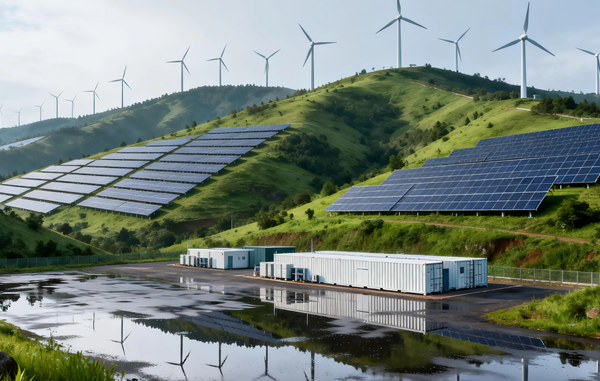
For resource forecasting functions, the model merges multi-source datasets from satellite remote sensing networks, terrestrial meteorological stations, hydrological monitoring outposts and on-site wind-solar facilities. It extends valid basin runoff forecasting windows to 60 days, with hourly precision maintained across the initial ten-day timeframe. Daily-scale prediction accuracy averages above 70 per cent for the remaining 50 days, creating extended lead times for coordinated dispatching planning.
A foreign academician of the Chinese Academy of Sciences and leading climate scientist notes the model’s defining technical advance lies in linking meteorological, hydrological and renewable resource forecasting pipelines directly to power operational decision-making, forming a holistic prediction framework covering the entire river basin, all energy resource types and multiple time horizons.
Built upon a multi-agent collaborative computing architecture, the system synthesises real-time inflow volumes, wind-solar output potential and grid load profiles to dynamically optimise unit combinations and renewable absorption strategies, shifting operational logic from reactive weather-based generation to data-driven forward assessment. Additional embedded modules handle equipment fault diagnostics, automated operational permit workflows and electricity trading analytics, transitioning site management from experience-based oversight to data-centric governance.
A senior official from China’s General Institute of Hydropower and Water Resources Planning & Design states the Yalong River model delivers a replicable, scalable full-stack intelligent solution compatible with gigawatt-scale clean energy hubs, offering a standardised digital upgrade template for equivalent renewable projects nationwide.
This AI energy platform is not an isolated development. Earlier this year, four central authorities including the National Development and Reform Commission, National Energy Administration, Ministry of Industry and Information Technology and National Data Bureau jointly issued the Action Plan for Boosting Mutual Empowerment Between Artificial Intelligence and Energy. The document outlines targets for substantial progress in clean energy supply capacity supporting AI computing infrastructure and wider industrial uptake of energy-focused artificial intelligence applications by 2030. National policy rollout drives AI deployment beyond limited pilot trials toward large-scale industrial adoption.
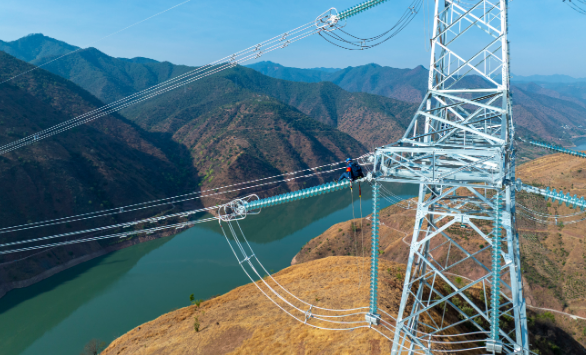
Sichuan province serves as a key testbed for this industry shift during the summer peak power demand period. State Grid Sichuan Electric Power leverages joint integrated dispatching mechanisms to optimise coordinated output from hydro, thermal, wind and solar assets, while drone swarms and continuous online monitoring hardware are widely deployed for transmission line inspection. On the generation side, Huadian Sichuan deploys dedicated intelligent renewable production platforms to refine wind and solar operational strategies, enabling multi-source power coordination to sustain stable supply. Many workflows previously reliant on manual judgement now draw on rapid AI data analysis to generate reference schemes, with final assessment delivered by professional operational teams.
A senior official from Sichuan Provincial Energy Administration highlights that mass grid connection of variable renewable resources has reshaped core operating mechanics of the new power system. Raising intelligence levels for forecasting, dispatching and real-time control becomes essential to safeguarding grid stability and maximising efficient consumption of green power.
Reliability, operational safety and transparent algorithmic reasoning stand as core industry priorities as artificial intelligence penetrates power production and control workflows.
The climate research academician identifies explainable, dependable AI operation under extreme operating conditions as the primary ongoing technical hurdle. AI dispatch systems cannot operate as opaque black-box tools; power grid management carries public safety implications, requiring clear breakdowns of calculation outputs, associated risk exposures and decisive contributing variables for every generated recommendation.
Industry practitioners maintain that energy sector workflows will retain a dual operating model for extended periods, structured around AI-assisted data processing and human-led final decision-making. Artificial intelligence undertakes mass dataset processing and optimisation scheme generation, while qualified power specialists sign off on all critical dispatching orders to realise a collaborative framework combining robust computational power and human contextual judgement.
Across the power sector, artificial intelligence integration advances through every link of energy generation and operational management, with reciprocal technological advancement between AI and clean energy laying solid technical foundations for new power system construction nationwide.
热门内容推荐