China’s June Exports Jump 27% Year-on-Year, Outstripping Market Consensus
According to ATS news agency, official customs trade figures released on Tuesday reveal China’s external trade delivered far stronger growth than market projections in June, with outbound shipments acting as a core stabilising force for the world’s second-largest economy amid ongoing supply chain volatility stemming from Middle Eastern geopolitical tensions.
Measured in US dollar terms, China’s June exports rose 27 per cent compared with the same month last year, a figure comfortably above the 19 per cent median forecast compiled by Bloomberg’s poll of industry economists, per data issued by the General Administration of Customs. Inbound purchases recorded an even sharper uptick, climbing 36 per cent year-on-year, well beyond the 26.1 per cent consensus estimate published by Bloomberg. Imports expanded by roughly 27 per cent in May, and the marked acceleration signals firming domestic purchasing demand across industrial and consumer supply chains.
Bilateral trade flows with the United States registered broad-based expansion. Customs statistics show China’s goods exports to the US hit USD 43.5 billion in June, marking a 13.9 per cent annual rise. Imports originating from the US also advanced 25.8 per cent year-on-year within the same month. The movement lifted China’s bilateral trade surplus with the US to USD 28.9 billion, up from USD 26 billion recorded in May. Cross-border economic exchanges between the two nations have steadied following bilateral high-level talks held in May, even as persistent trade imbalances remain a point of bilateral divergence.
Trade activity with the European Union also generated a widening surplus for China in June, standing at USD 32.9 billion, compared with USD 30.7 billion logged one month prior. The headline nationwide goods trade surplus expanded to USD 126 billion in June, versus May’s USD 105 billion reading, a trend drawing close scrutiny from economic policymakers across Western economies.
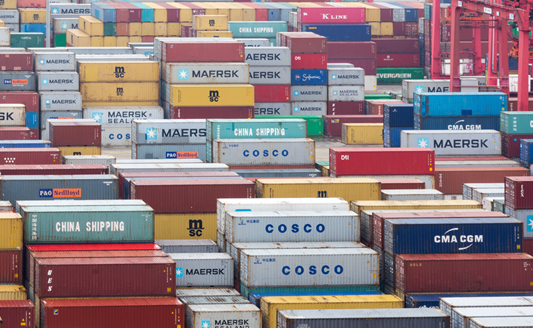
Robust overseas demand for Chinese manufactured goods provides vital support for domestic economic momentum, at a time when domestic household consumption remains sluggish and the real estate sector continues to face prolonged structural headwinds. An economist from Pinpoint Asset Management notes that export strength has been a central growth driver for China since the start of the calendar year, with sustained overseas demand projected to persist through the second half of 2026. The consistent performance underscores enduring competitiveness and operational resilience within China’s full-spectrum manufacturing ecosystem, spanning new energy vehicles, electronic hardware and general industrial equipment.
The same analyst also flags potential knock-on effects for cross-border trade negotiations with key partners, particularly European Union member states, stemming from widening trade surpluses. Currency market adjustments are expected to unfold over coming months, with gradual appreciation set to take place without disrupting the overall trajectory of China’s cross-border commodity flows.
Global industry research confirms multiple structural factors underpin the export surge, including booming international demand for AI-linked semiconductors, rising overseas uptake of Chinese electric vehicles and complete, mature industrial supply chains that deliver balanced cost efficiency and product iteration speed. Domestic authorities maintain multiple policy frameworks designed to sustain foreign trade vitality, including targeted facilitation for cross-border logistics, streamlined customs clearance procedures and tailored support for small and medium-sized export manufacturers.
热门内容推荐