China’s Robot Exports Surge Across Global Markets, Humanoid Segments Poised for Major Expansion
Data recently released by the General Administration of Customs has drawn widespread industry attention. In the first five months of this year, China shipped a combined 10.377 million units of various categorised robots, with an export value reaching 19.99 billion yuan. These automated devices are now supplied to more than 150 countries and territories worldwide. The export figures capture robust expansion within China’s robotics sector, alongside a diversified overseas product portfolio stretching far beyond single-function machinery.
Domestic cleaning robots stand as the backbone of outbound shipments, built around self-developed autonomous navigation, automatic dust collection and intelligent wastewater recycling systems that align with vastly different overseas residential layouts. Market commentary notes that Chinese manufacturers have become a core global supplier of household automation hardware. Statistics from Shanghai customs alone show cleaning robot exports hitting 6.11 billion yuan across the January-May window, accounting for 71.6 per cent of the port’s total robot export turnover. On a national scale, the segment’s outbound sales hit 140 billion yuan, making up over 70 per cent of all robot export revenue. Units branded with Made in China now feature widely in large North American family homes and compact European apartments, reflecting broad market penetration across continents.
The segment’s dominant export standing stems from its alignment with universal household demand, paired with long-standing supply chain advantages held by domestic manufacturers. Rapid product iteration, continuous functional upgrades and consistent cost-performance balance create dual momentum that strengthens Chinese firms’ market leverage within the domestic cleaning robotics niche.
Focus limited solely to floor-cleaning hardware overlooks the full depth of the industrial progress laid out in customs trade data. A senior official from the Ministry of Industry and Information Technology has shared projections that full-year domestic humanoid robot output will top 100,000 units in 2026, a milestone carrying weight beyond pure production volume. Cleaning robots operate as single-task automated equipment focused on physical movement, while humanoid robotics demand seamless coordination of multi-sensory input including vision, audio and tactile feedback alongside stable balance and precise manipulation in unstructured dynamic environments. A humanoid unit capable of steady object handling relies on integrated advances in algorithms, computing power and precision manufacturing, representing exploration of new intelligent interaction frameworks rather than simple manual labour replacement.
Policy frameworks support the cross-border movement of Chinese robotic hardware, yet the sector’s core competitive edge lies in integrated industrial chains and sustained technical breakthroughs. According to a Morgan Stanley industry report, China’s humanoid robot sales will double in 2026 to roughly 28,000 units, outpacing volumes recorded in any other single economy. Industry participants widely anticipate humanoid robots emerging as China’s next hundred-billion-yuan export pillar, following electric vehicles, power batteries and photovoltaic equipment. This projected growth trajectory tests the resilience and innovative capacity of the complete domestic industrial ecosystem.
Multiple hurdles remain to be addressed in the years ahead. Independent breakthroughs in core algorithms, domestic substitution of high-end sensors, mitigation of cultural gaps in overseas consumer markets and construction of localised after-sales service networks all require targeted industry progress. These concurrent challenges fuel global industrial competition and push domestic manufacturers to shift competitive strengths from cost-performance benchmarks to proprietary technology and brand value.
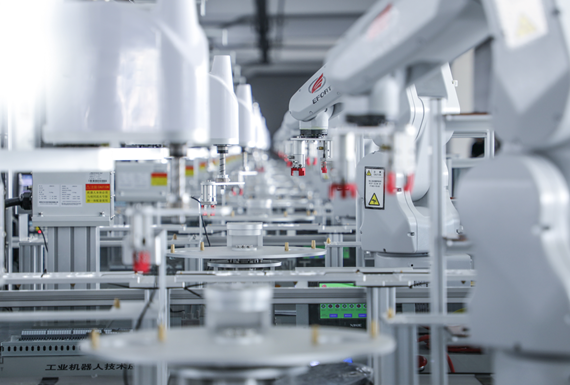
Everyday environments already carry visible markers of this ongoing industrial shift. Domestic cleaning robots grow more sophisticated within residential spaces, while factory robotic arms deliver increasingly precise handling. These incremental technological advances collectively lift the standard of Made in China manufacturing and reshape domestic living and workplace routines in gradual, pervasive ways. This wave of automation-driven transformation remains in its early stages.
The 2026 World AI Conference and High-Level Meeting on Global AI Governance will run from 17 to 20 July across four venues spanning three core zones in Shanghai: the Expo Area, Zhangjiang and West Bund. Co-hosted by the Ministry of Foreign Affairs, National Development and Reform Commission, Ministry of Industry and Information Technology and other central government bodies alongside the Shanghai Municipal People’s Government, this high-profile international event will stage comprehensive displays of domestic artificial intelligence progress and facilitate exchange on China’s AI development pathways.
热门内容推荐