China completes nation’s first batch methanol trial on long-distance product oil pipelines
According to Xinhua News Agency, the country’s first full-scale on-site trial for batch transportation of methanol through long-distance refined oil pipelines wrapped up successfully in Xianyang, Shaanxi Province, on 13 July, marking a landmark technical breakthrough that moves methanol pipeline conveyance from theoretical research to verified industrial practice.
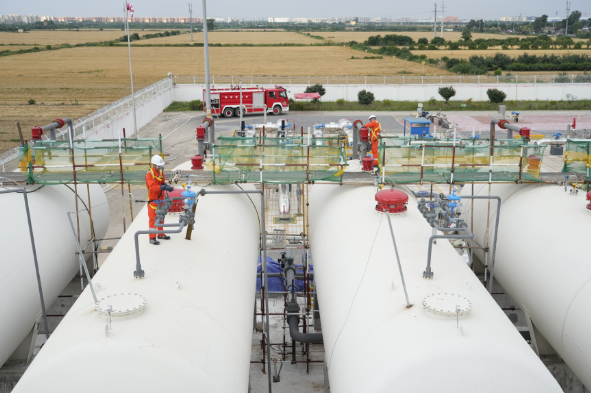
The trial was run across operational refined oil pipelines owned by China Pipe Network Group that span parts of Gansu and Shaanxi provinces. Engineers carried out comprehensive pipeline compatibility assessments alongside safety upgrades at two pumping stations before injecting a total of 1,000 cubic metres of fuel methanol in two separate batches. The liquid travelled 200 kilometres through the live pipeline network, alternating smoothly with petrol and diesel en route to terminal depots, closing the full verification cycle for this multi-product batch transport technology.
Technicians carried out inspections on the operational status of temporary methanol storage tanks throughout the trial period. Two distinct sets of operating parameters were tested to replicate real-world conditions, covering high and low flow rates as well as pipeline startup and shutdown cycles. The mixed liquid segment formed where methanol meets petrol never stretched beyond one kilometre during operation, with cross-contamination volumes held below 0.8 per cent along the pipeline route. The testing programme fully validated the process compatibility of batch methanol transport across undulating terrain and diverse operational modes.
Carrying out the trial on existing pipeline infrastructure delivers stark economic and environmental gains compared with constructing dedicated methanol pipelines from scratch. Upfront capital expenditure on infrastructure can be cut by over 80 per cent, while construction timelines shrink by 50 to 70 per cent. The reuse of established pipe networks also curtails ground disruption and ecological disturbance along the proposed transport routes.
A dedicated technical team completed a full chain of research work to enable the smooth delivery of this industrial trial. Work spanned theoretical modelling, laboratory bench testing, medium-scale loop trials and full-scale field demonstrations. Researchers ran repeated indoor and pilot batch transport tests mixing methanol with refined fuels, completed compatibility audits for all core equipment and finalised complete safety control protocols. A comprehensive technical framework for batch methanol conveyance has now been formalised, supplying core engineering data and practical benchmarks for wider rollout across China’s product oil pipeline grid.
Methanol functions as a safe, cost-effective liquid hydrogen carrier. Its high hydrogen storage density allows hydrogen to be stored and transported securely under ambient temperature and atmospheric pressure. It also serves as a clean, low-carbon alternative fuel, suitable for broad deployment within road transport and aviation sectors. Widespread uptake of methanol lifts utilisation rates for renewable power sources, cuts carbon abatement costs within transport systems and strengthens overall energy grid resilience.
A clear spatial imbalance exists between domestic methanol production capacity and consumption demand. Production facilities cluster heavily in north-western regions, yet major consumer markets lie in eastern coastal provinces across East and South China. Limited scalable cross-regional delivery solutions have long restrained the expansion of methanol industrial chains.
The successful trial lays solid technical groundwork for developing large-scale West-to-East methanol transport corridors in subsequent phases. It delivers a replicable, scalable solution to resolve the geographic mismatch between western methanol output and eastern consumption hubs, driving down costs for bulk interregional fuel shipment. The validated transport method creates unbroken supply links for clean energy and accelerates the green transformation of national energy systems.
Expanded rollout of this batch transport technology will unlock higher utilisation rates for the country’s extensive existing refined oil pipeline assets. Pipeline operators will integrate methanol shipments into regular multi-product delivery schedules, enabling steady flows of low-carbon liquid fuel from production heartlands to dense demand centres without building standalone chemical transport infrastructure.
热门内容推荐