Construction Starts on World’s First ±800kV Four-Terminal VSC-HVDC Link from South-East Xizang to Greater Bay Area
According to official energy industry dispatches, ground-breaking works kicked off on 9 July for the Qamdo Converter Station, a core node of the ±800kV ultra-high voltage direct current transmission scheme running between south-east Xizang and the Guangdong-Hong Kong-Macao Greater Bay Area. The construction site sits within Meiyu Township, Zuogong County, Qamdo City, with China Energy Engineering Group Southwest Electric Power Design Institute acting as the lead designer for the full infrastructure.
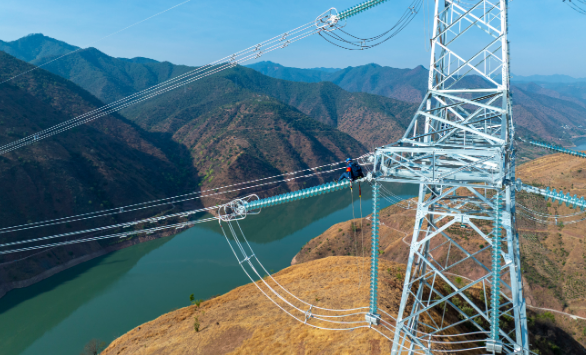
Known as the Xizang-Guangdong HVDC Project, the scheme holds two global pioneering credentials: it stands as the world’s inaugural ±800kV four-terminal voltage source converter HVDC transmission system, and marks the first multi-terminal UHV flexible DC corridor built to export clean power generated across Xizang’s hinterlands. The complete transmission route stretches 2,681 kilometres, traversing four provincial-level administrative regions including Xizang Autonomous Region, Yunnan, Guangxi Zhuang Autonomous Region and Guangdong Province. This UHV power link also ranks as China’s first such transmission line to cross three distinct topographical tiers, namely the Qinghai-Xizang Plateau, the Yunnan-Guizhou Plateau and the rolling hills of southern China’s coastal zones.
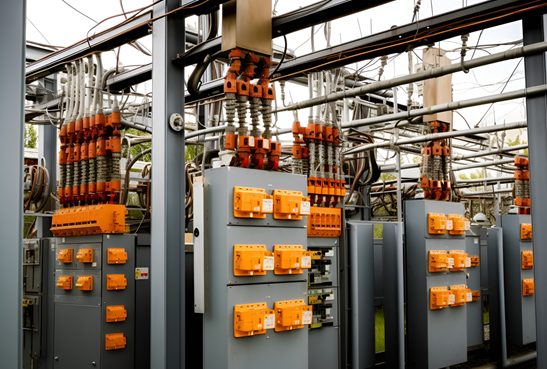
Four dedicated ±800kV converter stations form the backbone layout of the completed network, to be erected at Qamdo, Zayu, Xiaojing in Guangzhou and central Shenzhen respectively. The Qamdo Converter Station, situated at an altitude of 4,280 metres above sea level, carries a rated transmission capacity of 8 gigawatts. It holds the global record for the highest elevation among all operational flexible DC converter stations, functioning as the originating hub and primary power export node for the whole scheme. The facility’s core operational brief centres on aggregating photovoltaic and hydroelectric output from northern Qamdo districts such as Baxu before dispatching consolidated clean power eastward along the long-distance corridor.
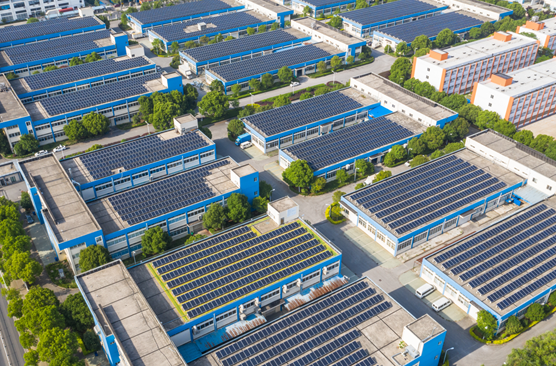
Once full construction phases reach completion, the sending-end grid infrastructure linked to the Xizang-Guangdong HVDC route will integrate 18.8 gigawatts of installed photovoltaic generation alongside 3.7 gigawatts of hydropower capacity. Concentrated clusters of water-solar-wind hybrid clean energy bases distributed across south-east Xizang will feed low-carbon electricity into the transmission channel on a consistent basis.
The power flow delivered via this long-distance corridor will ease peak-period electricity supply pressure within the Greater Bay Area, a densely industrialised and urbanised coastal zone with sustained high power consumption levels. The infrastructure unlocks pathways to translate Xizang’s abundant renewable resource endowments into tangible local economic output, while enabling coordinated growth mechanisms between western resource-rich zones and eastern industrialised economic hubs across the country.
Domestic power engineering bodies continue to roll out targeted technical research to address construction constraints brought by ultra-high altitude, complex alpine geology and long-distance cross-provincial power delivery. Optimised high-altitude power electronic hardware and intelligent monitoring control frameworks will be deployed throughout all converter station sites and overhead line sections, sustaining stable energy transfer under harsh plateau operating conditions. Supplementary supporting facilities for on-site renewable power collection, grid synchronisation and cross-regional power scheduling will progress in parallel with main converter station construction works in Xizang. Upon full commissioning, the four-terminal flexible DC architecture will enable flexible bidirectional power adjustment between western clean energy generation bases and eastern metropolitan load centres, raising overall efficiency of nationwide cross-regional clean energy allocation.
热门内容推荐