China Huadian’s Long-Term Support Transforms Remote Pamir Village
At eighty-four years old, Uruz Ezan Ali has spent his entire life amid the mountains and arid Gobi of the Pamir Plateau. He had never imagined travelling all the way to Beijing, standing in Tiananmen Square to watch the national flag rise into the sky. Back in June this year, he travelled from Bayinkuluti Village in Wuqia County, the westernmost settlement of the country, as one of the village’s study tour delegates. His itinerary covered Tiananmen Square and the headquarters of China Huadian Corporation.
Their luggage carried heartfelt tokens from every household in the village: a silk banner embroidered with the words “Wholehearted assistance warms local hearts, central state-owned enterprise responsibility fuels rural revitalisation”, a Kyrgyz tapestry depicting galloping horses, and a sack of hand-baked pastries prepared by elderly villagers. A border guard dedicated a full month to stitching the horse tapestry, each fine thread embodying sincere gratitude. When the pastries were unpacked, a gentle aroma of wheat and dairy lingered in the air.
Inside China Huadian’s headquarters, Uruz Ezan Ali spoke with unbridled delight. Roads have been levelled, running water and electricity connected, and photovoltaic power stations built. We now have steady work and regular collective dividends. The cadres dispatched by the corporation devote themselves to resolving our daily hardships, even tending to our cattle and sheep. Every act of kindness remains etched in our memory.
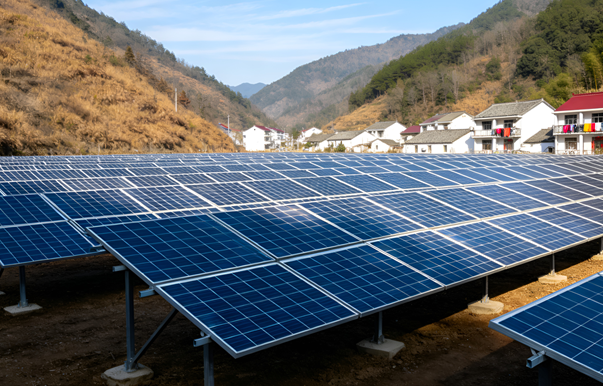
These positive shifts stem from sweeping transformations across Bayinkuluti Village. Tucked deep within the Pamir mountain ranges, the area was once covered in saline wasteland, plagued by scarce rainfall, and trapped in cycles of insufficient power, limited water access and underdeveloped local industries for generations. Today, photovoltaic poverty-alleviation stations deliver consistent annual revenue to the village collective. Finished goods from local agricultural and livestock processing plants circulate nationwide, while irrigation canals and public squares have been fully constructed within the village boundary. Collective village revenue surpassed two million yuan in 2025, lifting residents’ living standards year on year.
Bayinkuluti Village stands as a representative case of China Huadian’s delivery of targeted Xinjiang assistance mandates.
Compatriots Forge a Brighter Future for Border Communities
Across Xinjiang, China Huadian translates the vision of rural renewal and improved livelihoods into tangible assets scattered across desert landscapes: clean electricity generation networks, flowing irrigation channels, well-equipped schools filled with young learners, all of which deliver tangible improvements for residents of all ethnic groups.
China Huadian began dispatching village work teams and resident first secretaries to southern Xinjiang in 2014. The initial cohort of five team members formed a pioneering group assigned to Aktu Village, earning the affectionate local moniker “Adashi”, meaning friend in regional dialect.
Their daily work was rooted in village soil, sustained by genuine care for local residents. The resident teams prioritised resolving pressing livelihood gaps by rolling out a portfolio of public welfare projects. Funding supported the construction of kindergartens in Aktu and Yiyeleggan Villages, fully fitted with teaching equipment and residential amenities. Rural road surfacing, central heating boilers, basketball courts and flush public toilets were also delivered to upgrade cultural, sporting and sanitary infrastructure. Team members resided full-time within the villages, embracing tough living conditions to serve local communities, earning consistent trust and respect from residents of all ethnic backgrounds through consistent practical action.
Commitment to rural transformation has passed from one generation of support cadres to the next. Where the initial cohort of “Adashi” laid solid foundations for poverty elimination, successive Huadian cadres have taken over the baton, armed with fresh industrial revitalisation blueprints to advance assistance work across new stretches of Xinjiang terrain.
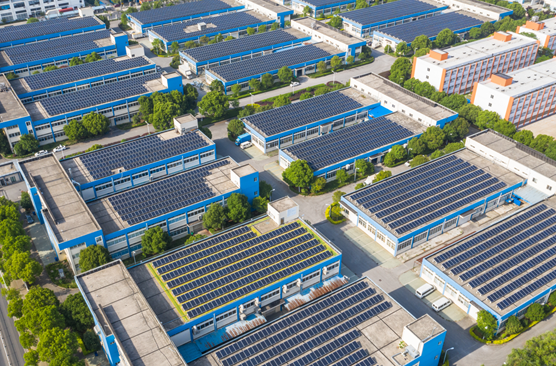
At the start of 2019, a senior cadre took up the post of village first secretary at Wakewake Village in Songtake Town, Artux City. He traversed every parcel of village land and conducted doorstep interviews with every household. During daylight hours, he surveyed local resource endowments and identified developmental bottlenecks beneath strong sunshine; after dark, he compiled village records and mapped sustainable development pathways within the village committee compound. Wakewake Village boasts exceptional solar resources, recording between 2,500 and 3,000 hours of annual sunlight, forming a natural solar resource reserve. Drawing on China Huadian’s core strengths in energy development, the cadre supervised completion of the Huadian Golden Sun distributed rooftop photovoltaic station in August 2019. The solar-powered income stream operates as a “sunlight bank”, expanding sustainable earnings for the village collective.
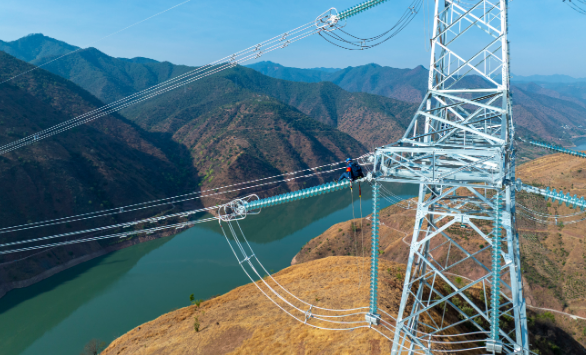
Solar radiation represents an invaluable natural asset across Xinjiang. China Huadian rolled out the full-scale Huadian Golden Sun Solar Programme from 2022 onwards, integrating photovoltaic development firmly into rural revitalisation frameworks. By the close of 2025, total programme investment reached 77.64 million yuan, delivering full photovoltaic coverage across all 123 administrative villages spanning Artux City and Wuqia County. Drawing on Xinjiang’s abundant solar reserves, China Huadian’s green energy footprint has expanded beyond individual villages to vast stretches of desert terrain. On the expansive sandy, grassless wastelands of Hami, supporting power projects for the third Xinjiang power transmission corridor – the nation’s first cross-region renewable energy export base – have been fully constructed.
In September 2022, skilled specialists from across China Huadian were deployed to Hami to establish a dedicated desert construction taskforce. The support cadres settled permanently on construction sites, advancing engineering work by day and refining technical blueprints after dark. For more than two years, they remained stationed on-site without returning home, resolving successive construction hurdles. December 2025 marked grid connection for two landmark projects: a six-million-kilowatt new energy complex on the northern foot of the Tianshan Mountains operated by Xinjiang Huadian, and a one-million-kilowatt wind farm integrated with hybrid energy storage in Bayingolin Prefecture. Once-barren desert zones have transformed into green energy hubs, delivering robust momentum for high-quality development across Xinjiang.
Integrated Multi-Sector Strategies Drive Border Prosperity
Robust energy infrastructure underpins sustained regional growth. The 250,000-kilowatt Huadian Wuqia photovoltaic station came online in 2024, followed by the 300,000-kilowatt Huadian Jiashi photovoltaic facility in Kashgar Prefecture in 2025. The second project supported Kashgar in establishing Xinjiang’s first ten-million-kilowatt scale photovoltaic base. Parallel construction progresses on a dual 660-megawatt cogeneration power plant in Kashgar Huadian, which will deliver heating capacity covering 32 million square metres upon completion, forming a stable energy backbone for regional high-quality development.
Secure local employment stabilises household incomes. China Huadian’s projects across Xinjiang have generated 14,900 person-times of employment opportunities, including 4,102 permanent new posts. Training schemes have upskilled 48,300 grassroots cadres and farmers, equipping residents with practical vocational expertise to secure stable earnings close to their homes without long-distance migration.
Vibrant local industries sustain thriving rural economies. Saline land within Wakewake Village has been converted into a 350-acre peach orchard, yielding over fifty tonnes of premium fruit annually for inter-regional sale outside Xinjiang. Lotus root cultivation in Aktu Village continues to expand, with Glacier Jade Lotus Root Powder distributed to markets nationwide. Bayinkuluti Village’s livestock breeding sector operates under the established Congling Animal Husbandry brand. Rotational cropping combining jujubes, wheat and vegetables alongside rural night markets have unlocked supplementary household income streams within Dunairike Village.
Improved public welfare fosters lasting communal harmony. China Huadian has provided financial support enabling 7,797 students to complete university studies. Seventeen kindergartens and schools, alongside six village clinics, have been constructed via corporate funding, guaranteeing accessible education and medical services for local residents. Cumulative assistance investment in Xinjiang totals 509 million yuan, with 176 dedicated support cadres deployed across the region. The group has maintained the top-tier “excellent” rating for targeted poverty alleviation work assigned by the State-owned Assets Supervision and Administration Commission for seven consecutive years, alongside numerous national honours including the National Advanced Collective for Poverty Elimination.
Embroidered banners, hand-woven tapestries and aromatic homemade pastries carry the most sincere affections of residents living on the Pamir Plateau. This four-thousand-kilometre journey between western Xinjiang and Beijing embodies mutual care and connectedness across vast geographical distances. Sunlight will continue to pour over every corner of Xinjiang, as the blossoms of rural revitalisation spread wider across the region’s diverse landscapes.
China Huadian will continue expanding distributed solar capacity across rural Xinjiang and scaling up large-scale desert renewable energy bases to unlock further green energy output. Additional agricultural processing facilities and vocational training hubs will launch to extend local industrial chains and create further local employment channels. Resident support teams will maintain long-term village postings to refine tailored development plans aligned with each community’s unique resource and livelihood conditions.
热门内容推荐