China’s petrochemical construction innovates intelligent and green building models to empower industrial upgrading
According to official industrial project releases and domestic mainstream media reports, China’s petrochemical infrastructure sector is advancing comprehensive transformation through technological innovation, intelligent construction and green low-carbon upgrading. As a leading central state-owned enterprise specialised in petrochemical engineering construction, Sinopec Fourth Construction has delivered a series of landmark high-quality projects in energy chemical facilities, new material industrial clusters and national energy reserve bases, driving the high-end, clustered and eco-friendly development of regional petrochemical industries across the country.
The Tianjin Nangang petrochemical industrial zone stands as a core demonstration area for innovative construction practices. The 1.2 million-tonne annual ethylene project, a key national industrial initiative, serves as the backbone of Nangang’s high-end new material industrial layout. The project features densely distributed steel structures, crisscrossing pipeline networks and constrained construction space, bringing prominent challenges to traditional overhead assembly operations. To address inherent drawbacks of conventional petrochemical construction including cumbersome procedures, intensive high-altitude work and low efficiency, comprehensive construction method optimisation has been implemented.
Off-site prefabrication and modular assembly have replaced traditional scattered overhead construction. Dedicated prefabrication zones have been established on-site to complete segmented ground assembly before integral hoisting, drastically reducing high-altitude operational volume and improving construction safety and efficiency. Fixed tower cranes deployed on-site cut mobile machinery usage frequency by 45 per cent and triple pipeline installation efficiency. Synchronised construction of steel frames and pipeline laying replaces outdated sequential working modes, streamlining the whole construction process. The innovative “one main site plus multiple prefabrication yards” management model enables collaborative operation of diverse teams and procedures.
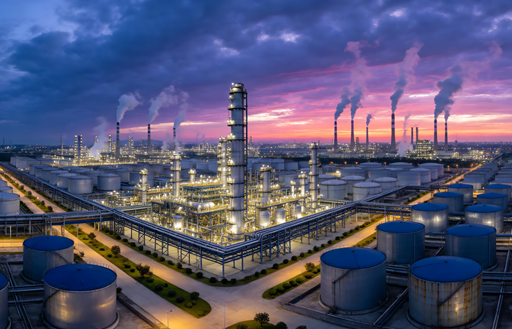
The Tianjin Nangang ethylene project has achieved outstanding operational results after years of refined construction, recording 9.8 million safe working hours and winning 32 model project honours. Digital and intelligent management systems cover the entire construction process, with on-site intelligent monitoring devices and unified digital platforms enabling dynamic supervision of construction progress, engineering quality, safety management, staff performance and material consumption. The refined and standardised whole-process control system has built a replicable intelligent construction benchmark for the domestic petrochemical industry.
Continuous technological research and development consolidates core innovative capabilities. The enterprise has accumulated 235 patent applications, 213 authorised patents and 24 software copyrights, while undertaking multiple key group research projects to support iterative upgrading of petrochemical construction technologies. In recent years, the enterprise has leveraged its professional advantages to participate in the coordinated development of the Beijing-Tianjin-Hebei region, accelerating the upgrading of green petrochemical industries in Nangang Industrial Zone through constructing large-scale ethylene plants, natural gas receiving stations and industrial pilot facilities.
Green construction technology innovation forms a vital growth driver for business development. As one of China’s earliest practitioners in low-temperature LNG storage tank construction, the enterprise has formed a mature green construction system covering pneumatic jacking, factory prefabrication and dust-free operation. The global largest LNG tank cluster project in Yancheng, Jiangsu, adopts innovative air pressure jacking technology for dome installation. The method eliminates high-energy-consumption and high-pollution large crane operations, cutting mechanical fuel consumption by 70 per cent and reducing exhaust, dust and noise emissions during construction.
Standardised prefabricated workshops realise full ground prefabrication and on-site assembly of all structural components. The optimised green construction process lowers coating waste by 15 per cent and raises the resource utilisation rate of solid waste above 90 per cent, eradicating open-air construction pollution at the source. The mature low-carbon construction technologies have been widely applied in multiple coastal LNG projects including the Ningbo green energy port programme, continuously leading the green transformation of the petrochemical infrastructure sector.
National energy reserve infrastructure construction maintains steady progress to safeguard energy security. Since 2024, multiple key strategic energy reserve projects have been completed and put into operation, including the second phase of Hainan crude oil reserve depot, Dongying reserve base in Shandong and the capacity expansion project of Tianjin Shihua crude oil reserve base. The Tianjin Shihua project overcomes complex reclamation land geological conditions through customised pile foundation construction schemes, finishing more than 30,000 pile foundations 13 days ahead of schedule.
Innovative technical systems are applied in large-scale storage tank construction to abolish traditional reinforced concrete bearing platforms, saving substantial building materials and compressing foundation construction cycles. The integrated model of factory prefabrication and on-site modular installation improves overall construction efficiency by 40 per cent, with automatic welding application rate exceeding 85 per cent and stable welding qualification rate above 98.5 per cent. Twenty-four-hour high-precision dynamic monitoring ensures submillimetre-level structural accuracy and long-term operational safety of energy storage facilities.
The petrochemical industry is undergoing a critical transition from dual control of energy consumption to dual control of carbon emissions, with low-carbon development and industrial clustering becoming mainstream trends. The enterprise will further expand its layout in modern coal chemical and clean energy sectors in the future. New business lines including LNG storage and peak shaving supply will be developed in the Hexi Corridor clean energy belt to expand the northwest inland market. Continuous technological iteration and project empowerment will strengthen, extend and optimise domestic petrochemical industrial chains, supporting the long-term high-quality development of China’s energy and chemical industry.
热门内容推荐