Chinese modular building solutions gain global traction with intelligent industrialised construction
According to China Central Television reports released on July 9, innovative modular building solutions developed in China are securing growing global market recognition, driven by intelligent manufacturing capabilities and integrated delivery models. Complete building units are fully prefabricated in domestic smart factories, packaged for maritime transportation and rapidly assembled on overseas sites, delivering efficient and high-standard residential and commercial infrastructure across international markets.
Customs export data shows robust growth in China’s modular construction sector. In the first four months of this year, the total export value of modular buildings shipped via Shenzhen Port reached 1.68 billion yuan, representing a year-on-year increase of nearly 20 per cent. The products are currently supplied to more than 150 countries and regions worldwide. Rising export figures, expanding overseas project footprints and repeat orders from international clients demonstrate strong market vitality within the specialised sector and mark a pivotal upgrade of China’s construction industry towards intelligent industrialised manufacturing.
Traditional global construction practices have long been constrained by conventional open-air building methods dominated by manual labour and layered on-site assembly. Such models are vulnerable to weather fluctuations, labour shortages and complicated procedural arrangements, resulting in prolonged construction cycles, cumbersome workflows and substantial material wastage. Conventional construction also generates considerable dust and noise pollution, while project quality relies heavily on manual experience, leading to low standardisation levels and limited error control throughout the building process.
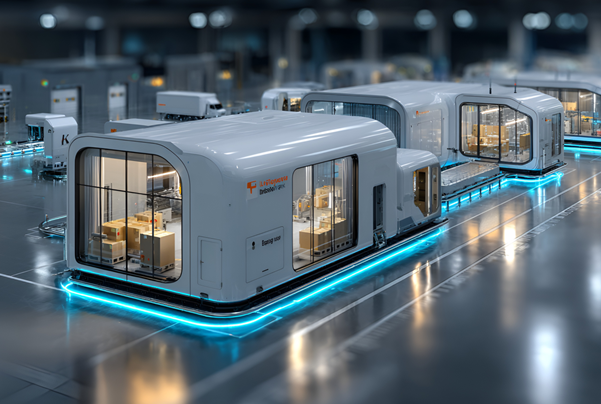
China’s modular construction model fundamentally reshapes traditional building production and operational logic. All core building components, including wall panels, flooring systems, water and electricity pipelines, and kitchen and bathroom facilities, are standardised and integrally prefabricated on smart factory production lines. Multiple manufacturing procedures proceed simultaneously and take shape in one unified process. On-site operations are simplified to module hoisting, precise assembly and final commissioning, cutting overall construction cycles by more than 60 per cent and eliminating numerous uncertainties inherent in traditional building workflows.
The industrialised transformation delivers substantial improvements in construction quality and precision. Modular construction converts extensive on-site manual work into controlled, traceable industrial manufacturing procedures, adopting millimetre-level precision standards for every component and process to ensure consistent and standardised building quality. Delivered projects have withstood long-distance maritime transportation and on-site adaptation tests. Overseas cases include elderly care apartments in the United Kingdom, star-rated hotels in Papua New Guinea and intelligent data centres across multiple global locations, all of which can be fully assembled within roughly two weeks after module arrival, showcasing the technical strengths of China’s advanced construction solutions.
The booming overseas expansion of modular buildings epitomises the industrial upgrade from conventional Chinese manufacturing to intelligent production. China’s construction exports previously centred on basic building materials with low added value and limited market competitiveness. Current modular building exports deliver comprehensive turnkey solutions covering research and design, intelligent manufacturing, on-site assembly and full-cycle operational maintenance, bringing substantial improvements to industrial value and market influence.
The global modular construction sector represents a high-potential market track with a current scale in the billions, with industry projections indicating the global market size will surpass 140 billion US dollars by 2030. Global infrastructure demand features diversified and customised requirements. Chinese modular building solutions offer strong adaptability, high construction efficiency and cost advantages, precisely matching local market demands. Their water and material conservation features and low-carbon, pollution-free operational attributes align with global sustainable development trends, further consolidating competitive edges in international markets.
While China’s modular construction industry maintains leading global market positioning and robust export momentum, there remains room for further optimisation in high-end customised design, regional adaptation and full-lifecycle overseas service systems. Continuous refinement of product design in line with local construction codes, climatic conditions and aesthetic preferences, together with upgraded logistics, installation and after-sales service frameworks, will consolidate long-term market competitiveness and support sustainable expansion within the global high-end construction sector.
热门内容推荐