China launches three-year campaign to deepen energy conservation and carbon reduction in key industrial sectors
According to official documents released by Chinese authorities, five central government departments including the National Development and Reform Commission have jointly issued a three-year action plan for energy conservation and carbon reduction upgrading in key industrial sectors. The initiative marks a critical deepening stage for China’s industrial low-carbon transition, laying out clear timelines and implementation roadmaps for high-energy-consuming industries such as steel and petrochemicals. Under the national dual-carbon strategy, the transformation of energy-intensive industrial sectors into high-efficiency benchmark operations has become a core strategic pillar for bolstering national energy security and driving high-quality economic development through greener industrial operations.
China’s key industrial sectors currently exhibit three distinct characteristics in their low-carbon upgrading progress, defining the core challenges and directions of the three-year renovation campaign. The first feature lies in a huge existing industrial stock base with high carbon emissions. Major industrial sectors hold massive established assets and remain the primary sources of national energy consumption and carbon output. The steel industry alone accounts for approximately 15 percent of China’s total carbon emissions, with its dominant long-process production model generating far higher carbon intensity than steel manufacturers in the European Union, Japan and South Korea. A large proportion of production capacity in crude steel, electrolytic aluminium and cement clinker still fails to meet advanced energy efficiency benchmarks, creating noticeable technological and structural gaps with international leading standards that require targeted rectification in the next three years.
The second feature is the growing intensity of low-carbon constraints faced by industrial players. Beyond external policy regulation, industries are encountering inherent technological limitations and process bottlenecks that hinder further emission cuts. Conventional energy-saving approaches have reached saturation, leading to a sharp rise in marginal carbon reduction costs. The cement sector, responsible for around 9 percent of national carbon emissions, sees over half of its carbon output stemming from inherent limestone calcination processes rather than fuel combustion. This structural attribute means simple fuel replacement measures can no longer bridge the substantial gap between current operational levels and long-term carbon neutrality targets.

The third feature involves extensive cross-industry linkage effects. Energy conservation and carbon reduction have evolved from isolated production upgrades into systematic, coupled transformations across industrial and regional boundaries. Carbon emission levels in key sectors are closely tied to upstream energy supply structures and downstream industrial application scenarios. The electrolytic aluminium industry presents typical power-aluminium linkage characteristics, with its carbon intensity directly determined by the cleanliness of power supply. Its decarbonisation progress is therefore deeply integrated with the grid’s capacity to absorb wind and solar power. Additionally, the establishment of national product carbon footprint accounting systems enables carbon emission data to penetrate downstream supply chains, covering automotive manufacturing and construction industries.
The implementation of the three-year renovation campaign will reshape the development logic of high-energy-consuming industries and deliver far-reaching industrial impacts across multiple dimensions. It will rebuild industrial competition patterns by embedding carbon costs into overall operational expenditure. Enterprises with substandard energy efficiency will face rising operational pressures including differentiated electricity pricing and restricted carbon quota access. In contrast, high-efficiency enterprises will gain competitive advantages through carbon quota trading and policy incentives. Regional pilot practices in Zhejiang Province have demonstrated tangible results, with targeted energy efficiency diagnostics covering more than 3,400 high-energy-consuming enterprises and lifting the energy efficiency levels of local steel and ethylene industries to national leading standards.
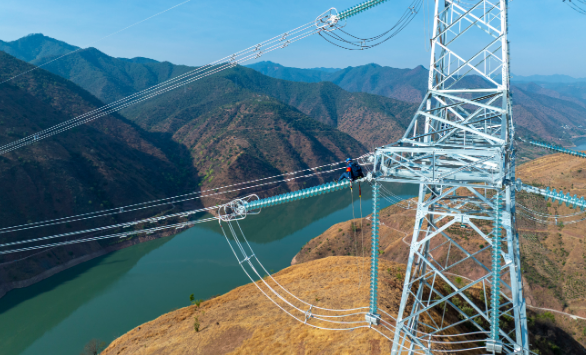
The campaign will also foster new industrial formats and green infrastructure investment. Industrial players are accelerating the adoption of digital and intelligent management tools to refine energy consumption control, spurring the integrated development of industrial internet and low-carbon transformation, and advancing in-depth integration of artificial intelligence and big data technologies into traditional manufacturing processes. Furthermore, the initiative supports the restructuring of national energy systems and the formation of replicable low-carbon development models. Integrated coordination of power generation, grid operation, energy storage and power consumption is being promoted to reduce industrial reliance on high-carbon fossil energy. Industrial green transformation cases are emerging nationwide, including the green power transmission project in Baotou that delivers clean electricity from 200 kilometres away, enabling local aluminium producers to achieve low-carbon production with renewable energy.
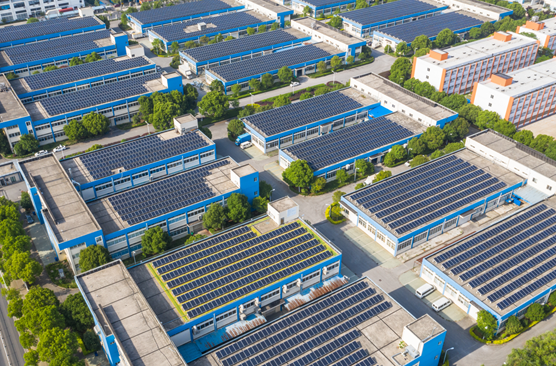
Continuous optimisation of technological innovation, industrial management and policy support will further advance the implementation of low-carbon renovation tasks in key industries. In terms of technology, industrial upgrading will follow leading energy efficiency benchmarks, with customised renovation solutions for individual enterprises. Key low-carbon technologies including cascade utilisation of residual heat and pressure, industrial green microgrids and clean hydrogen production will be widely promoted. Digital management of energy-consuming equipment will be strengthened, with intelligent sensors and big data analytics enabling real-time energy monitoring, fault early warning and precise efficiency optimisation.
In terms of industrial management, China is improving a dual operational mechanism covering carbon cost transmission and capacity value compensation. Linked reforms of the national carbon market and power market are facilitating smooth transmission of carbon-related costs to electricity pricing. A capacity electricity pricing system has been established to deliver reasonable compensation for flexible power sources including coal-fired power and energy storage facilities, stabilising the secure operation of the power system while supporting clean energy development.
In terms of policy support, coordinated fiscal, taxation and financial incentives are being scaled up. Listed industrial enterprises are leveraging capital market tools including green bonds and carbon-neutral asset-backed securities to expand low-carbon project financing channels. The evolving policy-guided, market-driven and enterprise-led operational system will sustainably advance the high-quality low-carbon transformation of China’s key industrial sectors in the coming years.
热门内容推荐