China’s Power Supply Reforms Deliver Streamlined Business & Green Energy Services, NEA 2026 Report Confirms
“Getting Electricity”, a globally recognised benchmark for assessing business environments, offers a full-spectrum evaluation covering application submission, grid connection, long-term supply stability, associated costs, processing lead times and power quality for both corporate and residential consumers.
The National Energy Administration has recently published the China Power Supply Development Report (2026), which documents the completion of a nationwide, interconnected world-class power service network spanning urban and rural territories. Total national electricity consumption exceeded 10 trillion kilowatt-hours in 2025, with nearly 800 million registered power consumers, the largest user base worldwide, supported by 99,000 local power service outlets distributed across all regions. Sustained reform drives focused on streamlining “Getting Electricity” procedures have delivered fundamental improvements to the power consumption business environment, raising tangible standards of service for all end users.
Streamlined Power Application Procedures Cut Costs for Industrial Operators
Power supply forms a critical link between power generation and end consumption, sustaining commercial activity and daily household operation as a core underpinning of economic growth.
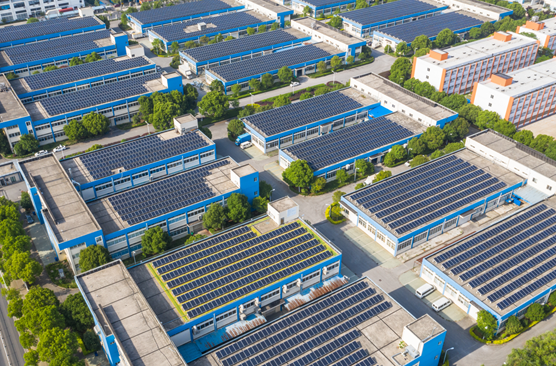
Suzhou in Jiangsu Province hosts 14 state-level and six provincial development zones, home to 19,000 foreign-funded enterprises whose power requirements rise incrementally as production lines come online. Full upfront installation of power capacity imposes heavy capital outlays on manufacturers, while staged applications risk delays to production expansion timelines.
State Grid Suzhou Power Supply Company has partnered with Suzhou Development and Reform Commission to roll out a tiered power connection service framework. Long-term power consumption roadmaps aligned with each enterprise’s expansion plans are formulated to deliver phased grid connection solutions, lowering initial capital expenditure for manufacturers and enabling faster commissioning, while freeing spare grid capacity for other industrial operators.
Comprehensive “Three Zero” and “Three Streamlined” services achieved nationwide coverage over the 14th Five-Year Plan period. The “Three Zero” model delivers zero on-site visits, zero administrative filings and zero capital investment for low-voltage power applications, while the “Three Streamlined” framework reduces time input, administrative effort and financial outlay for high-voltage corporate connections. China has built the world’s largest online power application platform, cutting cumulative customer capital expenditure on grid connection works by more than RMB 300 billion throughout the planning cycle.
2025 marked the final year of the 14th Five-Year Plan. To align with evolving domestic and international development patterns and address emerging power service demands from enterprises and residents, the National Development and Reform Commission and the National Energy Administration jointly launched a new round of “Getting Electricity” reforms, structured around five core targets: simplified application workflows, consistent high-quality power delivery, low-carbon consumption patterns, inclusive universal services and coordinated multi-agency oversight.
Data from the official report shows the scope of “Three Zero” services expanded to all private economic entities with power installation loads of 160 kilowatts or below during 2025, generating total savings of over RMB 40 billion for applicants. Power utilities rolled out targeted measures including shortened grid access routes and optimised cable routing designs under the “Three Streamlined” framework, delivering a further RMB 30 billion in cumulative cost reductions for commercial and industrial consumers over the year.
Green Power Consumption Infrastructure and New Energy Business Models Expand Rapidly
Advancing low-carbon electricity uptake forms an essential pillar of national energy transition and carbon reduction targets. Local authorities refined full-lifecycle green power service systems across 2025, focusing on renewable grid integration, electric mobility infrastructure, green power procurement and energy efficiency advisory services, establishing comprehensive power sector support for nationwide emissions reduction initiatives.
Networks of electric vehicle charging hardware expanded at scale. Optimised application procedures for charging point installation were introduced, alongside bundled one-stop packages combining vehicle purchase and grid connection, plus unified certification protocols for residential compounds. The national stock of EV charging facilities surpassed 20 million units by year-end, with 19 provincial-level regions including Shandong, Hunan and Yunnan delivering full charging coverage across every township. Aligned with national regulatory action on electric two-wheeler safety, over 210,000 charging stations received zero-cost grid connection support under the “Three Zero” scheme, cutting customer investment by RMB 400 million and covering more than 70,000 residential estates.
Integrated energy service business models have gained market traction. Nine designated pilot cities including Chongqing and Kunming rolled out large-scale vehicle-to-grid demonstration projects, with continuous technical upgrades to bidirectional power exchange systems. Integrated operational scenarios combining distributed generation, charging hardware and energy storage were developed to cultivate the integrated energy services market, with commercial frameworks such as energy asset trusteeship and performance-based energy management deployed to distribute efficiency gains between operators and end users.
Innovative market participants have secured formal channels to participate in electricity trading. Local regulators developed structured mechanisms for virtual power plants and new energy storage assets to engage with wholesale power markets, establishing viable commercial models for emerging low-carbon infrastructure. By the close of 2025, 470 virtual power plant projects operated nationwide, delivering a peak flexible load adjustment capacity of 16.85 gigawatts, a year-on-year uplift of roughly 70 per cent. Installed new energy storage capacity reached 136 gigawatts / 351 gigawatt-hours, a more than 40-fold increase compared with the end of the 13th Five-Year Plan cycle.
Senior officials from the National Energy Administration outlined ongoing integration of “Getting Electricity” reform into new power grid construction and every stage of the national low-carbon transition agenda. Power supply frameworks will evolve from standalone electricity delivery to integrated packages combining grid power, energy efficiency consulting and renewable power provision. Grid modernisation will drive improved service efficiency, lower green energy operating costs for commercial operators and underpin nationwide decarbonisation activity.
Residential Grid Upgrades Boost Reliable, Affordable Power for Households
Consistent power delivery directly shapes daily living standards, with targeted infrastructure upgrades addressing persistent residential power service challenges across all regions.
Non-grid direct supply residential compounds have long represented a structural barrier to standardised power service provision. Field teams from State Grid Xianyang Power Supply Company commenced on-site conversion and individual smart meter installation work at residential estates managed by Xianyang Agricultural Machinery Administration Centre recently. Separate smart metering hardware enables households to track real-time power consumption and secure reduced unit electricity charges after conversion.
Cross-departmental coordination frameworks led by local government bodies, with coordinated input from administrative agencies and grid operators, resolve logistical barriers to estate conversion in Xianyang. The company has finalised transfer agreements covering 124 residential compounds serving 39,400 households, with meter replacement and direct grid connection completed for 54 estates accommodating 13,700 residents. Remaining electrical safety hazards have been substantially eliminated, fulfilling household demand for direct metering and standardised public electricity pricing.
National data records the conversion of 17,000 non-direct grid supply residential estates to official utility management throughout 2025, delivering benefits to 7.8 million household consumers. Mandatory single-household metering standards apply to all newly built residential districts, with power utilities undertaking formal asset handover and ongoing maintenance of distribution infrastructure for eligible housing developments.
Targeted investment programmes reinforce rural and remote island power networks. Central budget allocations of RMB 5 billion for rural grid upgrades in 2025 mobilised total rural power construction investment exceeding RMB 160 billion, reinforcing distribution network resilience across rural territories. Grid extension works paired with local wind and solar resources support the development of intelligent microgrid systems on coastal islands, lifting power supply reliability and renewable energy utilisation efficiency in remote maritime regions.
Regulatory priorities remain focused on resolving persistent residential power service shortfalls, strengthening supply capacity in under-served regions and upgrading urban and rural distribution hardware. Balanced grid development across eastern and western territories and urban-rural zones proceeds in parallel with renovation of ageing residential power infrastructure, alongside refined local service outlet layouts to deliver universal, foundational power services for residential communities.
2026 marks the opening year of the 15th Five-Year Plan cycle. National Energy Administration policy teams outline continued development of benchmark cities with globally competitive power consumption business environments, demonstration regions delivering exemplary “Getting Electricity” standards, and distinctive towns and rural areas showcasing locally tailored power service frameworks. Progress generated by these flagship sites will drive consistent uplifts in nationwide power service delivery standards across the full planning cycle.
热门内容推荐