Two Projects Run by Guangdong Provincial State-Owned Enterprises Win State Scientific and Technological Progress Awards 2025
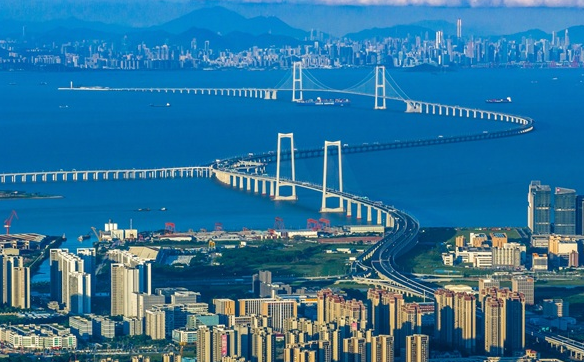
Official results of the 2025 National Science and Technology Awards were unveiled on 8 July, with two technological breakthroughs developed by enterprises under Guangdong provincial state-owned asset supervision securing national honours. The project themed Key Technologies, Equipment and Application for Steel-Concrete Immersed Tube Tunnel Construction of the Shenzhen-Zhongshan Link, led by Guangdong Transportation Group, claims the First Class of the State Scientific and Technological Progress Award. The second accolade, the Second Class of the same award, goes to Heat-Treatment-Free Strengthened Aluminium-Magnesium Alloys for Integrated Die Casting and Corresponding Application Technologies, a joint research output involving Guangdong Hongtu under Yueke Finance Group.
Groundbreaking Cross-Sea Tunnel Technology Sets Global Benchmarks
The construction environment of the Shenzhen-Zhongshan Link tunnel is defined by ultra-wide cross-sections, deep underwater burial and severe river silt accumulation, posing complex technical barriers for engineering teams. A brand-new wide compartment steel-concrete composite structural system has been developed to address such harsh operating conditions, alongside an innovative bonding framework combining transverse and longitudinal partition plates, studs and T-shaped rib connectors that delivers high-efficiency load transfer between steel shells and concrete infill. A full durability assurance framework spanning a service life of 100 years has also been formulated, filling persistent gaps within international engineering technical systems.
Domestic construction teams have built an integrated intelligent manufacturing platform with four dedicated production lines and one central control system for large-scale steel structure fabrication, enabling fully automated robotic welding and uniform anti-corrosion coating treatment for giant tunnel steel shells. Custom-built heavy-duty construction machinery has also been delivered, including the world’s first integrated vessel combining immersed tube floating transportation and underwater installation, plus an intelligent deep-water positioning and control platform for tube segment deployment. Nine interlinked control subsystems are integrated into the whole equipment suite, delivering millimetre-level precision for large immersed tube assembly in deep marine environments, a performance milestone unmatched by overseas equivalent projects.
Advanced Integrated Die Casting Materials Accelerate New Energy Vehicle Industrial Upgrading
Joint research conducted by Guangdong Hongtu and Shanghai Jiao Tong University delivers novel high-performance aluminium-magnesium alloys engineered for ultra-large integrated die casting used in electric passenger vehicles. The new material formula eliminates common manufacturing defects such as component deformation and surface bubbling triggered by conventional heat treatment procedures. Integrated die casting stands as a transformative production technique for lightweight new energy vehicle design; dozens or even hundreds of discrete mechanical parts can be consolidated into a single monolithic casting within just 90 seconds of forming cycle time. Vehicles adopting this manufacturing route record a 20 per cent reduction in overall curb weight, alongside an 8 per cent rise in driving range under standard test cycles.
A 16,000-tonne ultra-large intelligent die casting cell, co-developed and deployed for mass production, represents the largest operational unit of its type across global manufacturing facilities and holds leading international technical positioning. Stable serial production has been achieved with finished product yield rates maintained above 90 per cent. Full-scale integrated castings including rear floor assemblies, front cabin structural frames and battery trays have entered commercial supply chains, forming a complete end-to-end technical solution package covering integrated die casting material research, equipment manufacturing and mass component production.
The two nationally recognised breakthroughs stand as tangible evidence of sustained innovation investment carried out by Guangdong provincial state-owned enterprises across advanced infrastructure and new energy manufacturing sectors. Guangdong Provincial State-owned Assets Supervision and Administration Commission will roll out coordinated reform policies to foster further technological breakthroughs within provincial state-owned industrial entities. Special incentive mechanisms designated as direct transfer channels for scientific and technical achievements will be fully implemented; Guangdong Transportation Group will receive an outstanding annual comprehensive performance rating as a reward for securing the first-class national technology award. Policy support covering medium and long-term equity incentives and extended performance assessment cycles will be accessible to Class A innovative enterprises such as Guangzhou Hongtu, with flexible strategic loss tolerance windows set to unlock continuous research and development momentum.
Multiple other research outputs from provincial state-owned enterprises have been shortlisted for the 2025 Guangdong Provincial Science and Technology Awards recently, covering one Special Class, two First Class and twelve Second Class entries for Scientific and Technological Progress, plus one Second Class Technical Invention Award. Steady growth in both quantity and quality of proprietary innovations has been recorded among state-owned industrial entities across the province.
Provincial asset regulators will keep guiding state-owned enterprises to act as core sources of original independent technology breakthroughs. Continuous translation of scientific and technical innovation outputs into drivers of high-quality industrial growth will advance comprehensive development of the Guangdong-Hong Kong-Macao Greater Bay Area International Science and Technology Innovation Centre. Continuous industrialisation of core proprietary technologies will sustain steady advancement of domestic modern industrial systems.
热门内容推荐