Yantai Port Completes Third Zero-Cargo Terminal for General Goods, Expanding Low-Carbon Port Coverage Across Cargo Segments
A dedicated general cargo handling terminal under Shandong Port Yantai Port has formally secured zero-carbon terminal certification, marking the facility as the third zero-carbon berth complex developed by the port. The two earlier certified sites specialise in finished vehicle ro-ro cargo and long-distance passenger ro-ro shipping respectively.
The new milestone broadens Yantai Port’s zero-carbon infrastructure across diverse cargo categories, delivering tangible progress for Shandong Port Group’s development of world-leading intelligent and eco-friendly port hubs.
Yantai Port has embedded low-carbon operational frameworks into core development planning in recent years, pushing forward three flagship demonstration projects centred on integrated source-grid-load-storage energy networks, near-zero carbon operations and ecologically landscaped port zones.
Rollout programmes for wind and solar power generation, upgraded onshore power supply systems, electric handling machinery and digital intelligent monitoring platforms run concurrently to consolidate the foundational architecture for sustainable port activity.
As the primary dedicated handling zone for breakbulk cargoes, the newly accredited terminal leverages its specialist operational strengths to target energy consumption management at berths, full replacement of fossil fuel power with renewable supplies and digital upgrades to production workflows. Customised green and intelligent retrofits have been rolled out to create a zero-carbon demonstration zone tailored to the unique operational requirements of general cargo handling.
Operations at the specialist breakbulk berths within Zhifu Bay Port Area run entirely on renewable power with fully digital oversight and pollution-free handling cycles. Traditional bulk cargo terminals have long faced structural drawbacks including excessive energy draw and airborne emissions, and the port has addressed these persistent challenges through comprehensive modernisation built around four specialist pillars: purpose-built handling machinery, optimised operational workflows, trained dedicated operational teams and customised cargo handling services.
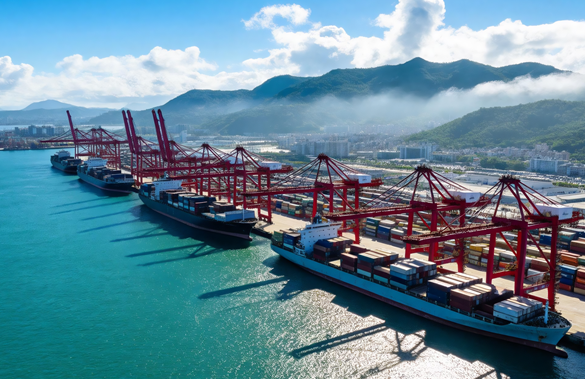
Full-scale green and intelligent overhauls have been carried out across ageing berth infrastructure, handling equipment and centralised monitoring systems, overhauling conventional high-emission operational patterns. Renewable power supply, automated electric machinery and zero-pollution production cycles now form standard daily operating conditions across the terminal precinct.
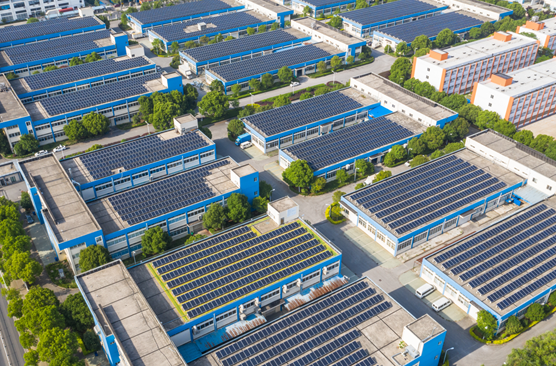
An innovative multi-source renewable energy framework combining small-scale wind generation, rooftop distributed photovoltaic arrays, ship-to-shore power supply and electric handling vehicles underpins the terminal’s carbon-neutral operation model. Three standalone 10-kilowatt small wind generators and a 9.26-megawatt rooftop solar installation operate continuously to deliver on-site clean power output.
Two low-voltage shore power supply units enable complete emission elimination for vessels moored alongside the berths. Over fifty pieces of battery-powered handling equipment including electric forklifts, reach stackers and automated guided vehicles have fully replaced internal combustion machinery, cutting fossil fuel consumption and airborne pollutants at the source.
Five interconnected intelligent monitoring systems run parallel to these energy assets, delivering end-to-end digital oversight covering loading and unloading workflows, real-time energy consumption tracking, environmental compliance supervision, carbon output accounting and equipment scheduling.
This integrated digital stack streamlines precision energy conservation and carbon reduction routines with consistent, regulated operational control.
Large-scale green infrastructure deployment proceeds at pace across the whole Yantai Port estate. Existing distributed photovoltaic installations deliver a combined capacity of 18.1 megawatts, with an additional 8.2 megawatts under construction.
Once all solar assets reach full operational capacity, annual clean power generation will exceed 30 million kilowatt-hours.
Onshore power supply facilities cover all 75 operational berths, with cumulative electricity delivered to moored vessels surpassing 25 million kilowatt-hours to date. Renewable power now accounts for 69 per cent of total energy consumed within port boundaries. Low-carbon operational frameworks have expanded beyond isolated demonstration berths to achieve widespread rollout across the entire port complex, delivering sustained clean energy momentum for intelligent green port development schemes.
Port-wide investment in renewable generation and digital monitoring hardware will continue over coming operational cycles. Further expansion of wind and solar assets, upgrades to shore power capacity and wider deployment of battery-powered handling fleets will lift the overall proportion of renewable energy consumed across all port terminals. Digital carbon tracking and energy optimisation platforms will receive iterative technical refinements to strengthen the replicable low-carbon port model developed at Yantai Port for adoption by coastal logistics hubs nationwide.
热门内容推荐