Wild Mushroom Season Takes Hold Across China, Yunnan’s Regulated Industry Boosts Supply of Foraged Fungi
As annual rainy seasons sweep across southwest China, the much anticipated wild mushroom eating season arrives, drawing widespread public enthusiasm for foraged fungi varieties unique to mountainous terrain. Multiple viral anecdotes circulate across domestic social platforms, illustrating the strong public allure of wild mushrooms. A former senior US Treasury official visited a Yunnan restaurant immediately after landing in China and ordered four plates of bolete mushrooms, while a resident in Guangxi waited more than three hours overnight to pick wild fungi once they grew an extra centimetre taller. Widespread awareness of mild toxic reactions from undercooked wild mushrooms has not lessened public willingness to seek out these seasonal delicacies.
Wild fungi carry a long-standing reputation as premium mountain ingredients, abundant in flavour-enhancing amino acids such as aspartic acid that deliver rich natural umami notes. Distinct species deliver varied sensory profiles: termite mushrooms offer bright, clean savouriness, Thelephora ganbajun provides chewy aromatic depth, bamboo fungus carries a delicate, light texture, and matsutake yields smooth, earthy richness. A well-known Chinese writer once documented decades of fond memories tied to Kunming’s wild mushroom harvests, noting how rainy weather triggers widespread fungal growth accessible to households of all income levels. For local diners, wild edible fungi stand far beyond seasonal food, representing rooted rural cultural heritage and a customary seasonal ritual passed between generations. Every mouthful captures nutrients nurtured within mountain forests and reflects long-standing regional culinary traditions.
Consistent consumer enquiries centre on the improved market availability of wild mushrooms, supported by official industry statistics. Yunnan hosts one of the world’s most diverse wild fungi populations, with 900 documented edible wild mushroom species, accounting for 36 per cent of global identified varieties and 90 per cent of China’s recorded edible fungal resources. The province’s natural annual wild mushroom reserve hovers around 500,000 tonnes, with actual harvest volumes fluctuating based on rainfall patterns and collection intensity. Output figures record steady year-on-year expansion, reaching 408,500 tonnes across Yunnan in 2025. Expanded market access for wild fungi reflects tangible growth in natural yields rather than temporary market trends.
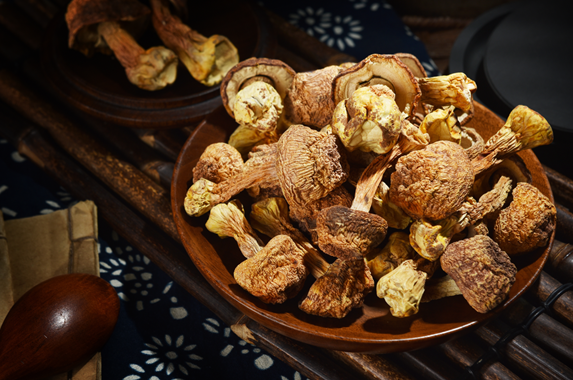
Sustained production growth for naturally occurring wild mushrooms stems from two core structural shifts within the regional industry. Though wild fungi grow naturally without artificial cultivation, local authorities across multiple Yunnan prefectures have rolled out targeted woodland management frameworks leveraging favourable terrain and climate zones. Dedicated wild mushroom growing woodlands adopt integrated understorey simulated cultivation technology, alongside germplasm resource enclosure protection, artificial propagation stimulation and contracted mountain forest fungus nurturing schemes. These stable managed habitats smooth out seasonal production volatility and deliver more predictable harvest volumes.
Parallel progress in standardised market governance further stabilises supply chains. The Moshuihua Wild Mushroom Trading Centre in Kunming, China’s largest dedicated wild fungi wholesale hub, launched the country’s first wild mushroom price index in 2023, tracking over 20 mainstream edible varieties. Real-time indexed pricing improves transparency for bulk buyers and consolidates Yunnan’s market pricing influence across national trade networks. On-site food testing laboratories within the trading complex block toxic mushroom specimens from entering retail channels. Higher market transparency and strengthened food safety oversight create balanced industrial conditions that support consistent year-round supply flows.
Shifting domestic consumption patterns and rising public focus on healthy diets drive surging market demand for matsutake, termite mushrooms and bolete varieties. Wild fungi enrich household dining options and operate as a major income generator for rural communities. Official agricultural output data contrasts national edible mushroom production metrics across key provinces. Henan recorded total cultivated mushroom output of 645,370 tonnes in 2024, generating an industrial value of 489.24 billion yuan. Yunnan’s combined cultivated and wild mushroom production reached 1.1941 million tonnes in the same year, with total industrial output exceeding 472.49 billion yuan. The near-matching economic value is largely attributable to high-value wild mushroom harvests within Yunnan’s portfolio.
Translating abundant natural fungal resources into sustained industrial advantage requires measures beyond informal seasonal woodland collection by individual households. Balanced industry development must reconcile controlled resource extraction with expanding consumer market demand. Standardised collection protocols under unified industrial frameworks lay foundations for balanced market cycles, given wild mushroom supplies sourced from scattered small-scale rural households. Formalised collection standards regulate harvesting timing and intensity to break repetitive cycles of over-picking, depleted yields, inflated pricing and intensified collection pressure. Ecological preservation and commercial exploitation operate as complementary rather than opposing priorities. Coordinated staggered harvesting schedules and guided orderly collection practices sustain long-term forest fungal ecosystems. Advanced deep-processing technology extends market availability beyond short rainy harvest windows, supporting production of freeze-dried wild mushroom products, condiments and functional nutritional goods to market both fresh and processed fungal goods year-round.
Industry infrastructure upgrades and ecological management frameworks will continue to shape long-term wild mushroom sector performance. For consumers and recreational foragers engaging with this year’s harvest season, food safety protocols take priority over pursuing seasonal culinary flavours, with strict preparation guidelines required to eliminate natural toxins present within unprocessed wild fungi.
热门内容推荐