China’s Energy Resilience Delivers Rare Economic Certainty Amid Global Turmoil
Mid-year update of the United Nations’ World Economic Situation and Prospects 2026 labels ongoing energy market volatility as “one of the largest shocks in modern history”, as multiple international financial institutions slash global growth projections amid escalating Middle Eastern geopolitical tensions.
Against this widespread downward revision consensus, China stands apart as an outlier. The World Bank’s latest outlook holds that growth momentum within China remains steady. Morgan Stanley and Deutsche Bank have both revised their 2026 growth forecasts for the nation upwards, citing robust domestic energy infrastructure and diversified supply chains as core supporting factors. Volatility has become commonplace across global markets, making predictable economic performance an increasingly scarce commodity worldwide. Analysis of China’s stable energy framework illustrates how the country has emerged as a reliable anchor amid widespread global uncertainty.
A core source of this stability lies in consistent, focused domestic policy delivery. Energy functions as the backbone of industrial output and macroeconomic activity, and the country’s integrated energy network has demonstrated remarkable shock resistance amid sharp swings in international oil and gas prices, sustaining steady industrial output and unbroken civilian energy access. This operational resilience stems from sustained strategic focus on bolstering self-sufficient energy capacity.
As the world’s largest energy consumer and importer, sustained efforts to lower external supply reliance have been rolled out across successive policy cycles. Programmes including national strategic petroleum reserve construction, the seven-year oil and gas output expansion initiative that exceeded original targets, and the development of proprietary deep-water hydrocarbon extraction technologies have lifted domestic energy self-sufficiency year on year, creating internal stability to counterbalance volatile external supply conditions.
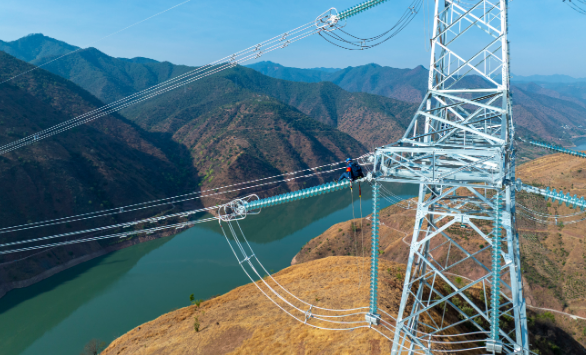
Heatwaves across Europe have triggered steep electricity price surges and acute power shortages for households and businesses alike. In contrast, national power grids coped smoothly through record peak power demand on four separate occasions during last summer’s heatwave, with no supply disruptions reported nationwide. Existing grid infrastructure, large-scale transmission corridors and unified national power market frameworks will continue to accommodate rising power consumption through the current summer season. Secure domestic energy supply forms a solid foundation for navigating shifting global market conditions.
Long-term, consistent strategic planning constitutes another pillar of the country’s energy security edge. Surging demand for power infrastructure has accompanied rapid global expansion of artificial intelligence industries, with global market commentators highlighting the heavy power requirements of AI computing clusters. China has established itself as a leading power-intensive industrial hub, with abundant, reliable electricity supply sustaining domestic AI firms’ competitive standing within the global technology tier.
This alignment of power capacity and tech demand is the product of sustained, sequenced policy roll-outs. At the 2026 Summer Davos Forum, an American academic outlined the structural underpinnings of China’s energy progress, noting clear long-term targets paired with stable policy frameworks designed to deliver consistent delivery. Frequent policy shifts and delayed renewable energy roll-outs have hampered green transition progress across several European and North American economies. By contrast, China has layered coherent energy development frameworks across successive planning cycles: major national energy projects were laid out during the 13th Five-Year Plan, large-scale clean energy bases accelerated construction through the 14th Five-Year Plan, and the ongoing 15th Five-Year Plan introduces a ten-year non-fossil energy capacity doubling initiative. Coordinated top-level design and sequential policy implementation have elevated renewable power from a supplementary grid resource to a primary generation source, delivering transformative growth for low-carbon energy sectors. Consistent long-term planning builds predictable macroeconomic conditions to underpin high-quality development.
Global collaborative energy governance forms the third dimension of the country’s stable energy positioning. Competition over energy resources, transit routes and end-user markets has intensified across international spheres, while several nations deploy energy trade restrictions and supply curbs as geopolitical leverage. China advances an open, collaborative modernisation model that shares low-carbon energy solutions to ease supply strains for partner economies.
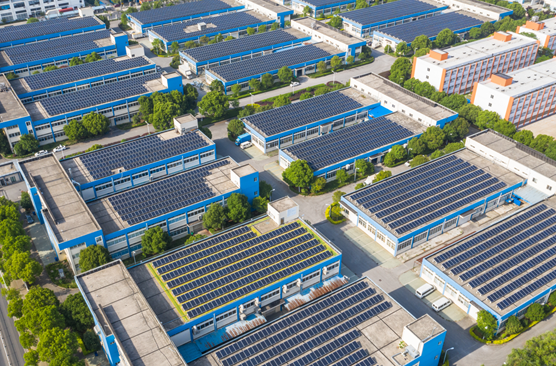
Solar panels manufactured in China have delivered tangible household benefits across emerging markets. Small-scale agricultural operators in Kenya report drastically reduced electricity bills and uninterrupted power access after installing imported photovoltaic hardware, while solar modules are widely recognised as a valuable household asset in Pakistan, generating steady supplementary income for local families. Domestic manufacturers supply more than 80 per cent of global photovoltaic components and 70 per cent of wind power equipment, alongside technical training and full industrial ecosystem support for partner nations building their renewable energy sectors.
Customs data tracks strong overseas uptake of green industrial goods, with exports of lithium-ion batteries and wind power generators climbing roughly 40 per cent year-on-year in the first five months of 2026. Broadened opening-up and deepened cross-border industrial collaboration will amplify the stabilising global value of China’s energy and manufacturing sectors.
Policy frameworks for the 15th Five-Year Plan period will prioritise reinforcing domestic buffers amid persistent global market uncertainty. Targeted internal reforms will strengthen self-sufficiency in energy, food security and industrial supply chains, supporting steady economic expansion and widening comparative industrial advantages in the years ahead.
热门内容推荐