Scenario-led AI Deployment to Unlock New Intelligent Economic Forms Across Industry, Daily Life and Urban Governance
Artificial intelligence has moved beyond isolated technical breakthroughs into a phase of cross-sector enablement. Transparent algorithms, computing power and model frameworks must be translated into tangible goods, services and integrated solutions to foster new intelligent economic models. Real-world operational scenarios stand as a core strategic resource to resolve this transformation challenge, bridging the gap between laboratory research and mass manufacturing, and embedding virtual digital tools within physical social systems. Unlike standalone technical research, scenario-based rollout prioritises integrated innovation combining technology, market demand and industrial ecosystems. Real-world pilot and value verification environments support deep integration between AI systems and all layers of economic and social activity.
A consistent guiding framework shapes deployment progress: tailoring technical solutions to defined scenarios, opening application spaces to nurture industrial clusters, and leveraging digital tools to streamline public governance. Stakeholders target priority sectors to resolve deployment bottlenecks and build a closed-loop system covering demand identification, collaborative innovation and large-scale commercial rollout. China’s super-sized consumer market, complete industrial supply chains and extensive real-world use cases are channelled to generate fresh growth momentum for intelligent economic development.
Large-scale Industrial Scenarios Form the Foundation of Intelligent Economic Growth
Manufacturing constitutes the backbone of national economic activity, and embedding AI tools across full industrial value chains unlocks multiplicative economic benefits. Scenario development addresses efficiency bottlenecks and structural constraints as sectors advance towards high-end, intelligent and low-carbon operation.
Global benchmark lighthouse and dark factory deployments are prioritised for complex process and discrete manufacturing sectors including steel, petrochemicals, automotive production and high-end equipment manufacturing. These flagship deployments deliver end-to-end intelligent operation spanning research and design, supply chain co-ordination, production, quality inspection and predictive equipment maintenance, rather than limited robotic replacement for single production steps. Industrial large language models, digital twin architecture and interconnected robot fleets dismantle internal data silos within manufacturing sites, enabling adaptive resource allocation and optimised scheduling. Replicable digital factory operating systems are generated to provide scalable upgrade templates for manufacturing sectors nationwide.

Industrial brain frameworks extend intelligent enablement beyond individual factory premises to full industrial clusters. Integrated platforms pairing industrial brains with future factory infrastructure target strategic emerging sectors such as integrated circuits, new energy vehicles and biopharmaceuticals. Centralised industrial data hubs aggregate cross-chain metrics covering supply and demand volumes, production capacity, inventory levels, talent pools and financial services. AI-driven analytics deliver real-time industrial trend monitoring, risk alerts and cross-factory co-ordination, guiding product development cycles and flexible production scheduling at downstream facilities. This model expands intelligent economic support from individual manufacturers to full industrial chains, enabling efficient resource redistribution and targeted innovation resource allocation across wider geographic areas, spawning networked collaborative manufacturing and data-backed supply chain finance services.
Open test and verification scenarios address bottlenecks hindering industrialisation of core domestic technologies including advanced AI chips, proprietary industrial software and independent operating systems. Industry-leading operators release anonymised production line data and operational environments to form joint innovation consortia with research institutes and small-scale manufacturers. Frontline technical adaptation, testing and iterative optimisation take place under genuine operational load conditions. Co-developed scenario platforms accelerate maturation of core domestic technologies, lowering barriers and risks associated with scaling first-of-a-kind equipment, and reinforcing self-reliant technical foundations for the intelligent economy.
Future Living Scenarios Expand Intelligent Economic Consumption Potential
Rising public demand for high-quality daily services delivers sustained domestic consumption momentum for intelligent economic expansion. Scenario-based innovation responding to livelihood priorities generates new consumer segments and novel service models, broadening the scope for intelligent economic growth.
Upgraded human-machine coexistence household frameworks nurture native intelligent consumer hardware. Next-generation intelligent terminals and embodied AI agents transform residential spaces into integrated service hubs, moving beyond isolated connected home appliances. Domestic service robots, wearable health monitoring hardware and intelligent environmental control systems form self-aware household ecosystems capable of interpreting and responding to resident requirements. Priority deployment covers elderly care support, children’s companion services and domestic health monitoring via multi-modal sensing and embodied intelligence platforms. Continuous, unobtrusive intelligent assistance covers personalised nutritional planning, adaptive sleep environment regulation and autonomous domestic cleaning machinery, creating a large, diversified native intelligent consumer market.
Reimagined mixed physical-digital retail frameworks revitalise offline commercial activity. Augmented reality, virtual reality and digital twin systems deliver immersive interactive upgrades for shopping districts, pedestrian precincts and tourist attractions, creating seamless hybrid future commercial and scenic zones. Virtual digital human assistants collaborate alongside on-site retail staff to deliver personalised styling recommendations and immersive remote shopping experiences. Extended sensory capabilities and enriched interactive content deliver unique experiential value, unlocking domestic consumption potential and lifting urban commercial appeal.
Inclusive, targeted public service scenarios unlock sustained investment demand across social sectors. Educational, medical, cultural and sporting service deployments bridge digital access divides and deliver equitable intelligent public resources. Intelligent medical frameworks integrate 5G connectivity and AI to support remote minimally invasive surgery, computer-aided diagnostic imaging and personal health digital twin profiles, distributing premium medical resources to grassroots communities. These dual-purpose livelihood and industrial scenarios attract long-term capital investment in new digital infrastructure and intelligent service frameworks, establishing mutually reinforcing cycles of consumption expansion and targeted infrastructure investment.
Modern Governance Scenarios Optimise the Intelligent Economic Operating Ecosystem
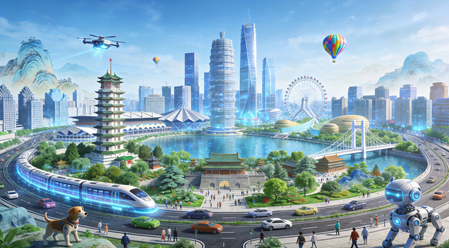
Managing hyper-scale urban systems presents complex global challenges, while simultaneously delivering extensive real-world test environments for integrated AI deployment. Constructing and administering cities as unified intelligent organisms forms a strategic frontier for advancing new intelligent economic models.
Digital twin urban infrastructure delivers full-spectrum real-time monitoring and forward-looking decision support. Building information modelling, geographic information systems and internet-of-things hardware generate complete digital replicas of physical urban environments, with live data streams mapping transport, water supply, power, gas and meteorological infrastructure. Urban planners run multi-variant simulation assessments within virtual twin environments to evaluate transport, drainage and environmental impacts of proposed transit construction, selecting optimal development pathways. This foundational governance infrastructure drives demand for specialised intelligent solutions covering urban planning, construction and daily municipal management.
City-wide integrated intelligent safety frameworks establish robust risk mitigation mechanisms against extreme weather events, geological hazards and industrial safety incidents. All-weather air, land, sea and space sensor networks support AI-powered early warning systems. Coastal flood control platforms combine meteorological forecasting, tidal hydrology, pipeline flow data and geographic mapping to simulate inundation trajectories up to seventy-two hours in advance, pinpointing high-risk zones and generating automated contingency plans covering flow regulation, emergency stockpiling and population evacuation. Low-power sensor fleets paired with edge computing identify subtle anomalies including gas pipeline leakage and structural strain on bridge infrastructure, shifting municipal safety management from reactive incident response to proactive risk prevention. Forward-looking safety systems underpin stable expansion of intelligent economic activity.
Agile collaborative regulatory frameworks drive institutional innovation to accommodate emerging intelligent economic formats. Regulatory sandboxes and trigger-based oversight mechanisms create balanced, prudent operating environments for novel technologies and industrial models. City-level open test corridors for autonomous mobility allocate dedicated road space and operational windows for real-traffic trials, with continuous data sharing between operators and oversight bodies enabling parallel technical iteration and regulatory refinement. These multi-purpose test environments deliver both technical validation and institutional stress testing, refining national AI governance frameworks and fostering reciprocal progress between technical and institutional innovation.
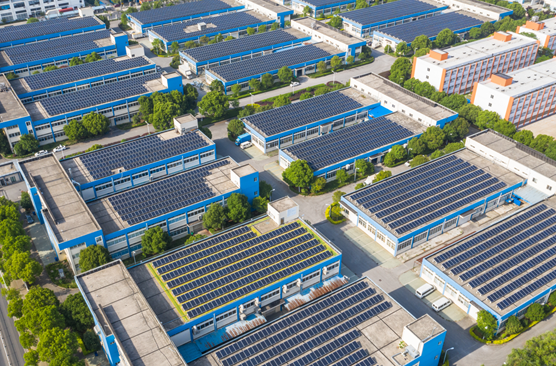
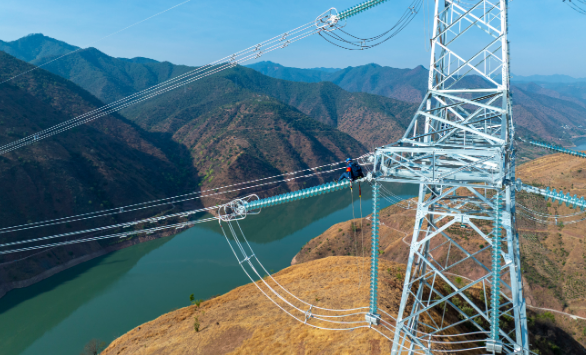
Widespread rollout of scenario-based AI deployment across industrial, residential and governance spheres accelerates the evolution of China’s modern energy and digital systems, advancing national low-carbon economic transition.
热门内容推荐