Ningxia’s Policy Overhaul Unblocks Agricultural Tech Transfer, Delivers Tangible Farmer Income Gains
According to Farmers’ Daily, countless high-yield crop varieties including premium wolfberry, saline-resistant rice and blight-resistant potato strains have long remained confined to laboratory trials, with structural bottlenecks slowing large-scale field rollout. Growers stand ready to boost earnings via improved seed stock, yet administrative and institutional barriers have repeatedly stalled technical extension work. Ningxia Hui Autonomous Region has rolled out a full suite of reforms covering liability exemptions, intellectual property rights reallocation, targeted financial backing and dedicated industrial platforms to streamline the entire technology commercialisation pipeline, translating lab-bred crop innovations into steady household revenue for rural producers.
Policy Reforms Remove Researchers’ Risk Aversion
Across Zhongning County’s sprawling wolfberry plantations, clusters of Ningnongqi No.18 bear abundant fresh fruit. Lead wolfberry breeder Cao Youlong, based at Ningxia Academy of Agriculture and Forestry Sciences, outlines historic operational restraints. Research teams once restricted elite cultivars to small trial plots, as any yield losses or disease outbreaks following mass planting would fall entirely on the research division. Promising germplasm sat unused while farmers lacked high-performance seedlings, creating mutual commercial losses for both agricultural scientists and rural operators.
A culture of risk avoidance pervaded agricultural research bodies nationwide. In March this year, five local authorities led by the Department of Science and Technology of Ningxia issued a trial guidance document outlining due-care liability exemptions for technology transfer staff. The framework defines 11 distinct scenarios where researchers bear no administrative accountability for financial losses stemming from field trials or market volatility, provided all procedures are followed and no private gain is sought. Field outreach and variety demonstration work now carry no punitive risk for participating scientists.
Ningxia has built a layered regulatory framework spanning multiple years to accelerate agricultural innovation rollout. A dedicated commercialisation statute enacted in 2018 mandates that all fiscal-funded agricultural research projects complete field demonstration within 12 months of project closure. A pilot scheme for rights assignment prior to full commercial transfer launched in 2022, followed by a 2025 special management regulation offering individual project grants capped at RMB 5 million, with supplementary funding available for landmark crop varieties.
Market outcomes reflect the policy overhaul’s tangible impact. Uptake of integrated green pest management for wolfberry has cut regional pesticide application volumes by 20 per cent. A commercial entity secured exclusive breeding rights to core cultivars for a payment of RMB 7.1 million, lifting benchmark purchasing prices for wolfberry raw materials across county supply chains.
Zhao Jian, director of the technology transfer division at Ningxia Academy of Agriculture and Forestry Sciences, divides his schedule between institutional labs and field growing bases and notes a stark shift in staff engagement metrics. Outreach activity previously held little weight in academic performance reviews and promotion assessments. Eighty per cent of all commercialisation proceeds now flow directly to the research teams behind each innovation, while successful field deployment acts as a core evaluation benchmark. Separate asset accounting rules apply to institutional research outputs, removing rigid state-owned asset return thresholds that once deterred experimental rollout. Over the past three years, the academy has formalised rights assignment for 83 institutional innovations and completed 263 commercialisation transactions, with cumulative contract value reaching RMB 37.535 million. The suite of transferred technologies has lifted production margins across wolfberry, rice and potato industrial chains.
Dedicated Platforms Bridge Labs and Field Growing Operations
Modern greenhouse facilities in Helan County deliver balanced crop yields across all cultivated vegetable lines. Leading grower Zhang Baoguo recounts past frustrations with disjointed technical support. Early attempts to adopt water-saving irrigation systems came with one-off seedling supply but no sustained guidance on fertiliser scheduling or pest control mitigation. Current arrangements grant research teams a ten-year mandate for continuous on-site technical coaching, slashing trial-and-error costs for commercial growers. The revised irrigation system delivers a 40 per cent reduction in water consumption alongside a 15 per cent yield uplift, drawing regular study visits from more than twenty neighbouring farming co-operatives.
Favourable regulatory frameworks alone cannot resolve gaps in intermediate pilot and demonstration land parcels, which form a critical missing link between laboratory development and mass field cultivation. Leveraging the Academy of Agriculture and Forestry Sciences and Yinchuan municipal pilot hubs, Ningxia has built a network of dedicated transfer infrastructure to lower entry barriers for farmers adopting new crop varieties.
Regional agricultural research teams tailor germplasm selections to match varied growing conditions across irrigated plains, mountain highlands and resettlement villages, delivering consistent income growth at every demonstration site.
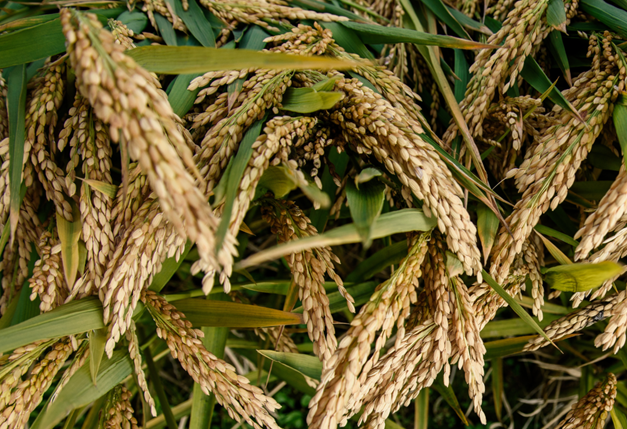
Eighteen hundred mu of saline rice demonstration plots in Litong District, Wuzhong City, bear fully mature panicles. Lead breeder Sun Jianchang outlines decade-long shifts in researcher incentives. Variety extension previously generated minimal supplementary revenue, while academic promotion criteria prioritised peer-reviewed publications over field results, discouraging long-term postings on saline land improvement projects. The revised profit-sharing and assessment structure allows sustained field-based breeding work. On-site yield testing records a harvest of 712.9 kilogrammes per mu for Minning No.1, meeting top-grade high-quality rice standards, with stable yields of 550 kilogrammes per mu on saline land. The complete technology package transferred for a contract fee of RMB 660,000. Soft rice cultivar Yanningxiang has won official recognition for premium grain quality, lifting market purchase prices and steadying disposable income for rice-growing households.
Potatoes form the primary revenue stream for rural households across southern Ningxia mountain zones, with common scab disease long suppressing industrial output potential. Ma Jianjun, site manager of the Jiantaibao industrial park in Xiji County, cites historic reluctance to trial new cultivars. Severe scab outbreaks once triggered total crop failure across large planting zones, with substrate replacement costs reaching RMB 10,000 per mu and deterring investment in untested seed stock. Researchers presented the region’s liability exemption framework alongside technical solutions, removing administrative risk concerns and enabling wide-scale rollout of integrated green disease control. The county now hosts 51,000 mu of demonstration plots under sustainable pest management, halving disease incidence rates. Cumulative industry losses avoided exceed RMB 28 million, while annual operational expenditure savings at industrial parks stand at RMB 5 million, delivering an 800 RMB per mu income increase for more than 20,000 potato-growing households.
Resettlement villages in northern Ningxia generate diversified revenue via circular protected agriculture systems. Orchard Village in Shizuishan City operates a triple cropping rotation combining muskmelon, straw mushroom and morel mushroom. Full-time grower Wang Xiulian carries out mushroom harvesting and describes the shift from single-season chilli cultivation, which steadily depleted soil fertility and delivered slim annual margins. The multi-crop rotation system adds RMB 3,000 per mu in annual household revenue, while greenhouses create local casual employment for elderly relocated residents. Monthly personal earnings have risen by RMB 3,500, with collective village income climbing by over RMB 200,000 per annum and lifting living standards for relocated rural households.
Yinchuan acts as Ningxia’s core hub for agricultural innovation commercialisation, consolidating resources into a unified cross-industry service network. The platform integrates research institutes, large-scale agricultural operators, family farms and co-operatives under a unified model combining intellectual property assignment, direct technology transfer and revenue sharing. Research teams secure ten-year independent rights to conduct field extension work, with dedicated administrative fast-track channels for all commercialisation paperwork. Annual fiscal support of RMB 20 million funds agricultural pilot and concept verification facilities, eliminating logistical gaps in technical delivery to rural sites. Improved Tan sheep breeding technology in Yongning County lifts lamb survival rates to 96 per cent, delivering a RMB 120 revenue increase per finished animal. Integrated rice-aquaculture systems promoted in Zhangzheng Town generate an extra RMB 2,600 per mu, placing practical agronomic innovation within direct reach of local growers.
Full-Cycle Rural Support Builds Sustainable Agricultural Prosperity
Field-based research forms the core of successful technology dissemination, according to Li Zhenyong, a long-serving field scientist at Ningxia Academy of Agriculture and Forestry Sciences. Regular rural outreach enables researchers to align laboratory innovations with on-farm production constraints, acting as a liaison bridging academic R&D and commercial agricultural demand.
Dual support mechanisms operate under coordinated policy and platform infrastructure. Structured practical training sessions upskill research teams to engage commercial markets, while pre-outreach briefings for growers explain liability exemption rules to eliminate hesitation around trialling unproven varieties. Integrated innovation, industrial, capital and talent development programmes run concurrently, backed by regular regional policy briefings and permanent on-site research demonstration teams. More than fifty industry-research matching events are held across the region each year.
Local science authorities outline sustained outreach plans covering village and enterprise sites to communicate policy benefits to research staff and rural producers. The full regional framework relies on liability exemptions to reduce risk, intellectual property reforms to unlock commercial incentives, dedicated fiscal grants for capital expenditure and industrial platforms to coordinate deployment. The combined measures clear persistent bottlenecks in technology transfer, creating a seamless pipeline from laboratory development to field cultivation. Agricultural innovation drives advanced productive forces across rural areas, delivering simultaneous industrial upgrading and household income expansion.
Regional agricultural technology transfer metrics record an average annual growth rate of 28 per cent over the past three years, with more than 50,000 rural households recording higher disposable income via improved seed varieties and sustainable growing techniques. Frontline researchers, commercial growers and agricultural enterprise operators report the reform suite has removed administrative barriers to field outreach. Crop cultivars and low-carbon pest management systems previously confined to laboratory testing have been widely adopted across rural landscapes, reinforcing the competitiveness of Ningxia’s signature agricultural sectors and establishing consistent revenue channels for rural households. The integrated innovation framework delivers stable scientific and technical backing for high-quality development of rural industrial chains across the autonomous region.
热门内容推荐