Second Hualong One Unit at Taipingling Nuclear Plant Connects to Grid in Greater Bay Area
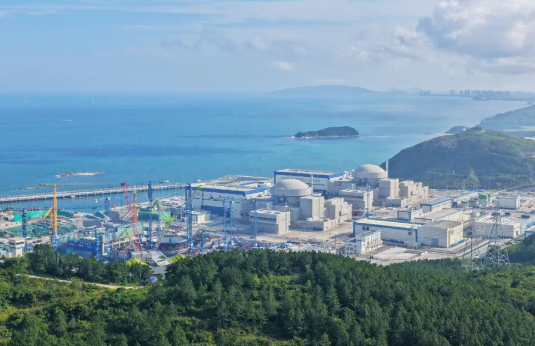
According to Xinhua News Agency, Unit 2 of CGN’s Taipingling nuclear power station in Guangdong achieved its first grid connection at 09:16 on 4 July, generating its initial kilowatt-hour of electricity. The milestone confirms the second reactor at the Guangdong-Hong Kong-Macao Greater Bay Area’s first dedicated Hualong One nuclear complex has full capacity to feed power into regional transmission networks, marking a vital advance towards full commercial operation.
Construction work on Unit 2 broke ground on 15 October 2020, built around Hualong One, China’s domestically developed third-generation pressurised water reactor with complete independent intellectual property rights. Inspections carried out on site immediately after grid synchronisation confirm steady operational performance, with all technical metrics matching pre-set design benchmarks. A full sequence of verification trials will unfold in line with established operational schedules to assess the unit’s full operational capability, with commercial power generation scheduled to launch in the latter half of 2026.
Calculations based on average national nuclear utilisation hours recorded in 2025 outline the station’s long-term energy output profile. Once fully operational, Unit 2 will produce more than 9 billion kilowatt-hours of clean electricity each year, a volume sufficient to cover the annual industrial and residential power consumption of roughly one million local residents. The facility will deliver equivalent annual carbon dioxide cuts exceeding 8.3 million tonnes, easing carbon intensity pressures across the Greater Bay Area’s industrial and urban energy systems.
The Taipingling site holds planning consent for six Hualong One reactors split across three construction phases, with Unit 1 entering commercial service back in April 2026. Digital and intelligent construction solutions ran through the full build cycle of Unit 2, delivering multiple refinements to core equipment manufacturing, site assembly and pre-commissioning workflows. Widespread adoption of self-developed control systems and steam generator hardware has strengthened the domestic supply chain for key nuclear components throughout the project.
Rising electricity demand continues to characterise the Greater Bay Area, which recorded the country’s highest provincial power consumption volume in 2025. Additional low-carbon baseload supply from Taipingling’s second unit will reinforce the stability of regional power grids, while balancing the mix of fossil fuels, wind and solar generation deployed across southern Guangdong. Further commissioning tests will proceed uninterrupted over the coming months to clear the final technical hurdles standing before full commercial dispatch.
热门内容推荐