Deepen Pragmatic Cooperation, Expand Mutual Opportunities Exclusive Interview with Karl Hartleb, Managing Director of Internationalisation Center Styria
Centered on Graz, the capital city of Styria, Austria, the region gathers high-end manufacturing, cutting-edge research and premium vocational education resources, serving as a pivotal hub for economic, industrial and talent exchanges between China and Europe. Our reporter recently conducted an exclusive interview with Karl Hartleb, Managing Director of Internationalisation Center Styria. The in-depth dialogue covered the region’s industrial strengths, economic and trade ties with China, vocational education collaboration, communication and trust-building for internationalisation, elaborating on long-term cooperation achievements and new paths for bilateral synergy.
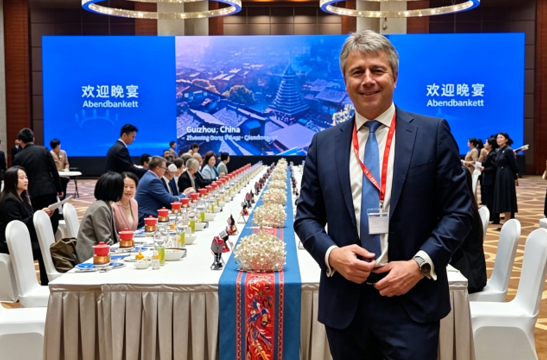
Managing Director of Internationalisation Center Styria, Karl Hartleb
Integrated Multi-sector Strengths Build a European Hub for Science, Research and Industry
Asked about the international positioning of Styria and Graz, Hartleb stated that the region integrates tourism, university research and advanced industries to form unique comprehensive competitive edges.
Mountain tourism featuring skiing, hiking and nature-based travel is mature and well-developed, continuously attracting global visitors. As a youthful university city, Graz hosts numerous higher education institutions with a large student population, laying a solid foundation for regional education and research. Close integration between universities, research organisations and industrial enterprises enables Styria to boast one of Europe’s highest R&D intensities, far exceeding Austria’s national average, and delivers sustained technological support for industrial innovation. The coordinated development of diverse sectors jointly shapes the region’s core competitiveness in global engagement.
Distinct Industrial Clusters Create Ample Export Potential for the Chinese Market
Hartleb introduced that Styria has fostered multiple globally competitive export industrial chains, driven by dual growth engines of innovation and foreign trade.
Key competitive sectors include mobility, machinery and automation, steel and advanced materials, pulp and paper, timber products, electronics, testing and measuring equipment, life sciences, green technology and industrial automation. Supported by a complete mobility industrial ecosystem, the region manufactures complete vehicles and a full range of components for German automotive manufacturers. High-end steel and advanced materials are widely applied in automotive, aircraft, aerospace and defence sectors. Leveraging the Silicon Alps ecosystem, the region boasts robust capabilities in electronics and chip design, while hydrogen energy and sustainable industrial processes emerge as emerging growth areas.
Styria maintains a consistent trade surplus with an export-driven economic structure. Germany, the United States, Italy and China rank as its four core overseas markets, with China occupying a strategically important position in the region’s export layout.
Building a Service Platform to Advance Two-Way Economic and Trade Links Between Chinese and Austrian Enterprises
On economic and trade cooperation with China, Hartleb pointed out that China stands as a major trading partner for Styria. Many renowned local and Austrian enterprises have established operations in China, covering environmental technology, paper manufacturing, hydroelectric power, automotive engineering, precision testing, logistics automation, steel application and rail systems.
As an official regional export service body, Internationalisation Center Styria’s core mandate is to assist local enterprises in tapping overseas markets. For the Chinese market, the Centre maintains close cooperation with Austrian trade offices and partners in Beijing, Chengdu, Guangzhou, Shanghai and Hong Kong. It delivers full-cycle market entry services: supporting enterprises in pre-entry market research, matching local industrial partners, identifying local business opportunities, and guiding them to set up permanent operations and develop regular businesses in phases, thus building a stable and pragmatic cooperation channel for enterprises from both sides.
Drawing on Dual Education Experience to Explore Sustainable Long-term China-Austria Vocational Education Cooperation Models
Vocational education constitutes a core priority for bilateral local cooperation. Hartleb recalled a previous pilot project launched in Shanghai that introduced modules of Austria’s dual education system, focusing on mechatronics and industrial practical skills training. While the pilot delivered positive results, scalability and sustainable operation remained prominent challenges.
He analysed that China now boasts a large cohort of young vocational graduates, and industrial upgrading generates growing demand for internationally recognised skill certification standards, opening broad prospects for bilateral collaboration. An optimal cooperation framework can combine Austria’s mature vocational education standards and certification expertise with China’s training infrastructure, industrial parks and global demand for skilled workforce to realise complementary advantages. WIFI, the vocational training institute under the Austrian Federal Economic Chamber, possesses mature systems for continuing education, welding and technical training with deep industry linkages, making it a qualified core partner for China-Austria vocational education cooperation. Both sides may jointly develop standardised skill training and qualification certification platforms to underpin high-quality development of manufacturing industries.
Optimise Communication Channels and Consolidate International Cooperation via Long-term Mutual Trust
Hartleb shared pragmatic approaches to cross-border communication, trust cultivation and international outreach. At present, economic media in China is rapidly shifting toward online and social media distribution. Even small teams can achieve extensive global exposure as long as their content is picked up by official and commercial media channels.
In recent years, Chinese economic and trade delegations have paid more frequent visits to Europe, and today’s cooperation frameworks focus more on tangible deliverables compared with a decade ago. He stressed that China’s internationalisation agenda requires more than large-scale investment; progressive partnership development, regular mutual visits, local network cultivation and proactive market preparation carry greater significance. Graz and Styria stand ready to act as reliable partners for China-Europe cooperation, steadily advancing exchanges through enterprises, vocational education, media and practical projects. Bilateral trust will be accumulated through long-term interactions to drive deeper and more sustainable cooperation.
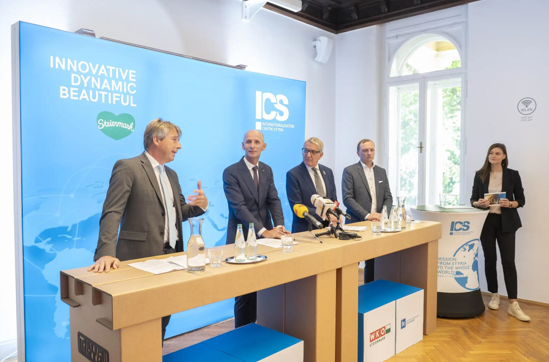
This exclusive interview clearly demonstrates the extensive alignment between Styria, Austria and China in industrial trade, scientific research, vocational education and people-to-people communication. With deepening economic and trade exchanges between China and Europe, both sides will continuously unlock two-way cooperation potential through communication platforms operated by local professional service institutions. Industrial coordination, joint talent training and people-to-people connectivity will further enrich the connotation of pragmatic China-Europe cooperation.
热门内容推荐