Global Digital Economy Conference 2026 Unveils Suite of International Standards and Cross-border Digital Cooperation Outcomes
According to China News Service, the outcome release conference for the 2026 Global Digital Economy Conference was held in Beijing, marking a landmark industry gathering opening the 15th Five-Year Plan cycle. Senior officials from Beijing municipal authorities, district management bodies, international alliance secretariats and industry associations delivered keynote addresses outlining the conference’s cross-border collaborative framework and tangible digital innovation deliverables.
Shu Bilei, Deputy Secretary-General of the Beijing Municipal People’s Government, delivered opening remarks at the outcome briefing. Digital economic expansion acts as a core driver for new quality productive forces and industrial digital transformation, he stated. This year’s event centres thematic debate on artificial intelligence, digital governance and data element circulation, advancing local implementation of the digital inclusivity framework across Beijing while reinforcing China’s collaborative commitments to global digital development. The conference has rolled out an expanded multi-dimensional activity schedule, broadened international participation channels, released a series of authoritative research reports and benchmark evaluation criteria, and finalised a portfolio of innovative joint ventures and collaborative laboratories, injecting substantial momentum into an open, mutually beneficial global digital economic landscape.
Li Zelin, Deputy Party Secretary and Director of the Administrative Committee of Chaoyang Park, addressed delegates on the district’s role as the core host venue for the conference. Chaoyang District has hosted and co-organised a full spectrum of featured activities covering artificial intelligence, digital medical services, intelligent elderly care, digital advertising, AIGC and esports, including themed forums, OPC Co-creation Festivals, product premiere showcases and digital consumption exhibitions, with a wide array of cutting-edge digital innovations put on public display throughout the event cycle.
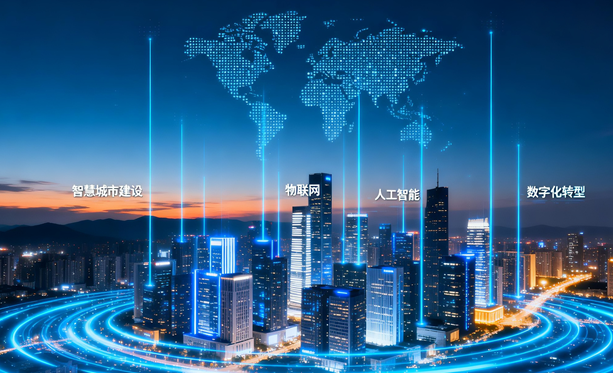
Yu Jing, Secretary-General of the Global Digital Economy Cities Alliance, outlined the platform’s expanding international footprint. The alliance now incorporates 48 partner cities and 52 institutional members, with nearly 40 high-level international delegations, more than ten intergovernmental organisations and over 80 overseas chambers of commerce taking deep participatory roles in conference proceedings. Four leading international bodies serve as co-hosts for the 2026 conference: the United Nations Development Programme, the United Nations Industrial Development Organization, the World Data Organization and the Global Digital Economy Cities Alliance. Three flagship international publications were formally launched during the event. The 2026 Global Digital Economy Lighthouse Case Compendium, jointly selected by the International Telecommunication Union, the International Trade Centre and the Global Digital Economy Cities Alliance, draws thirteen benchmark models from 308 valid submissions spanning six continents and more than sixty countries. The Global Digital Economy Urban Development Report was published alongside the Global Digital Inclusive City Evaluation Guidelines, a framework compiled under the lead of the United Nations Development Programme.
Zhao Junsheng, Deputy Secretary-General of the China Communications Enterprises Association, shared aggregated attendance and media metrics from the full conference run. Keynote and thematic forums hosted in excess of ten thousand invited speakers, with over three thousand enterprises engaging in face-to-face industry exchanges. Total offline participant volumes surpassed eighty thousand, while concurrent digital industry expositions recorded more than fifteen thousand individual visitor entries. Over 31,700 related media reports were generated across the event cycle, with conference coverage reaching third position on national social media trending rankings. More than two hundred formal industrial and research outcomes were unveiled across all forum sessions. A pioneering city-wide linkage model has been deployed for the first time, stretching event activities from the National Convention Centre to key districts across Beijing, with satellite sub-forums staged in Geneva, Switzerland and Lhasa, Xizang.
Liu Weiliang, Party Group Member and Deputy Director of the Beijing Municipal Bureau of Economy and Information Technology, outlined the long-term strategic positioning of the annual conference. The event advances the digital inclusivity agenda with city-level implementation frameworks, establishing shared benchmarks and collaborative blueprints for urban digitalisation worldwide. The platform operates as a core venue within Beijing for new technology debuts, innovative scenario rollouts, industrial project landing and digital ecosystem incubation, evolving from a bilateral exchange hub into a primary channel for sharing China’s digital development frameworks with global stakeholders. The conference will continue to expand its network of collaborating international organisations, elevating its global standing and amplifying the influence of each branded thematic forum series.
Three pivotal municipal research reports and technical standards were released collectively during the outcome briefing: the Beijing Digital Economy Development Report (2025–2026), the White Paper on Beijing Informatisation Standard Construction, and Technical Specifications for Artificial Intelligence Computing Centres. A formal partner accreditation ceremony was held alongside awards presentations for Outstanding Organisation, Outstanding Communication and Distinguished Contribution. Award recipients include the Global Digital Economy Cities Alliance, the China Communications Enterprises Association, Xinhua News Agency Beijing Branch and the China Academy of Information and Communications Technology.
热门内容推荐