China’s Homegrown Cruise Liners Fuel Booming Domestic Maritime Tourism and Industrial Upgrade
International media outlets have widely recognised the rapid expansion of China’s domestic cruise tourism market, driven by the successful operation of homebuilt large-scale cruise vessels and innovative travel product upgrades. China’s cruise sector has maintained double-digit annual growth in recent years, establishing itself as one of the fastest-growing cruise markets across Asia and the globe, with new consumption scenarios continuing to emerge alongside rising consumer demand for maritime travel experiences.
China’s first domestically built large cruise ship, Adora Magic City, has launched the country’s first destination-free offshore cruise route, departing from Shanghai Wusongkou International Cruise Port. Unlike traditional itineraries that include multiple port calls, the new short-haul cruise model features open-sea navigation without intermediate berthing and returns directly to the home port. Tailored for weekend leisure travel, the route departs on weekends and returns on early Monday mornings, offering compact and relaxing maritime getaways for urban travellers.
The vessel hosts a full lineup of on-board entertainment, including stand-up comedy performances, magic shows, themed parties and round-the-clock catering services, enabling passengers to enjoy immersive cruise experiences entirely on board. According to Travel and Tourism World, the innovative route design represents a creative breakthrough in cruise route planning, reshaping conventional cruise travel patterns centred on shore excursions.
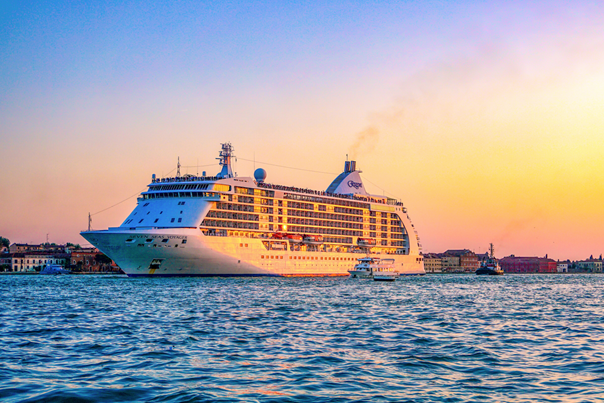
Cruise Map, a German cruise data platform, notes that the destination-free cruises prioritise on-board experiential consumption, providing a flexible alternative to long-distance cruise journeys. Cruise operators have enriched diversified entertainment and catering facilities to match the market positioning of short leisure offshore trips, catering precisely to the rising demand for high-quality weekend travel among Chinese consumers.
Market expansion continues with the upcoming launch of China’s second domestically built large cruise ship, Adora Flower City. Its maiden voyage tickets have been officially available for sale since May 20, with the debut cruise scheduled to set off from Guangzhou Nansha International Cruise Home Port on 22 November. According to Singapore-based Lianhe Zaobao, the vessel completed a 12-day sea trial recently, marking a key milestone before official delivery and following its undocking in March.
Adora Flower City stretches 341 metres in length with a gross tonnage of 141,900 tonnes, housing 2,130 rooms and suites capable of accommodating up to 5,232 guests. As the sister ship of Adora Magic City, the new vessel delivers comprehensive upgrades in spatial design, intelligent technology and passenger experience, setting new benchmarks for China’s domestic cruise manufacturing standards.
Industry data from the 2025 China Cruise Industry Development Report shows robust market growth momentum. China’s cruise passenger volume reached 1.265 million person-times from January to November 2025, representing a year-on-year increase of 27.8 per cent. Domestic Chinese cruise operators have seen their market share surge from less than 10 per cent in 2019 to 40 per cent, highlighting the rapid rise of homegrown cruise brands.
Multiple national policy documents have laid solid institutional support for industry development. Relevant central authorities issued the Special Action Plan for Boosting Consumption in spring 2025, proposing continuous enrichment of cruise routes and tourism products. Later in the same year, the Ministry of Transport and the Ministry of Culture and Tourism jointly released supportive measures to encourage the development of long-haul routes including Maritime Silk Road and global cruise itineraries, as well as diversified “cruise plus” consumption scenarios to activate market potential.
Nikkei Asia states that large-scale cruise tourism has become a key consumption driver for China’s economic expansion. The sector integrates high-end manufacturing, maritime transportation and cultural tourism, forming a comprehensive industrial system that stimulates regional consumption and employment growth. Every homegrown large cruise vessel delivers substantial consumption spillovers for both on-board services and onshore supporting industries.
US travel magazine Traveler highlights the booming operation of Adora Magic City, which has completed dozens of voyages and served hundreds of thousands of passengers. The vessel’s stable commercial performance reflects strong market demand for domestic cruise travel. The expansion plans of local cruise enterprises align closely with China’s strategic layout for high-end manufacturing and tourism upgrading. Continuous investment in cruise port infrastructure across coastal cities further underpins the industry’s long-term development.
US financial news platform Quartz observes that China’s thriving cruise market benefits from optimised border clearance policies and diversified travel combinations such as “high-speed rail plus cruise” and “air plus cruise”. The improved cross-border travel convenience has attracted a growing number of foreign tourists, broadening the passenger source structure of domestic cruise ports.
Singapore’s Asia Travel Weekly points out that China dominates the growth of Asia’s cruise industry, contributing more than half of the Asia-Pacific cruise departure volume increase between 2024 and 2025. Major coastal cruise ports including Shanghai, Xiamen, Qingdao and Tianjin have recorded significant year-on-year growth in vessel calls and passenger throughput. Shanghai’s cruise port handled over 1.8 million inbound and outbound passengers in the past year, with foreign tourist arrivals exceeding 120,000, up more than 80 per cent year on year.
British cruise industry platform Cruise Watch emphasises the remarkable progress of China’s cruise manufacturing capacity. The construction of Adora Flower City started in August 2022, with overall construction efficiency improved by over 20 per cent compared with its sister vessel. The sophisticated vessel incorporates more than 25 million independent components and 4,700 kilometres of cables, showcasing China’s mature large-scale cruise ship manufacturing and system integration capabilities.
The prosperity of the cruise tourism sector mirrors the comprehensive strength of China’s shipbuilding industry. Chinese shipyards rank first globally in new order volumes for 15 out of 18 major ship types worldwide. The complete industrial chain supporting cruise manufacturing drives coordinated development of numerous suppliers and contractors. The continuous iteration and upgrading of homegrown cruise vessels will further release the dividends of China’s high-end shipbuilding industry and sustain the vigorous growth of the domestic cruise economy.
热门内容推荐