CNPC Makes First Large-Scale Shipment of High-End Polyolefins to Europe via China-Europe Railway Express from Lanzhou Inland Port
According to Economic Information Daily, a China-Europe Railway Express loaded with high-grade polyolefin goods departed Gansu (Lanzhou) International Land Port bound for Warsaw, Poland on 25 June. The shipment marks the first large-scale export of premium chemical materials to European markets organised by China National Petroleum Corporation, opening a new channel for mass supply into high-end overseas consumer and industrial sectors.
The train carries a total volume of 1,210 tonnes covering ten distinct polyolefin grades, engineered with tailored performance attributes including high modulus, superior impact resistance and low volatile odour profiles. These formulations satisfy diverse manufacturing requirements across Europe’s automotive assembly, household appliance production, plastic pipe fabrication and flexible packaging industries. The rail service operates as a direct through route without intermediate transshipment, cutting total transit duration by more than fifty per cent compared with conventional combined sea and land freight logistics.
Departing from Lanzhou Eastchuan Railway Logistics Park, the block train crosses China’s border at Alashankou Customs checkpoint before traversing Kazakhstan, the Russian Federation and Belarus en route to its destination in Warsaw. Full container loads remain sealed for the entire journey with no unpacking required at intermediate frontiers, minimising physical abrasion, contamination and handling losses for sensitive polymer products. Consistent delivery lead times and stable supply cycles are secured for European industrial buyers through this dedicated overland corridor.
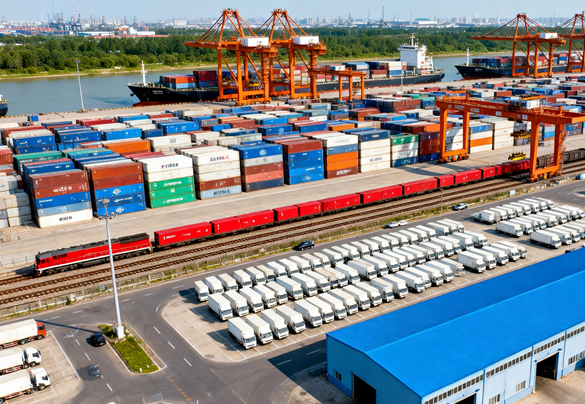
Expansion into premium international markets runs parallel to CNPC’s continuous upgrade of end-to-end supporting commercial and logistical capabilities. Global marketing networks undergo steady geographic expansion, reinforced by dedicated overseas commercial teams and bespoke client response frameworks designed to address customised overseas industrial material orders. Petrochemical product export footprints now extend across more than sixty countries and territories worldwide, with 134 specialised rubber and plastic material grades available for cross-border supply. Shipments of high-value customised engineering polymers and advanced new composite materials account for an expanding share of total overseas sales volumes, delivering substantial year-on-year growth in overall export throughput.
Railway operators have rolled out customised loading, stacking and transit protocols catering to the storage and transport limitations of polymer products, which are vulnerable to moisture ingress and compressive deformation. Coordination agreements signed with rail authorities in Central Asian and Eastern European nations streamline empty container backhaul cycles, supporting regular, repeat rail departures from the Lanzhou inland port hub. Local customs administrations have also streamlined clearance documentation and inspection workflows for bulk chemical rail consignments to sustain the efficiency gains delivered by this cross-continental freight route.
Integrated energy and logistics analysts confirm that dedicated China-Europe rail chemical corridors reduce reliance on congested maritime shipping lanes and volatile ocean freight pricing fluctuations. The new through service from Lanzhou creates a sustainable long-term supply pathway for China’s advanced petrochemical manufacturing base to reach European industrial hubs, reinforcing industrial and supply chain connectivity under Belt and Road co-operation frameworks across the Eurasian landmass.
热门内容推荐