Inner Mongolia’s Tenth UHV Transmission Line Starts Construction to Boost Clean Power Delivery
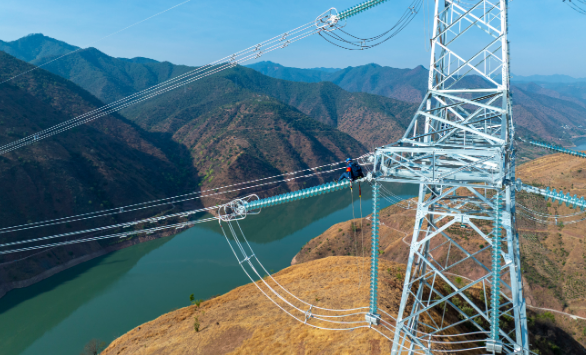
According to People’s Network, ground foundation work using reverse circulation drilling rigs has commenced at tower position 2R050 in Shagedu Town, Jungar Banner, Ordos City, Inner Mongolia, marking the official launch of the Dalat–Western Inner Mongolia 1000kV AC power transmission project, the region’s tenth ultra-high voltage (UHV) engineering scheme.
The transmission corridor stretches from the 1000kV Dalat UHV Substation, runs through Dalat Banner and Jungar Banner within Ordos, and terminates at the 1000kV Ordos UHV Substation. Construction covers one new 1000kV UHV substation, twin-circuit lines spanning 124.4 kilometres apiece, and 393 transmission towers. The overall investment totals 42.46 billion yuan, with full commercial operation scheduled for September 2027.
This project stands as the first approved scheme under the “Two Nodes, Three Corridors” framework that extends North China’s UHV grid into western Inner Mongolia, and also the initial UHV project to receive official clearance during the 15th Five-Year Plan period. Its infrastructure will deliver stable operational support for the ±800kV Western Inner Mongolia–Beijing-Tianjin-Hebei UHV DC line, facilitating the integration and outbound transmission of power generated from the new energy base in north-central Ordos within the Kubuqi Desert.
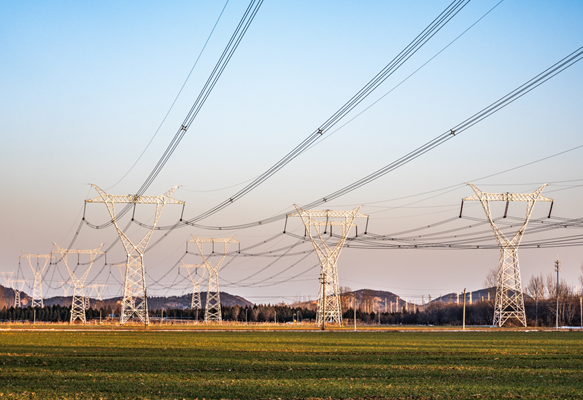
The new line reinforces structural links between existing UHV delivery channels across western Inner Mongolia, forming a robust sending-end grid framework. It raises the capacity of local UHV networks to sustain steady operation of multiple long-distance DC transmission lines originating from desert, gobi and wasteland renewable energy zones, alongside boosting power transfer capacity on the west-to-east electricity transmission corridors within Inner Mongolia’s grid system. The completed infrastructure will unlock resource advantages across western China, accommodate large-scale consumption of clean power, and underpin coordinated development across the Beijing-Tianjin-Hebei metropolitan cluster.
Since November 2014, when the first local UHV project – the Xilinhot–Shandong 1000kV AC transmission line – broke ground, Inner Mongolia has finished and put into service eight UHV routes, consisting of five alternating current and three direct current schemes. The sprawling UHV network enables long-distance cross-regional power supply to eleven provincial-level regions, with cumulative transmitted electricity exceeding 910 billion kilowatt-hours. Green power trading partnerships have been established with multiple provinces and municipalities, cementing Inner Mongolia’s role as a key supplier within the unified national power market and furnishing solid backing for the national West-to-East Power Transmission strategy and carbon peaking and carbon neutrality targets.
A string of major UHV projects including the Western Inner Mongolia–Beijing-Tianjin-Hebei DC line and the newly launched Dalat–Western Inner Mongolia AC corridor have entered active construction phases with foundation pouring work underway. UHV infrastructure development has shifted its core focus from conventional coal power export to renewable energy delivery, sparking a fresh wave of construction activity across desert, gobi and wasteland regions. All ongoing engineering works align with the regional drive for green economic transition and high-quality social and industrial growth.
Further UHV pipeline development will advance across Inner Mongolia in the coming years, with comprehensive trials of digital monitoring and intelligent scheduling rolled out at construction sites. Technical models refined during the build of the Dalat–Western Inner Mongolia line will be replicated for subsequent renewable energy transmission projects across northern China’s arid energy belts.
热门内容推荐