China’s Building Materials Sector Delivers Transformative Progress in 14th Five-Year Period, Maps Low-Carbon, AI-Driven Roadmap for Next Phase
Per Economic Daily dispatches, the building materials sector has secured wide-ranging breakthroughs in industrial restructuring, technological innovation and digital upgrading throughout China’s 14th Five-Year Plan cycle (2021–2025), centred on a framework of green, low-carbon, safe and high-quality expansion. Shifting market balances, deeper delivery of dual carbon targets and rising public demand for superior living standards set fresh benchmarks for the industry’s future development. Sun Xingshou, Vice Chairman and Secretary-General of China Building Materials Federation, outlined the sector’s completed milestones and upcoming reform priorities in an exclusive interview.
Steady Expansion Outperforms Baseline Projections
The building materials sector forms a foundational raw material backbone, feeding into 34 industrial divisions across the national economy and supplying more than 150 downstream sectors spanning construction, power generation, automotive manufacturing and renewable energy. The five-year cycle delivered resilient growth amid successive external and domestic operational disruptions.
Average annual growth in industrial value added stood at 0.5 per cent across the period, while total industry assets expanded by 56 per cent, delivering steady progress ahead of initial internal forecasts. Fundamental structural transformation has repositioned the industry away from basic raw material supply toward integrated material and finished goods manufacturing, with two-thirds of all output now taking processed, value-added form.
Revenue generated by green building material products surpassed 250 billion yuan in 2025, recording average annual growth of 20 per cent over five years. Standout sub-sector expansion rates include 15 per cent annual growth for glass fibre composite materials and 29 per cent yearly output expansion for photovoltaic glass, establishing advanced low-carbon materials as primary growth engines.
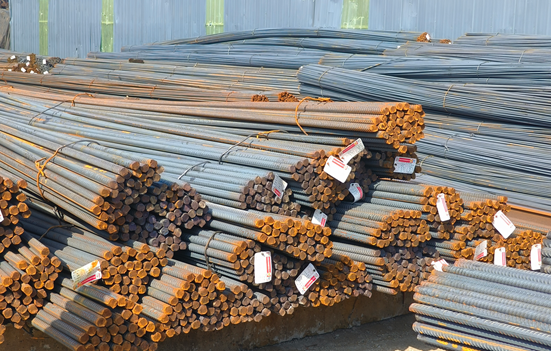
Sector-wide carbon emissions dropped 24.9 per cent compared with 2020 levels, marking five consecutive years of emission reductions. Energy consumption per 10,000 yuan of industrial value added fell 17.4 per cent, while carbon dioxide emissions per equivalent output declined by 25.3 per cent. The full industry has formally hit its carbon peak and entered a sustained carbon neutrality transition phase. As a core industrial decarbonisation field, the sector has built a systematic low-carbon development ecosystem anchored by the rollout of Six-Zero factory standards, driving parallel decarbonisation of industrial, energy, raw material and product portfolios.
Innovation Ecosystem Takes Root Across Manufacturing Chains
The 14th Five-Year cycle saw an acceleration of technical breakthroughs, with flagship enterprises rolling out globally pioneering technologies and finished goods that underpin progress toward high-end, intelligent, green and integrated industrial operation. Landmark innovations include the world’s first Generation 8.6 ultra-thin float glass substrate developed by China National Building Material Group, alongside a full ammonia-hydrogen zero-carbon combustion demonstration line operated by Monalisa Group. Huaxin Building Materials Group has iterated alternative fuel technology to unlock long-standing bottlenecks within cement production, while high and low temperature resistant anti-rust coatings manufactured by Tianjin Dengta Coatings featured in national exhibitions showcasing landmark industrial achievements from the five-year plan period.
Two interconnected factors have fuelled this wave of new research outputs. Industrial enterprises have prioritised scientific and technical innovation as core competitive capacity, lifting the sector’s overall research and development intensity to approximately 1.5 per cent in 2025, a leading figure among all raw material industries. Complementary institutional frameworks support targeted research via a national challenge bidding system administered by China Building Materials Federation, focused on Six-Zero factory construction, advanced super materials and artificial intelligence integration. Seventy-six key research directions have been defined, with 174 technical projects opened for competitive tendering, spurring iterative progress on transformative, mission-critical industrial technologies.
Digital and intelligent transformation delivers measurable efficiency gains across kiln-based production workflows, lifting digital coverage of core operational processes to 66.5 per cent by the end of the five-year cycle. The launch of proprietary industrial large language models – including CNBM Group’s Xiaomiao platform and Conch Group’s cement AI model – signals the official arrival of artificial intelligence within building materials production. A dedicated AI Plus Building Materials action framework will be advanced through the 15th Five-Year Plan cycle, pairing broad industrial foundation models with targeted on-site application scenarios to drive full digital-industrial integration.
Industry operators will capitalise on China’s complete domestic supply chain ecosystem and vast consumer market to advance coordinated dual circulation development, expanding overseas deployment while reinforcing domestic industrial demand. Three interconnected growth pillars will anchor long-term industrial evolution: upgraded traditional building material production, scaled development of inorganic non-metallic new materials, and refined processing of specialised non-metallic mineral resources.
Comprehensive Overhaul of the Entire Industrial System Awaits the 15th Five-Year Plan Cycle
Ancient yet continuously evolving, the building materials sector retains substantial untapped development potential through the next planning cycle, supported by both external macroeconomic imperatives and internal structural adjustment space. As an irreplaceable foundational supply chain for all manufacturing activity, the industry faces internal structural imbalance: 70 per cent of current output serves conventional construction sectors, only 20 per cent feeds emerging industrial, renewable energy and consumer quality upgrade markets, while 10 per cent of non-metallic mineral extraction still operates under extensive, low-value production models. Scientific and technological innovation will unlock wide scope for structural rebalancing and market expansion across coming years.
The 15th Five-Year period will deliver wholesale restructuring of the building materials industrial system, shifting development focus away from volume expansion toward balanced quality, efficiency and sustainable operation. Growth models will evolve from capacity-centric incremental expansion to parallel stock optimisation and targeted new capacity development, with priority shifted toward emerging industrial growth vectors.
A full national rollout of the Six-Zero factory construction initiative forms the primary policy lever for scaling green low-carbon manufacturing. Technical research into proprietary equipment and standardised evaluation frameworks will progress across cement, flat glass, sanitary ceramics, wall materials and glass fibre segments, with dedicated construction technical guides published for each core sub-sector. A tiered development pathway covering formative and net-zero facilities will nurture a nationwide network of benchmark low-carbon production sites, aligning all manufacturing activity with the sector’s decarbonisation roadmap.
Wider uptake of green low-carbon construction materials will be paired with integrated collaboration across building design, operation and end-of-life recycling phases to deliver full value-chain carbon abatement. Market scale for green building materials will continue to expand, with projected annual revenue exceeding 400 billion yuan by 2030. Industry bodies will also advance cross-sector alignment through a high-quality materials for premium housing programme, delivering integrated safe, healthy, eco-friendly material solutions to lift coordinated development across construction and building materials value chains and upgrade the full spectrum of finished construction products.
Over successive planning cycles, the sector will build a fully modernised industrial system defined by strengthened innovation capacity, universally low-carbon operational models, rationalised industrial structures, complete geographic distribution networks, advanced technical equipment, streamlined production management, optimised product ranges and comprehensive service infrastructure. A balanced industrial landscape unifying finished building goods, advanced new materials and deep mineral processing will take shape, embedding the sector deeper within daily social life and long-term national industrial development trajectories.
Industrial research teams will continue refining evaluation standards for low-carbon manufacturing facilities and rolling out AI-driven production control systems across domestic plant networks. Cross-border trade divisions will adjust overseas product portfolios to match shifting global demand for sustainable construction materials, while technical outreach programmes extend digital and green manufacturing expertise to small and medium-sized production operators nationwide.
热门内容推荐