Gansu Revitalises Traditional Industries and Cultivates Emerging Sectors Driven by Technological Innovation
Per China Economic Daily dispatches, Gansu, a time-honored industrial base in western China, delivers steady industrial progress by upgrading legacy manufacturing lines and expanding emerging industrial capacity. Technological innovation serves as the core engine powering high-quality growth across the province, unlocking internal industrial momentum and consolidating the foundations of an industrial powerhouse. A modern industrial framework that leverages local resource endowments and comparative advantages takes shape, breathing new vitality into the historic manufacturing hub.
Official industrial metrics record consistent robust expansion across the provincial industrial sector. From the second half of 2023 through the first quarter of 2026, the growth rate of value-added industrial output from enterprises above designated size in Gansu ranks among the national top ten for 33 consecutive months. The tally of such industrial firms rises from 1,832 at the close of the 13th Five-Year Plan period to 3,293. Over the 14th Five-Year Plan cycle, the province’s total industrial output value climbs from 730 billion yuan to 1.3 trillion yuan, with annual average industrial value-added growth hitting 7.2 per cent. Industry contributes 27 per cent of regional GDP and accounts for 40 per cent of aggregate economic expansion.
Innovation Restores Competitiveness to Core Industrial Players
Traditional industries generate over 60 per cent of Gansu’s large-scale industrial value added, while roughly 83 per cent of state-owned enterprise assets are deployed within conventional resource-processing segments. The province prioritises optimisation rather than phasing out established industrial capacity, and has pioneered advances in sophisticated industrial foundations and modernised industrial chains throughout the 14th Five-Year Plan term.
Production control hubs at Baiyin Nonferrous Metals Copper Division house two integrated smelting furnace systems that combine independent research achievements and imported advanced technology. Flash furnaces represent internationally leading standards for efficiency and low emissions, yet demand rigid input raw material specifications. The proprietary Baiyin Furnace, developed with fully independent intellectual property rights, accommodates high-moisture and impurity-laden mineral feeds with stable operational efficiency. Initial research into the first-generation Baiyin Furnace began in 1972, earning national invention second prize and national science and technology progress first-class award. The fourth-generation iteration now operates with intelligent digital control systems that upgrade furnace design and metallurgical mathematical modelling. Comprehensive energy consumption per tonne of refined copper drops from 300 kilograms of standard coal to under 210 kilograms. Real-time operational monitoring cuts production downtime and lifts overall operational efficiency as smelting hardware and technical processes receive iterative upgrades.
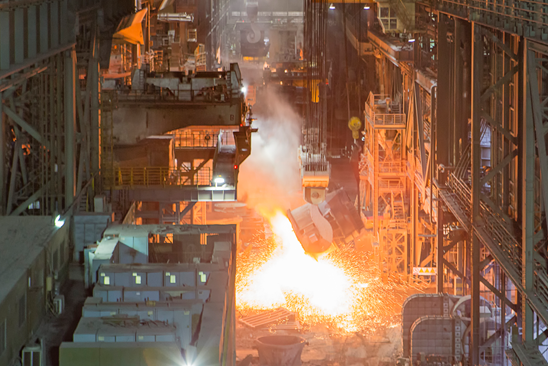
Intelligent digital retrofits roll out across dozens of legacy industrial installations province-wide. Jiuquan Iron and Steel Group, a steel manufacturer with over six decades of operational history, delivers product iteration and market expansion via enterprise-led research and technical transformation throughout the 14th Five-Year Plan period. The firm completes 29 major scientific research projects and launches 111 new product varieties, expanding its product portfolio from 343 categories to more than 450, with high-end product share rising from 30 per cent to 70 per cent. Its Compact Strip Production line commissioned in 2006 faces inherent process limitations that compromise molten steel purity and restrict high-end product development. In June 2024, the enterprise renovates two ageing production lines within existing plant premises, integrating thick slab and thin slab manufacturing workflows onto a unified new production line. Spatial restructuring and process reorganisation slash construction investment by 20 billion yuan compared with building an equivalent standalone facility.
Lanzhou Petrochemical Machinery Group was founded in 1953 with a historical focus on fossil energy processing equipment. Reliance on conventional oil and gas hardware constrains corporate expansion, and the enterprise evolves into a comprehensive solution provider for full-spectrum energy equipment after years of strategic exploration. Drawing on established strengths in pressure vessel fabrication and system integration, the group expands into nuclear, hydrogen, photovoltaic and energy storage equipment manufacturing. Provincial state-owned enterprises channel 470 billion yuan into research and development throughout the 14th Five-Year Plan cycle, triple the investment recorded in the preceding planning term, with aggregate industrial output and corporate profits doubling over the five-year window.
Upstream and Downstream Industrial Chains Achieve Integrated Coordination
Crude resource extraction and primary processing no longer dominate Gansu’s resource utilisation model. The province advances coordinated development across industrial supply chains, securing stable upstream raw material supply and expanding deep processing and downstream application sectors. Industrial upgrading strategies cover four dimensions: reinforcing weak industrial links, extending advantageous industrial chains, upgrading traditional manufacturing workflows and establishing emerging industrial clusters. Over the past five years, value added from non-ferrous metallurgy, petrochemical chemical engineering and equipment manufacturing rises by annual average rates of 17.8 per cent, 4.8 per cent and 9.9 per cent respectively.
Jinchang Group Yongchang Copper Co., Ltd. was incorporated in November 2024 to operate two key provincial industrial projects: copper smelting technical upgrading and a 400,000-tonne intelligent copper electrolysis facility, both reaching full design operational capacity in September 2025. Advanced continuous smelting technologies enable closed-loop intelligent production spanning copper concentrate, anode plate and cathode copper manufacturing, while capturing by-products including rare inert gases and iron ore concentrates. Sulphur dioxide flue gas generated during smelting feeds on-site sulphuric acid production facilities to supply adjacent industrial parks and eliminate external waste discharge. Annual smelting slag output totals one million tonnes, with recovered copper concentrate recycled back into primary smelting workflows. Third-party industrial investors process residual tailings to extract iron powder, delivering full-cycle comprehensive resource utilisation.
Diversified revenue streams are developed alongside core cathode copper and sulphuric acid output. Surplus industrial steam is prepared for external commercial sales; liquid oxygen, liquid nitrogen and rare neon and helium gases generated from oxygen production secure external sales permits ahead of market launch, while refined iron concentrate maintains consistent off-site supply. Production workflows spanning pollution abatement, energy conservation and circular resource recovery illustrate the low-carbon transition pathway for conventional smelting enterprises. Jinchang City rolls out 25 key industrial circular economy projects within its resource utilisation industrial chain in 2025, committing 2.2 billion yuan in total investment and generating 118 billion yuan of industrial output, representing a 28.3 per cent year-on-year expansion.
Non-ferrous metal manufacturers eliminate reliance on low-value primary ingot exports. Baiyin Nonferrous Metals Group acts as a core chain leader for provincial copper and zinc industrial networks, prioritising local deep processing of mineral raw materials rather than shipping unrefined ingots out of the region. A 70,000-tonne single-unit copper foil production line, the largest of its kind nationwide, is completed in Lanzhou New Area through joint cooperation with Jiujiang Defu in 2023. Construction of a follow-up 200,000-tonne high-conductivity copper rod manufacturing project proceeds concurrently. Annual oxygen-free copper rod output hits 109,000 tonnes last year with an output value of 7.8 billion yuan, with a 2026 production target of 150,000 tonnes valued at 12.6 billion yuan. These copper rods serve photovoltaic and new energy vehicle manufacturing sectors, capturing over 70 per cent of regional northwest market share.
More than 60 per cent of the group’s annual 400,000 tonnes of electrolytic copper undergoes local deep processing, with further development of copper busbars, copper tile fittings and copper powder products scheduled to raise local conversion rates to 100 per cent throughout the 15th Five-Year Plan period. The enterprise also extends industrial chains covering zinc, gold and scattered rare metals. A 70,000-tonne zinc alloy production line is delivered under a strategic cooperation framework signed with Jiuquan Iron and Steel, Jinchang Group and Lanzhou Petrochemical Machinery Group in 2023. A joint 20,000-tonne nano zinc oxide project with Lanzhou Zhongke Petrochemical Machinery targets high-end paint, coating and radiation shielding manufacturing applications.
Exhibition halls at Lanzhou Petrochemical Machinery Group showcase complete hydrogen industrial chain equipment covering electrolytic water hydrogen production, hydrogen purification, solid-state hydrogen storage vessels and downstream chemical and civil end-use hardware, all independently researched and manufactured by the enterprise. Full integrated workflows for hydrogen generation, transportation, storage and application are operational, with research focused on high-power carbon membrane electrolysis and hydrogen-ammonia integrated production routes. The enterprise adheres to a full-value development framework that transforms raw mineral inputs into finished high-performance materials, with independent design and fabrication of 125MN and 180MN high-speed forging presses filling gaps in domestic industrial machine tool supply chains. Plate heat exchangers manufactured by the group support fusion energy large scientific installations and microchannel heat exchangers for hydrogen refuelling stations. Orders for emerging industrial segments reach 1.219 billion yuan in the first quarter of the current year, rising 24.69 per cent year-on-year, with strategic emerging and future industries accounting for 43 per cent of total corporate industrial structure.
Integrated upstream and downstream coordination lifts overall industrial chain competitiveness. Fourteen key provincial industrial chains record aggregate output value of 2.18 trillion yuan in 2025, a 16.45 per cent year-on-year increase. Non-ferrous metallurgy, new energy and equipment manufacturing, and biopharmaceutical industrial chains register growth rates exceeding 20 per cent. Installed capacity within the new energy and equipment manufacturing industrial chain surpasses 80 million kilowatts, with annual output value topping 100 billion yuan, up 20.48 per cent year-on-year.
Industrial Clusters Optimise Value Chain Efficiency
Advanced manufacturing cluster development strengthens industrial chain resilience, supply chain security and scale advantages including collaborative research, talent aggregation and cost reduction. Gansu concentrates industrial factors and project deployment within dedicated industrial parks, establishing two national-level advanced manufacturing clusters covering non-ferrous metals across Jinchang, Baiyin, Lanzhou and Wuwei, plus industrial machine tools spanning Baoji, Hanzhong and Tianshui. A nickel, copper and cobalt new materials cluster gains recognition as a national featured industrial cluster for small and medium-sized enterprises.
Leading state-owned enterprises guide industrial chain transformation through resource integration and joint research, setting unified industrial standards and phasing out outdated low-efficiency capacity. Downstream aluminium processing facilities cluster adjacent to Dongxing Aluminium Industry Co., Ltd., enabling direct transfer of molten aluminium feedstock to produce precision strips, high-grade bars and wire rods rather than exporting primary aluminium ingots. The proportion of high-value aluminium products rises 23 per cent year-on-year, delivering a value uplift of more than 1,000 yuan per tonne and shifting corporate competition models from volume expansion to value enhancement.
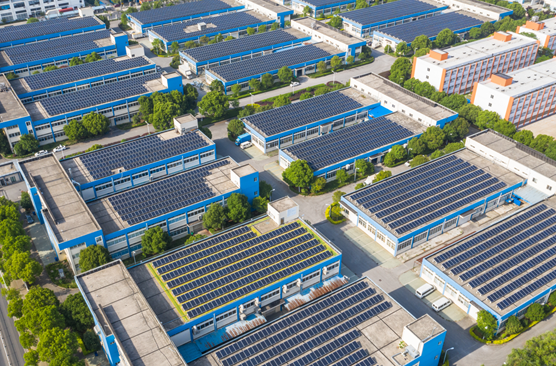
As a major industrial power consumer, the enterprise expands low-carbon energy utilisation. Jiuquan Iron and Steel Group develops large-scale photovoltaic facilities with 1,000 megawatts of installed capacity and wind farms totalling 1,400 megawatts, laying foundations for full structural transformation within local aluminium manufacturing. Green power accounts for over 30 per cent of Dongxing Aluminium’s total energy consumption by the close of the 14th Five-Year Plan period. Trading of green electricity certificates totalling 11.8435 million units in 2025 enables certification for 20,000 tonnes of green aluminium liquid output, establishing formal pathways for verified low-carbon aluminium product certification.
Enterprises across Gansu’s traditional competitive industries build coordinated industrial ecosystems aligned with market demand, adopting two core collaboration models: joint research on flagship products between leading large corporations, and specialised auxiliary production by small and medium-sized enterprises clustered around core industrial players. Domestic manufacturers previously relied entirely on imported heavy-gauge pure nickel strip due to a lack of end-to-end smelting and rolling capacity. In 2021, Jinchang Group, Lanzhou Petrochemical Machinery Group and Jiuquan Iron and Steel launch joint research to localise production of the product. Jinchang Group supplies mineral feedstock for smelting workflows, Lanzhou Petrochemical Machinery Group provides large-scale forging hardware, and Jiuquan Iron and Steel contributes mature rolling technology. Cross-enterprise collaboration delivers complete domestic manufacturing capacity spanning smelting, forging, rolling and deep processing to substitute imported nickel strip supplies.
Hundreds of industrial enterprises cluster around Jinchang Group’s industrial chain within Jinchang City, leveraging local nickel, cobalt and manganese mineral resources to develop supporting manufacturing clusters. Full industrial ecosystems covering battery raw materials, cell assembly and energy storage systems are established after delivery of successive large-scale industrial projects, with 80 per cent of raw materials for new energy battery production sourced locally. Inter-corporation win-win coordination drives coordinated industrial transformation across regional administrative zones.
The Jinchang-Baiyin-Lanzhou-Wuwei non-ferrous metals national advanced manufacturing cluster facilitates cross-regional industrial synergy across western Gansu. Jinchang operates world-leading nickel, cobalt and platinum group metal extraction facilities; Baiyin serves as a comprehensive multi-category non-ferrous metals manufacturing hub; Lanzhou functions as a regional research, processing and logistics centre for non-ferrous metal products; Wuwei undertakes overflow industrial capacity transfer from adjacent nickel, cobalt and copper manufacturing operations. Over 20 higher education institutions, more than 120 key laboratories and thousands of industrial enterprises participate in cluster development after formal national accreditation in 2024.
The cluster accommodates over 340 industrial enterprises and generates output value exceeding 380 billion yuan in 2025, a roughly 30 per cent year-on-year increase. It nurtures two national manufacturing single champion enterprises, nine specialised and sophisticated “little giant” firms and 121 national high-tech enterprises. Two national intelligent manufacturing demonstration plants and two national intelligent manufacturing benchmark production lines operate within the cluster, alongside six national green industrial parks and seven national green manufacturing factories, forming a national benchmark for digitalised and low-carbon development within the non-ferrous metals sector.
State-owned Assets Supervision and Administration Commission authorities for Gansu outline sustained industrial transformation plans for the 15th Five-Year Plan cycle. Provincial state-owned enterprises will scale up investment in production line upgrades, deepen technological innovation applications, and maintain regular coordination with municipal administrative bodies and industrial departments to foster aligned government-industry collaboration for industrial upgrading. Additional technical retrofits and integrated industrial chain expansion projects will progress across all regional industrial parks throughout the planning term to solidify Gansu’s distinctive modern industrial framework.
热门内容推荐