Yunnan’s Green Corridor Economy Diversifies Highway Revenue to Over 40% of Group Turnover
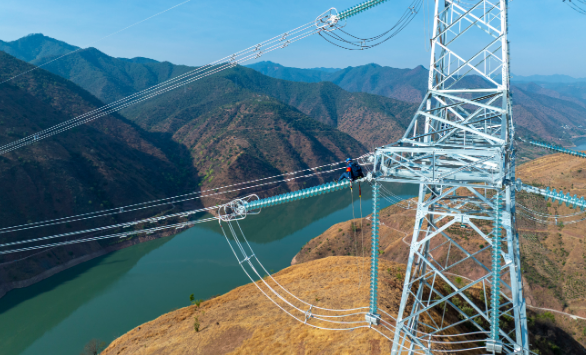
According to China Daily Yunnan Branch, Yunnan province now ranks second nationwide for the total length of operational motorways, yet mountainous terrain creates distinct financial pressures for its highway network. Steep valleys and extensive bridge-and-tunnel stretches push per-kilometre construction costs to double the national average, while sparse population distribution and uneven regional economic activity leave traffic volumes on many routes at half the country’s mean figure. Reliance solely on toll revenue can no longer sustain long-term operational and maintenance budgets under this cost-revenue imbalance.
Yunnan Communications Investment Group has pioneered a nationwide model to unlock value from idle highway assets through the development of green corridor economy, repositioning motorways from mere transit arteries into integrated carriers of ecological, digital, branding and industrial value. Years of iterative rollout have lifted earnings from this diversified portfolio to account for more than 40 per cent of the group’s total annual revenue, establishing a replicable operational framework for mountain-region motorways across western China facing identical cost and traffic constraints.
The group manages over 6,500 kilometres of expressways, with a large share featuring bridge-tunnel ratios exceeding 50 per cent. Large upfront capital outlays for construction and upkeep sit alongside limited cash flow from vehicle tolls, a structural challenge shared by all inland mountain provinces as major new motorway build programmes draw to a close and asset lifecycle management becomes the core operational priority. Authorities across the province have focused on unlocking thousands of kilometres of roadside resources to generate fresh revenue streams without imposing additional burdens on local communities.
A full strategic overhaul was rolled out from 2022 onwards, aligned with provincial and national green development initiatives. The core operating logic reshapes single linear transit routes into broad integrated economic belts: vertically streamlining the full industrial chain covering investment, financing, construction, management and operation, while horizontally merging ecological conservation, cultural tourism, clean energy, digital innovation and cross-border trade sectors.

Tangible investment and revenue milestones had been recorded by the end of 2025. Cumulative capital injection into industries linked to green corridor economy surpassed 2 billion yuan, and income generated from these lines made up over two-fifths of the group’s total turnover. Supplementary earnings are now secured through roadside derivative industries, digital infrastructure and integrated real-economy schemes, independent of toll charges from passing vehicles. Industry analysts note that non-toll revenue exceeding 40 per cent of total turnover marks a fundamental shift for provincial transport investment platforms, breaking the historic cycle of relying exclusively on tolls to service infrastructure debt.
Four interconnected business verticals deliver the bulk of this new income stream. Motorway service areas have been transformed into composite retail and visitor hubs. Lujiangba Service Station along the Hangrui Expressway hosts a complete coffee value chain experience centre, with sales of local small-grain coffee and associated goods topping 20 million yuan in 2025 and raising per-capita annual income for nearby coffee farmers by more than 20,000 yuan. The Dushupu Service Station houses Yunnan’s first central logistics warehouse for green agricultural produce, with a 77 per cent tenancy fill rate and annual cargo turnover valued at over 300 million yuan. Aggregate agricultural product sales across all group-managed service stations exceeded 500 million yuan by the close of 2025.
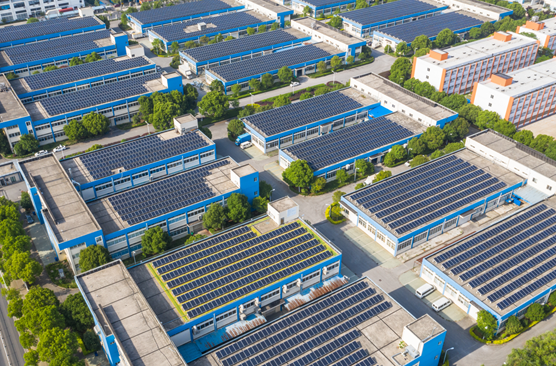
Distributed photovoltaic installations on highway embankment slopes and service station rooftops deliver stable clean energy yields. Two hundred and twelve solar power projects have been deployed, with thirty-two pilot facilities fully commissioned for grid export. A network of four green electricity ultra-fast charging corridors stretches 3,350 kilometres, incorporating 271 public charging stations. The roadside clean energy segment generated almost 200 million yuan of turnover in 2025, alongside the first realised returns from carbon asset trading.
Digital and low-altitude industrial frameworks capture new productivity gains. The group operates the largest computing cluster run by a provincial state-owned enterprise in Yunnan, delivering 100 petaflops of processing capacity, and has launched China’s first vertical large language model tailored exclusively for highway transport operations. Intelligent toll collection robots and liquid-cooled ultra-fast chargers, capable of adding a 200-kilometre driving range within six minutes, have entered full service. A dedicated provincial low-altitude industrial investment arm delivers drone inspection, emergency material delivery and unified government aerial monitoring services across multiple prefectures, opening new revenue lines from data provision and platform operation.
Cross-border highway corridors convert remote border routes into integrated logistics hubs. The full opening of the Mengyuan-Guanlei Port motorway cuts over two hours from cargo transit times between Guanlei Harbour and Kunming. Regular combined rail, road and water intermodal shipments under a single customs document system along the Lancang-Mekong river corridor handle roughly 17,000 tonnes of goods each year, while Guanlei Harbour hosts the country’s first waterborne border residents’ mutual trade market. Border corridor activity generates supplementary income from trade settlement, warehousing and supply chain financial services alongside core freight handling.
A closed-loop operating system underpins the consistent profitability of green corridor economy. On-site solar generation cuts external electricity procurement costs, while smart monitoring systems reduce labour spending on toll collection and routine maintenance. Underutilised spaces including service station land, embankment zones and under-bridge plots are leased or co-developed to raise per-unit land output. Hybrid models combining service stations with tourism hubs, logistics distribution and digital service platforms create direct incremental revenue detached from vehicle tolls. Unified commercial branding under the Caiyunyi trade mark elevates market premiums for local farm goods and cultural merchandise, strengthening the group’s public recognition and market credibility.
This multi-layered operational framework mitigates financial pressure stemming from high construction outlay and low traffic volumes, building long-term revenue resilience across interconnected industrial chains. The green corridor economy initiative was designated a special pilot project for low-carbon transport development under the Ministry of Transport in 2024, while provisions to expand the model and lift comprehensive motorway operational benefits were embedded within Yunnan’s 15th Five-Year Plan outline published in 2025.
Three core strategic identities now guide the group’s long-term development: integrated transport investment, construction and operation service provider; developer of green corridor industrial ecosystems; and integrated value aggregator combining industrial activity and financial instruments. The Yunnan model demonstrates that highway infrastructure can deliver sustained economic returns beyond basic transit functions, offering actionable operational blueprints for western provinces burdened by expensive low-traffic motorways and eastern regions managing large stocks of mature expressway assets. Fresh industrial and digital projects continue to roll out across the provincial motorway network to expand the scope of diversified green corridor operations in subsequent operating cycles.
热门内容推荐