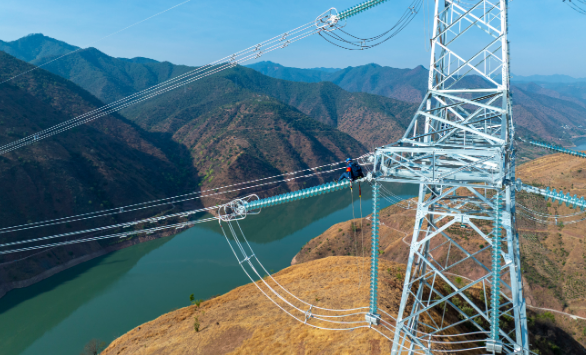
China-Laos Railway Delivers Record Passenger and Freight Volumes as Belt and Road Land Corridor Expands Regional Trade and Tourism
According to Xinhua News Agency transport coverage published on 6 June 2026, the China-Laos Railway, a landmark infrastructure project under the Belt and Road Initiative linking Kunming in southern China to Vientiane in Laos, continues to unlock tangible economic and cultural dividends through sustained growth in cross-border passenger and cargo movements. Operational expansion across the line creates fresh space for shared regional prosperity and deepens bilateral friendly ties between China and Laos.
Clear evidence of strengthened cross-border connectivity can be seen in cumulative transport statistics collated up to 1 June this year. Railway operators have run more than 100,000 passenger trains along the full route, carrying over 73 million travellers in total. Cross-border passenger volumes stand at 840,000 visitors originating from more than 120 nations and territories worldwide. Total freight throughput across the line exceeds 84 million tonnes, with cross-border cargo shipments accounting for 19 million tonnes of that aggregate volume. These metrics cement the railway’s position as a central arterial route for integrated cross-border logistics and travel across mainland Southeast Asia.
A steady upward trajectory defines the line’s operational capacity, marking a full progression from basic connectivity to consistent, high-volume throughput. Monthly passenger departures have climbed from an initial baseline of roughly 600,000 at launch to a peak monthly figure of 2.25 million, representing a near threefold expansion in passenger turnover. Daily passenger train services on the Chinese section have risen from eight initial departures to a maximum of 86 services each day, while the Laos stretch now operates up to 18 daily passenger trains, compared with four at opening. Four international passenger trains run daily between Kunming and Vientiane, cutting the fastest through-journey time to nine hours and 36 minutes. Border clearance procedures at Mohan Railway Port have been streamlined to take approximately 50 minutes, turning same-day cross-border travel between China and Laos into a regular, accessible option for travellers.
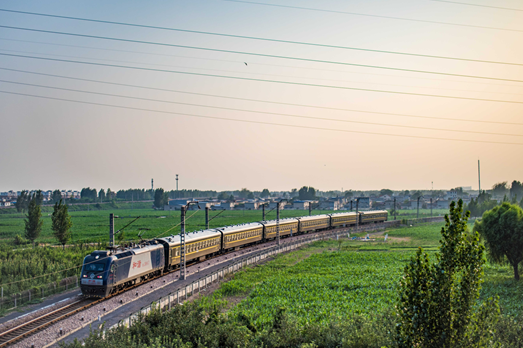
The railway functions as more than a transit route, forming a fully operational cross-border economic corridor that cuts commercial overheads for regional traders. A World Bank assessment confirms overland logistics costs between Vientiane and Kunming have fallen by 40 to 50 per cent thanks to consistent rail freight capacity. Cross-border fruit imports carried along the line hit 107,900 tonnes across the first five months of the year, recording a year-on-year rise exceeding 30 per cent. Shipments of durian alone expanded 94.2 per cent against the same period last year. Mohan Railway Port recorded a single-day peak of 3,665 tonnes of imported tropical fruit entering China, with integrated cold-chain rail services running through China, Laos and Thailand capable of delivering Southeast Asian fresh produce to domestic markets within three full days of harvest.
The spectrum of goods traded across the railway has broadened dramatically, expanding from just over a dozen product categories at launch to more than 3,800 distinct commodities today, covering supply chains across 19 countries and territories including Laos, Thailand, Vietnam and Malaysia. Cross-border import and export cargo value handled by the railway reached 6.81 billion yuan in the first quarter of 2026, an increase of 62.7 per cent year on year. On outbound shipments, the three high-growth green manufacturing categories of new energy vehicles, lithium batteries and photovoltaic equipment registered a 10.4-fold rise in trade value, forming a powerful new engine driving cross-border export expansion.
Cross-border rail travel has emerged as a mainstream leisure choice for regional tourists. International passenger services connect well-known cultural and scenic hubs including Kunming, Xishuangbanna, Luang Prabang and Vientiane, lifting spending across local hospitality, catering and attraction sectors along the corridor by more than 35 per cent. Cross-border passenger arrivals in the opening months of 2026 reached 164,000, up 35.3 per cent year on year. Dedicated tourist rolling stock including the Star Lancang-Mekong Express and Kunming Express operate scheduled cross-border journeys, with on-board catering featuring the shared China-Laos Friendship Coffee range and regional local specialities to turn each rail trip into an immersive cultural exchange experience.
Settlement and economic patterns along the route have undergone lasting transformation driven by consistent passenger and freight flows. Nakelee, a former rest stop on the ancient Tea Horse Road, has recorded a more than 160 per cent jump in annual tourist arrivals. Manlongle Village beside the Wild Elephant Valley Station has developed local tourism industries supported by rail access, delivering measurable rises in household annual income for local residents. New integrated business models combining rail transport with cultural tourism and modern agricultural supply chains continue to emerge, allowing communities on both sides of the border to capture direct benefits from cross-border integration.
Nearly five years of stable, high-efficiency operations illustrate the core principles of extensive consultation, joint contribution and shared benefits that underpin the Belt and Road Initiative. As China and Laos mark the 65th anniversary of bilateral diplomatic relations and the official Year of China-Laos Friendship, the rail link spanning mountain ranges and river basins sustains constant passenger and freight movements that embody cooperative partnership between the two nations. Additional operational upgrades, expanded freight special services and coordinated cross-border industrial cooperation schemes will maintain steady growth in passenger and cargo volumes along the corridor.
热门内容推荐