China’s building materials sector accelerates high-end, low-carbon and intelligent restructuring
According to China Building Materials Federation (CBMF), the release of the Report on High-quality Development of China’s Building Materials Industry marks tangible structural shifts within China’s foundational building materials sector, which underpins national economic expansion. Backed by new quality productive forces, traditional building material manufacturers are shifting from blind capacity expansion to technology-driven development amid nationwide low-carbon policy rollouts.
Advanced building materials, defined as next-generation inorganic non-metallic materials with compound functional and carbon-reduction capabilities, serve as the core driver for industrial upgrading. They cover four key sub-sectors: advanced cementitious binders, high-performance architectural glass, premium fine ceramics and inorganic fibre composites. The CBMF report verifies that innovation, green transformation and cross-border opening contributed 80 per cent to industrial upgrading throughout the 14th Five-Year Plan period.
Current industrial innovation metrics show steady growth in research investment. The sector’s overall R&D intensity is projected to hit 1.5 per cent in 2025, outperforming the average level of bulk raw material industries. Cumulative R&D spending on inorganic non-metallic new materials has exceeded 160 billion yuan, while the proportion of revenue generated by new products has climbed from 12.2 per cent to 21.4 per cent. Multiple globally pioneering technical solutions have entered industrial pilot phases across domestic production lines.
Latest on-site technical exchanges have unveiled scalable low-carbon and digital solutions. At a recent green and intelligent innovation symposium, independent low-carbon cement formulations were displayed, cutting carbon emission intensity by 30 per cent compared with conventional products. Such cementitious materials are being paired with prefabricated building systems and prioritised for renovation of ageing residential communities and affordable housing projects. Sinoma International also launched four integrated technological packages covering zero-waste urban governance, ultra-clean flue gas treatment, intelligent mine operation and digital equipment maintenance. The suites enable cement and mining firms to complete iterative upgrades from digitalisation to intelligent operation.
Digital transformation continues to gain traction across the sector. Official industrial data from the Ministry of Industry and Information Technology shows the numerical control rate of core production procedures has reached 70 per cent, a 16.2 percentage point increase from 2020. Industrial AI large models are undergoing commercial deployment in quality inspection, raw material proportioning and energy consumption regulation, reshaping daily production workflows. Digital intelligence has been embedded in policy guidelines for the upcoming 15th Five-Year Plan, which will drive further infrastructure upgrading for the sector.
Global building material markets face four parallel structural trends: full-scale decarbonisation, high-end industrial restructuring, automated manufacturing and circular resource utilisation. Emerging infrastructure markets in Southeast Asia, the Middle East and India record annual infrastructure investment growth above 10 per cent, creating untapped overseas demand. Industry analysts note cross-boundary collaboration will dominate future expansion, including interdisciplinary technical integration, joint research between enterprises and academic institutions, cross-border R&D partnerships and deep integration between building material production and architectural construction.
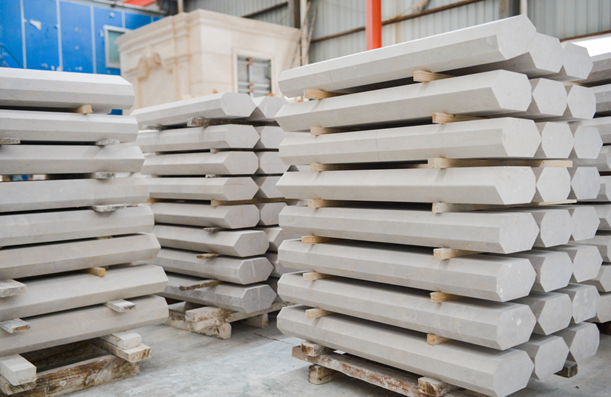
Domestic supply-demand alignment is being standardised via unified industrial criteria. The General Guidelines for High-quality Building Materials, the first dedicated selection standard for domestic construction materials implemented in January 2026, sets unified benchmarks for health, safety, environmental performance and product quality. Driven by demand for high-quality residential buildings, local manufacturers including Huagou Technology have shifted from single-component suppliers to full-life-cycle service providers. Huagou Technology’s high-performance concrete prefabricated components can shorten construction cycles by 30 to 50 per cent, with applications spanning wind power infrastructure, modular housing and long-span bridge projects.
China’s building materials industry has delivered sustained declines in total carbon emissions and emission intensity. The output value of certified green building materials has surpassed 250 billion yuan, with mainstream production equipment meeting international advanced standards. Stringent domestic carbon regulatory policies and shifting green consumption demands are reshaping market competition rules. Industrial insiders divide the sector’s green upgrading into three sequential phases: initial exploration, targeted technical breakthrough and comprehensive systemic transformation.
Sub-sector technical roadmaps have been clarified for medium-term development. For advanced glass materials, domestic research teams are advancing iteration from third-generation display glass to fourth-generation AI optoelectronic glass, with follow-up research targeting packaging materials for semiconductor devices and liquid cooling components for AI computing centres. Premium fine ceramics will be optimised to adapt to extreme working scenarios for aerospace and nuclear energy equipment. R&D priorities for inorganic fibre composites focus on domestic substitution of large-diameter carbon fibres and circular recycling technologies for high-value industrial waste.
热门内容推荐