Kenli 3-2 Oilfield Delivers Decisive Output Surge via Technical Upgrades, Setting Ten-Year Production Highs
According to China Energy News, Kenli 3-2 Oilfield operated by CNOOC Tianjin Company has posted remarkable production growth over the first five months of the year. Its average daily crude oil output climbed by 63.6 per cent year-on-year, while average daily natural gas output jumped by 141.7 per cent. Both daily oil and gas production volumes have hit their highest levels recorded in the past decade.
Classified as a typical shallow-water delta reservoir within the Bohai Oilfield complex, Kenli 3-2 Oilfield faces inherent geological constraints including small scattered reserves, intricate fault structures and severe reservoir heterogeneity. These geological features create substantial obstacles to efficient exploitation and long-term stable output maintenance. The on-site development and production management team has targeted quality improvement, efficiency gains and stable production expansion, adopting a work framework focused on tapping existing reserves, identifying new production increments and accelerating capacity release. Targeted optimisation tailored to the reservoir’s geological traits and sustained technical breakthroughs have unlocked strong production potential from this small-scale offshore field.
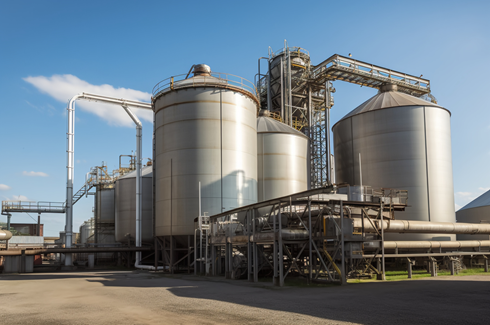
Existing well potential has been fully unlocked through refined stimulation measures for mature wells. Following sidetracking and perforation operations on Well A10, its peak daily oil production reached 133 cubic metres, with daily gas output exceeding 13,000 cubic metres.
New production increments have been secured to tackle development hurdles tied to narrow channel reservoirs characterised by superimposed sand bodies and complex oil-water contacts. Drawing on mature technical experience in fine reservoir characterisation for fluvial offshore formations, the team carried out detailed dissection of interwoven channel sand bodies to map the distribution of high-quality reservoir zones and accurately pinpoint sweet spots for new well deployment. Seven adjustment wells were subsequently put into place, achieving an average horizontal reservoir encounter rate of 90 per cent even within a thin reservoir stratum merely four metres thick. At peak operation, these seven wells deliver an additional 560 cubic metres of crude oil each day, hitting 164 per cent of the designed allocated output, alongside daily natural gas additions above 70,000 cubic metres.
Since the start of the year, cumulative incremental crude oil output from the oilfield has exceeded 1,500 cubic metres, and more than 8 million cubic metres of additional natural gas have been brought into the production stream.
The technical approaches trialled at Kenli 3-2 provide replicable solutions for other small, geologically complex shallow-water delta oilfields across the Bohai Sea basin. Further fine-tuning of well operation parameters and continuous iteration of reservoir development technologies will stabilise the elevated production levels that the field has achieved.
热门内容推荐