New Advanced Rehabilitation Hospital Opens in Beijing to Fix Regional Service Shortfalls and Support National Health Strategies
According to Xinhua News Agency, health stands as a fundamental pillar of people’s livelihood and national strength, with physical wellbeing serving as a core benchmark for residents’ quality of life. Following the roll-out of the Healthy China 2030 Outline and the launch of rehabilitation care expansion and upgrading initiatives set out for the 15th Five-Year Plan period, rehabilitation medical services have been fully integrated into a complete care chain covering disease prevention, clinical treatment, rehabilitation intervention and chronic disease management. At present, the domestic rehabilitation sector faces uneven resource distribution, weak specialist discipline development and disjointed follow-up care for severe illnesses and chronic conditions, creating clear demand for high-standard medical institutions to address these structural gaps.
Beijing Jianlin Rehabilitation Hospital, a key livelihood project backed by both municipal and Shunyi district authorities, advances construction guided by Party building and adheres firmly to social responsibility principles. The entire development requires a total investment of five billion yuan, with detailed layout and architectural design completed by China Architecture Design Group. It has been built into a tertiary research-focused rehabilitation facility characterised by modern operations, intelligent management and landscaped surroundings, alongside customised butler-style medical support services.
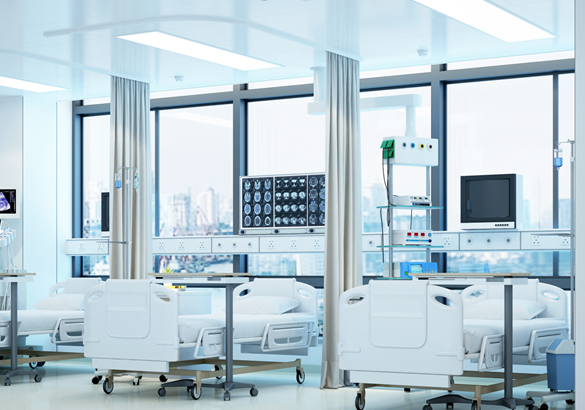
Situated in Gaoliying Town of Shunyi District, the hospital enjoys unrivalled transport links close to Beijing Capital International Airport, Olympic Avenue and the Jingcheng Expressway. Its campus occupies 160 mu of naturally preserved green land, with nearly 50,000 square metres of floor space dedicated to medical functions. Nineteen standalone VIP rehabilitation wards are arranged on site, and the first phase delivers 323 inpatient beds. Orthopaedic post-surgery rehabilitation and tumour post-surgery rehabilitation are defined as its core specialist focuses, around which a targeted clinical treatment framework has been established. A complete industrial chain linking pharmaceutical supply and medical treatment has also been put in place, forming a closed-loop service model spanning diagnosis, rehabilitation and medication support. The tranquil campus design combines strict medical specifications with human-centred wellness concepts, leveraging natural landscapes to deliver a soothing healing environment for patients.
A second construction phase is scheduled to house a vocational college for rehabilitation nursing education. Adopting a blended training system combining clinical placement, practical training and research commercialisation, the new campus will operate an integrated framework for medical services, education and scientific research, steadily supplying professionally trained nursing practitioners for frontline clinical work.
Party building mechanisms steer all operational and developmental work across the hospital, with such frameworks deeply embedded into clinical care delivery, specialist discipline expansion and public welfare programmes. Targeted improvements are carried out across specialist team building, talent recruitment, technology roll-out, bed capacity expansion and service refinement, translating institutional strengths derived from Party organisation into tangible benefits for local patients.
The facility directly tackles local bottlenecks including insufficient sub-specialty rehabilitation capacity and fragmented severe patient follow-up care. It assembles a cohort of leading rehabilitation physicians and seasoned operational managers from home and overseas, solidifying clinical capabilities in high-demand rehabilitation streams for orthopaedic and oncology patients. Long-term cooperation agreements have been signed with multiple top-tier overseas rehabilitation institutions, introducing internationally recognised clinical protocols and quality control benchmarks to enhance the management of complex rehabilitation cases. Local residents can therefore access standardised, world-class rehabilitation treatments without travelling outside the Beijing area.
State-of-the-art medical hardware including Siemens MRI scanners, CT devices, hyperbaric oxygen chambers and intelligent rehabilitation robotics have been installed on campus. A smart healthcare system built on 5G and big data technology connects pre-admission screening, inpatient therapy and post-discharge follow-up into one seamless workflow. Twelve dedicated treatment centres covering surgical recovery, sports rehabilitation, nutritional therapy, psychological counselling and traditional Chinese medicine physiotherapy have been set up to deliver full-cycle rehabilitation support.
The hospital runs dual-track operations covering routine paid medical services and targeted charitable outreach. While meeting diverse demand for high-end personalised rehabilitation care, a dedicated charitable relief fund has been established to deliver financial support and fee waivers to model workers, research specialists, low-income households, people with disabilities and chronically ill patients with impaired mobility, easing the financial strain of rehabilitation treatment. Rehabilitation packages have been extended to incorporate psychological counselling, vocational retraining and social reintegration support, enabling recovering patients to rebuild physical and mental health and smoothly return to family life and social roles.
Leveraging Beijing’s geographic advantages within the Beijing-Tianjin-Hebei city cluster and access to abundant resources from top grade tertiary hospitals in the capital, the institution keeps filling local gaps in accessible rehabilitation services. Further upgrades to specialist layouts and patient-facing services will proceed in the coming period. The landscaped research-orientated rehabilitation hospital will consolidate its local foothold in Beijing and extend its service reach across the whole Beijing-Tianjin-Hebei metropolitan region.
热门内容推荐