Smart Construction System Powers Expansion Project of Yangzhou Power Plant with New Productive Forces
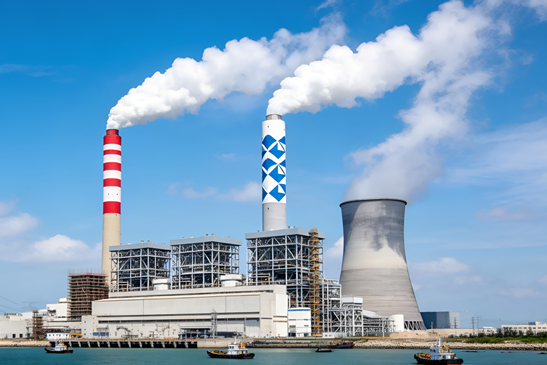
The expansion site for Phase III of Guoxin Yangzhou Power Plant, a clean and high-efficiency coal-fired power generation project equipped with two sets of 1,000-megawatt ultra-supercritical double-reheat generating units, sits on the northern bank of the Yangtze River south of the ancient city of Yangzhou. Tower cranes stand densely across the construction zone amid constant machinery operation. As a key provincial-level infrastructure project with a total investment of nearly 9 billion yuan, the facility advances at full speed to achieve full commercial operation of both generating units in the summer of 2027.
Beyond the bustling construction activities lies a sophisticated digital management backbone. Artificial intelligence, the Internet of Things and big data technologies have been embedded into every link of on-site construction management, shifting the traditional infrastructure management mode that relied heavily on manual patrols and empirical judgement to a data and computing-driven model. The upgrade delivers innovative solutions to long-standing safety management challenges in construction engineering by incorporating elements of new quality productive forces.
A large intelligent display screen installed in the project command centre functions as a digital control cockpit, presenting real-time updates on staff attendance, mechanical equipment operating conditions, environmental monitoring indicators and construction schedules. The system clearly marks inspection schedules for scaffolding structures and upcoming maintenance deadlines for special equipment. On-site safety supervisors gain full visibility of the entire construction site remotely without repeated on-site visits.
Digital transformation manifests itself in every operational detail. Colour-coded helmet stickers issued at the on-site certification centre serve as digital identity credentials for construction workers. A quick scan reveals each worker’s job type, training history and affiliated work team, eliminating ambiguities and mismatches in verifying qualification credentials for special operation practitioners.
AI patrol robots operate round the clock across the construction compound. Instant alerts are sent to management personnel’s mobile devices once safety violations such as missing safety helmets, on-site smoking and unauthorised hot work are detected. Exclusive QR codes are affixed to fire extinguisher cabinets, power distribution boxes and scaffolding assemblies. Inspectors submit inspection records via code scanning with automatic data archiving, replacing cumbersome manual ledger checks.
A dedicated AI safety experience zone gains wide popularity among construction labourers. It features electric shock simulation, fall protection drills, virtual reality accident reconstruction scenarios and hands-on cardiopulmonary resuscitation training. Customised training modules are rolled out for different worker groups: general workers receive training on working-at-height protection protocols, while specialised operators learn standardised equipment operation procedures, with tailored assessment questions aligned with actual job requirements to ensure knowledge translates directly into on-site practice.
Digital tools are deployed to tackle high-risk and technically complex sub-projects including deep foundation pits and high-formwork supports. Each high-risk construction segment is linked to dedicated monitoring terminals, enabling one-click access to special construction schemes, technical disclosure documents and on-site witnessing records. Construction progress and potential hazard points are updated synchronously, allowing transparent and controllable risk management without repeated manual cross-checks of piles of paper documents on site.
Intelligent optimisation also reshapes internal supervision workflows behind the scenes. Location tracking badges assigned to safety inspectors record their patrol routes and working durations in real time, leaving objective digital records to confirm full inspection coverage. Every piece of special machinery is assigned an electronic health file that logs maintenance timelines and component replacement records in a traceable manner, shifting safety management from post-incident emergency responses to proactive risk prevention.
This intelligent construction framework, trialled at the provincial state-owned energy enterprise’s flagship expansion scheme, keeps undergoing technical iteration. It will connect seamlessly to the power plant’s intelligent operation and maintenance system after construction completion, forming a full-cycle digital link covering both the construction and operational phases of the power facility. The integrated digital system is set to become a replicable and scalable benchmark for digitally enabled smart infrastructure construction.
Digital tools operate continuously alongside heavy construction machinery on site. These virtual digital collaborators are laying a solid digital foundation for the digital transformation of energy infrastructure in China’s economically robust coastal province.
热门内容推荐