China’s Cross-border E-commerce Expands Steadily with Surging Capital Backing Branding and Intelligent Upgrade
According to the National Bureau of Statistics, official data published by the National Bureau of Statistics of China demonstrates that China’s cross-border e-commerce sector achieved rapid expansion throughout the 14th Five-Year Plan period. The country’s cross-border e-commerce import and export volume reached 2.75 trillion yuan in 2025, representing a 69.7% increase compared with 2020. The average annual growth rate stood at 11.2% between 2021 and 2025, outperforming the overall growth of national foreign trade by 4.1 percentage points.
Multiple favourable factors jointly fuel the robust development of the industry. China’s complete and robust manufacturing industry guarantees sufficient commodity supply, while continuously upgraded digital technologies simplify the whole workflow of foreign trade. Rising global penetration of online shopping tightens the linkage between domestic and international markets. Improved cross-border logistics infrastructure removes bottlenecks restricting cross-border goods circulation. Policies including the expansion of cross-border e-commerce comprehensive pilot zones and streamlined customs clearance have been fully implemented to help foreign trade businesses explore overseas markets smoothly.
Statistics from the National Bureau of Statistics indicate continuous upgrading of national cross-border e-commerce comprehensive pilot zones. The total number of such pilot zones hit 178 by the end of 2025, covering all 31 provincial-level administrative regions nationwide. Local pilot zones keep assisting domestic enterprises in digital transformation and global expansion. By the end of 2024, over 120,000 cross-border e-commerce market players had been nurtured across the nation, roughly 16,000 of which have obtained high-tech enterprise certification, and more than 30,000 independent overseas brands have been developed with platform support.
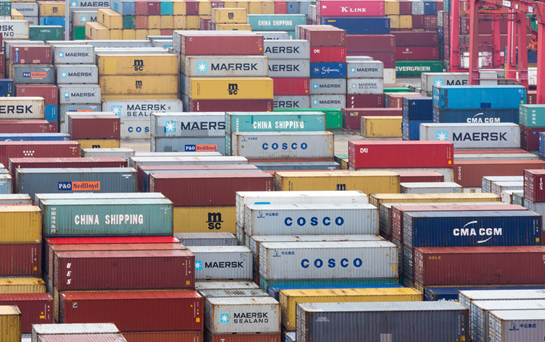
Cross-border e-commerce has turned into a core driving force boosting China’s merchandise foreign trade growth and delivers unique advantages in empowering small and medium-sized foreign trade enterprises. With inclusive global trade developing steadily, cross-border e-commerce restructures how small and medium-sized traders participate in global commerce. It cuts redundant intermediate trade links to connect manufacturers directly with end consumers and fits the demand for fragmented and frequent procurement. New business models featuring low-threshold market access, local overseas delivery and quick capital settlement grant numerous small and medium firms entry tickets to global markets.
Small and medium-sized foreign trade enterprises serve as the backbone of China’s foreign trade, and a large number of these businesses are based in county-level industrial bases. Cross-border e-commerce enables county-based manufacturers to sell products globally and inject fresh momentum into high-quality development of county economies. Cross-border e-commerce and industrial internationalisation promote each other’s growth. Industries with higher international acceptance secure more orders via cross-border e-commerce platforms and accordingly expand the industry’s market reach; wider global coverage of cross-border e-commerce in return helps Chinese products and services access more corners of the world and lift the international competitiveness of domestic industries.
In-depth collaboration between domestic industrial clusters and cross-border e-commerce generates prominent synergistic effects. Garment products from the Pearl River Delta and home appliances from the Yangtze River Delta are exported massively via e-commerce channels, producing synergetic benefits beyond individual gains and tapping new growth space for foreign trade. Against the backdrop of global industrial and supply chain restructuring and frequent geopolitical risks, cross-border e-commerce is far more than a conventional sales channel. It acts as an important structural strength to extend China’s industrial chains worldwide and secure supply chain stability in the digital economy era.
According to IT Juzi, investment data from industrial research platform IT Juzi shows capital is pouring into cross-border e-commerce at a faster pace this year. Up to the press date, 11 investment and financing deals have been sealed in the sector, with total funding reaching 590 million yuan, far exceeding the full-year financing volume of 340 million yuan in 2025. Fresh capital is mainly channelled into four core segments: cross-border logistics, cross-border payment, digital SaaS and AI supporting services, plus incubation of high value-added domestic proprietary brands. Many investment institutions focus on independent brand R&D for smart home goods and outdoor supplies alongside their localised overseas operation, pushing the sector away from the outdated low-margin bulk shipment model.
Currently, the sector deepens development in compliance, branding, intelligent transformation and diversified global layout with steady expansion of market scale. Continuous capital inflows will underpin the full industrial chain’s upgrading and overseas market expansion of China’s cross-border e-commerce in the future.
热门内容推荐