Eastern Route Water Diversion Project Completes Record Annual Water Transfer for North China Ecological Restoration
Xinhua News Agency reports the 2025–2026 annual water transfer operation of the northward emergency water supply project under the first phase of China’s South-to-North Water Diversion Eastern Route has officially concluded on June 2. Official operational statistics confirm the project delivered 359 million cubic metres of water to Hebei and Tianjin, alongside 177 million cubic metres of supplementary water to the Grand Canal by May 31, exceeding the preset annual water transfer quota.
The annual water dispatch effectively secures agricultural irrigation water demand across water-receiving northern regions. It sustains full water connectivity along the entire Grand Canal for five consecutive years, delivering tangible support for comprehensive groundwater over-exploitation management and ecological rehabilitation of rivers and lakes across North China.
China South-to-North Water Diversion Group and regional operational authorities have overcome complex hydrological and meteorological challenges throughout the operation cycle. Insufficient water inflow in the Huaihe River basin, abrupt shifts between drought and flood conditions, and unprecedented autumn flood events have posed stringent tests for water resource regulation. Through scientific water allocation and unified cross-regional project scheduling, the current operation achieves three historic breakthroughs since the project’s launch, including the earliest initiation date, the longest water conveyance cycle and the largest regulated water volume on record.
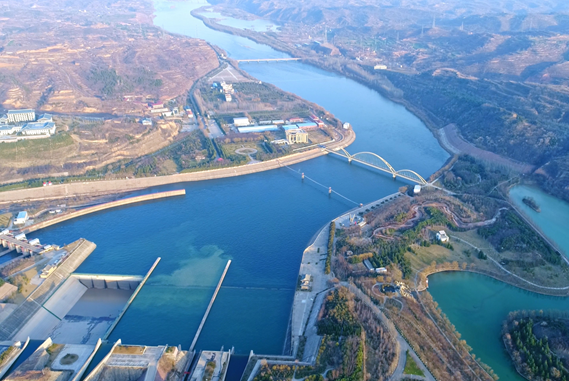
Adopting a progressive water diversion principle, the project initiated this year’s water dispatch in October last year under tailored operational arrangements, over 60 days earlier than previous annual schedules. The advanced launch maximises water supply efficiency and extends the effective service cycle of cross-basin water allocation. Collaborative operational mechanisms have been established among regional management bodies to strengthen joint management covering water volume monitoring, water quality guarantee and routine patrolling supervision.
A dual supervision framework integrating automatic intelligent monitoring and manual on-site inspection is fully implemented across the whole pipeline network. Key hydraulic facilities including gate stations and inverted siphons receive enhanced round-the-clock patrols and operational maintenance. Standardised monitoring of water volume and water quality at major monitoring sections ensures stable water quality compliance and consistent secure operation of the entire water diversion system.
Sustained supplementary water delivery for the Grand Canal continuously activates ecological vitality along the waterway corridor. Stable water replenishment facilitates green ecological development of riverside zones and elevates the comprehensive operational benefits of the cross-basin water diversion project.
The operational team will summarise mature scheduling and supervision experience accumulated during the annual water transfer campaign. Targeted measures will be implemented to advance high-quality development of the national water diversion project system. Optimised water resource allocation schemes and refined operational management mechanisms will further underpin national water security, coordinated regional development and long-term ecological restoration progress across North China’s river and lake systems.
热门内容推荐