China’s Electric Vehicles Grow Heavier as Industry Explores Lightweighting Solutions for Sustainable Growth
Xinhua News Agency publishes industry analysis built on official vehicle insurance statistics and research findings from domestic automotive think tanks, casting light on the expanding curb weight of China’s new energy passenger vehicles amid evolving consumer preferences and technical upgrades.
Official insurance transaction data spanning the first four months of 2026 puts the average curb weight of domestic new energy passenger cars at 1,939.3 kilogrammes, marking a 27.5 per cent climb against the full-year benchmark recorded back in 2020, which translates into an average weight gain of more than 400 kilogrammes per single vehicle within just six years. Many mainstream household electric models now tip the scale above two tonnes, with certain passenger cars even exceeding the unladen weight of small light commercial trucks, a shift that has sparked widespread discussion across automotive market participants and ordinary vehicle owners across the country.
Multiple overlapping factors combine to push up overall vehicle mass, with traction battery packs standing as the primary contributor to extra weight. Battery assemblies routinely weigh several times more than conventional internal combustion engines fitted to petrol-powered counterparts. For mid-size passenger cars of identical make and body configuration, combustion-engine variants normally register around 1,600 kilogrammes empty, while their fully electric equivalents easily surpass 2,000 kilogrammes in curb weight. Persistent range anxiety among end buyers has driven manufacturers to install larger-capacity battery modules to deliver longer driving mileage. The average battery capacity of battery-electric passenger vehicles reached roughly 63 kilowatt-hours in the opening four months of 2026, a 20 kilowatt-hour uplift compared with the average figure logged in 2020 and directly adding substantial bulk to finished automobiles.
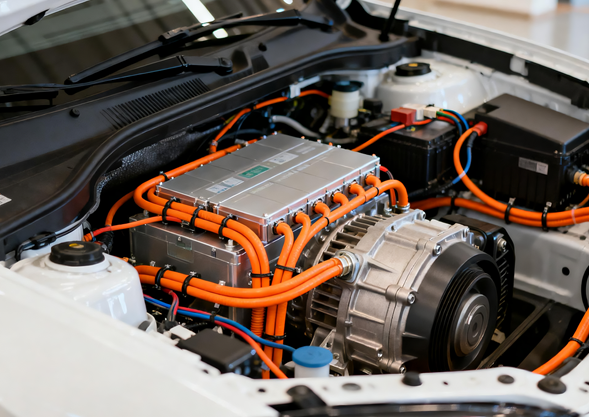
Advancements in onboard intelligent equipment constitute another steady source of incremental vehicle weight. Widely adopted advanced driver-assistance systems, immersive smart cockpits, multi-sensor fusion hardware and vehicular networking modules collectively add approximately 50 kilogrammes to each finished car as standard factory fitment. Extra structural reinforcement for enhanced crash protection, upgraded sound insulation components and reinforced chassis frameworks for improved ride comfort further inflate total vehicle tonnage across latest product line-ups.
While larger vehicle dimensions and upgraded specifications align with rising demand from mid-to-high-end consumer groups and help automotive manufacturers sharpen product competitiveness, unchecked weight expansion carries tangible downsides for daily usage and environmental sustainability. Heavier bodies generate greater driving inertia and restrict emergency manoeuvring space during unexpected road incidents, raising latent road safety risks for drivers and surrounding traffic. Extra bulk also demands higher power consumption during regular operation, running counter to the core energy-saving and low-carbon development goals for the new energy vehicle sector. Heightened vehicle measurements and heavier curb weights have triggered practical parking shortages across dense residential districts, a topic that has trended prominently across domestic social media platforms. Road engineering research confirms a 20 per cent rise in vehicle deadweight can roughly double the rate of pavement degradation on public highways and bridge infrastructures nationwide.
China’s domestic new energy vehicle industry is shifting focus from blind capacity expansion toward refined high-quality development, prompting the whole sector to rethink excessive hardware stacking and oversized body design practices. No direct correlation exists between enlarged vehicle scale and premium positioning or improved passive safety performance, leaving ample space for diversified product development tailored to varied driving scenarios and regional road conditions across China’s sprawling territory.
Escaping the vicious loop of raising driving range purely via enlarged battery packs and boosting product appeal through redundant component additions hinges firmly on breakthroughs in lightweight automotive engineering. Vehicle producers are set to ramp up research and industrial deployment of high-strength steel, aluminium alloys and advanced composite materials, alongside iterative optimisation of battery energy density and integrated pack layout to cut redundant structural weight from finished products.
Regulatory frameworks led by the Ministry of Industry and Information Technology form systematic guidance to steer rational industrial progress. Existing policies including corporate average fuel consumption and new energy vehicle dual-credit rules impose clear power consumption thresholds and systematic energy management constraints on automakers, pushing continuous technical iteration and curbing irrational over-weighting trends through targeted regulatory levers. Ongoing policy refinement will complement corporate technical upgrades to strike a balanced equilibrium among crash safety standards, cruising mileage, riding comfort and finite environmental resource limits for long-term industrial advancement.
热门内容推荐