China Advances Urban Waste Classification and Disposal Capacity with Solid Regulatory and Infrastructure Gains
Official data from the Ministry of Housing and Urban-Rural Development shows that China has built a comprehensive urban domestic waste disposal system with advanced processing capacity and sound institutional standards by the end of 2025, marking substantial progress in urban ecological governance and waste resource utilisation.
The national waste incineration infrastructure network has achieved large-scale coverage. The country hosts 1,137 waste incineration facilities with a daily processing capacity of 1.18 million tonnes. A total of 15 provincial-level administrative regions including Beijing, Zhejiang and Shandong have realised zero landfilling of raw domestic waste. The emission control standards for major pollutants from waste disposal facilities reach leading global levels, effectively lowering the environmental impact of urban waste treatment.
China has established a standardised institutional system to support long-term waste classification implementation. Prefecture-level and above cities across the country have issued 199 local laws and regulations targeting household waste classification, alongside more than 100 specialised technical standards and guidelines. Waste classification has become a fundamental urban governance initiative nationwide. Residential community waste classification coverage has been fully realised across all 297 prefecture-level and above cities, forming a standardised and universal grassroots governance pattern.
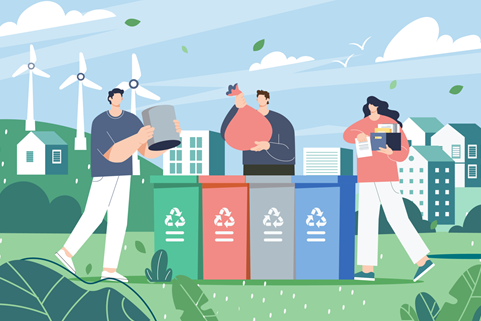
The fourth national urban household waste classification publicity week runs from May 25 to May 31 this year, further popularising scientific waste sorting concepts and guiding public participation in low-carbon and eco-friendly living practices. Continuous public awareness campaigns help consolidate existing governance outcomes and foster a social atmosphere for green urban development.
The Ministry of Housing and Urban-Rural Development will steadily advance waste reduction, resource recycling and harmless disposal in future work. Targeted and region-specific management mechanisms for recyclable waste will be optimised to raise the overall efficiency of waste resource recovery and reuse. Consistent policy implementation will further refine classified waste management workflows and support refined urban environmental governance.
Systematic upgrades in infrastructure capacity and institutional construction lay a solid foundation for long-term industrial development. Steady optimisation of waste recycling systems will drive the continuous improvement of resource utilisation efficiency. The country targets an urban domestic waste resource utilisation rate of over 76 percent by the end of 2030, further unlocking the resource value of urban domestic waste and promoting sustainable urban ecological development.
热门内容推荐