Yangtze Delta’s Borderless Industrial Cluster Drives High-quality Integrated Development
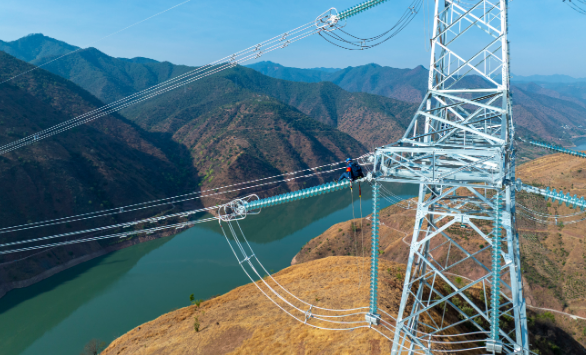
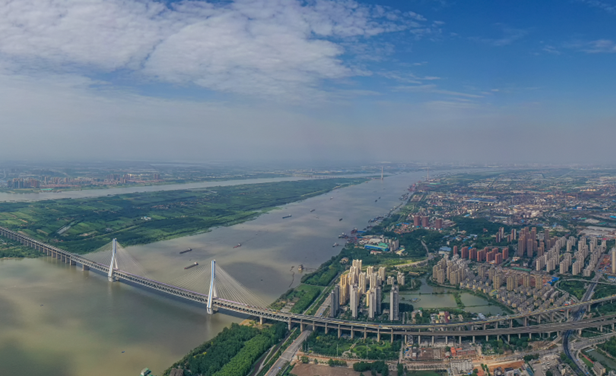
China’s Yangtze River Delta region has built a highly efficient borderless industrial ecosystem through in-depth regional integration, enabling full industrial chain support and rapid technological iteration across Shanghai, Jiangsu, Zhejiang and Anhui. The region now stands as one of China’s most economically vibrant, open and innovation-driven growth poles, with continuous breakthroughs in interconnected infrastructure, industrial synergy and technological collaboration.
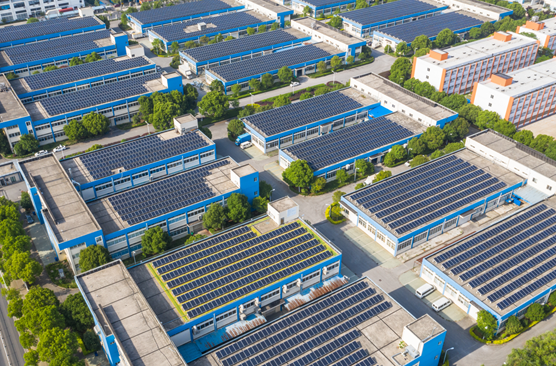
Regional industrial coordination has delivered remarkable operational efficiency. Within a four-hour transportation radius across the Yangtze Delta, manufacturers can source all components for a new energy vehicle. A six-axis industrial robot can be fully assembled on local production lines in merely 12 minutes. Such efficient industrial matching stems from mature cross-regional layout covering whole-process research, manufacturing and application.
Cross-administrative industrial collaboration has become mainstream across the region. A marine medium-speed engine independently developed in China adopts a segmented industrial layout, with research and design completed in Shanghai, assembly conducted in Jiangsu, and practical application scheduled for transport vessels in Zhejiang starting July this year. Over 70 percent of the engine’s thousands of components are supplied by local Yangtze Delta enterprises, achieving same-day component delivery.
Key strategic industries including large aircraft manufacturing and innovative pharmaceuticals also benefit profoundly from integrated development. Commercial Aircraft Corporation of China undertakes core design, assembly and testing in Shanghai, while enterprises in Jiangsu provide supporting supplies and a Zhejiang firm serves as a designated supplier for the C929 fuselage project. For biopharmaceutical enterprises, technological achievements incubated in Shanghai Zhangjiang High-tech Park can be rapidly transferred to Wujiang in Jiangsu, greatly shortening commercialisation cycles.
Deepened regional synergy generates strong multiplier effects on technological innovation. Joint efforts across the Yangtze Delta have broken long-term overseas monopolies in multiple core technological fields. Advanced carbon-13 isotope industrialisation technologies are developed in Shanghai and mass-produced in Jiangsu and Anhui with regional clinical verification. AI intelligent inspection equipment and high-end sensing instruments adopt a collaborative model of technological research in Hefei, product iteration in Hangzhou and scenario promotion across the delta, accelerating domestic substitution of high-end devices.
The region’s innovation vitality continues to grow with improved resource allocation. As of May this year, the Yangtze Delta has launched 105 joint key research projects covering integrated circuits, artificial intelligence and biomedicine. Thirty-six innovation consortia have been established in recent three years, focusing on new energy, new materials and nuclear fusion energy. The region’s artificial intelligence and biomedicine industries account for one-third of China’s total market scale.
Optimised institutional mechanisms further bolster foreign trade and global competitiveness. According to Shanghai Customs data, the Yangtze Delta’s import and export volume reached 6.14 trillion yuan in the first four months of this year, hitting a record high for the period with a 15.9 percent year-on-year increase and accounting for 37.8 percent of China’s total foreign trade. Local authorities have launched 197 digital application scenarios in shipping, trade and finance sectors, streamlining cross-border logistics and trade procedures.
Empowered by integrated development, regional enterprises are expanding global influence. At the 2026 American Society of Clinical Oncology Annual Meeting, over half of China’s selected pharmaceutical research projects came from Yangtze Delta enterprises. The complete industrial ecosystem covering R&D, production and clinical trials across the four provincial-level regions offers solid advantages for technological innovation and global market expansion.
The Yangtze Delta will further optimise cross-regional innovation systems and build more resilient industrial chains. Continuous improvement in integrated development will strengthen the region’s position among global urban clusters and deepen its links with global industrial and supply networks.
热门内容推荐