China Expands Public Rental Housing Coverage for Non-registered Urban Residents
China is broadening its public rental housing scheme to include more non-local resident families with stable urban employment and residency, rolling out targeted policies to strengthen people’s livelihood security and boost urban vitality.
The requirements are outlined in the 15th Five-Year Plan, which encourages cities nationwide to extend public rental housing access to qualified non-registered households. The State Council further clarified the arrangement in its guideline released on May 22 regarding improving basic public services based on permanent residence. The new rules will enable more young workers, food delivery staff and frontline public service employees to access affordable government-subsidized housing.
China has established a multi-tiered affordable housing system covering public rental housing, indemnificatory rental housing and subsidized commercial housing for different social groups. During the 14th Five-Year Plan period, the country built the world’s largest urban housing security network. Authorities have funded and constructed more than 11 million units of various indemnificatory housing and resettlement housing for urban renewal projects, benefiting over 30 million residents.
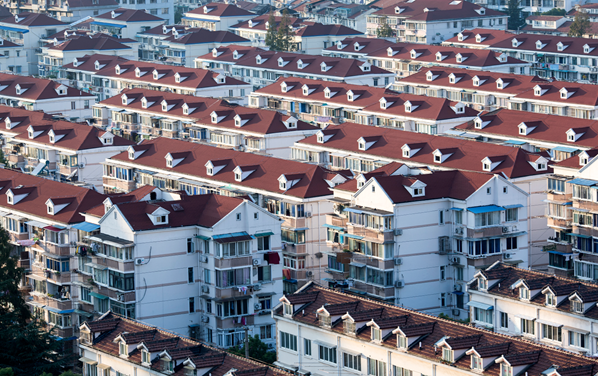
Public rental housing mainly targets low-income households, middle and low-income urban families with housing difficulties, newly employed young workers and migrant workers with stable urban jobs. Regional authorities have scaled up housing supply and subsidies to meet grassroots housing demands. Sichuan has offered housing security to 506,000 households via physical public rental housing units, with local authorities issuing 168 million yuan of rental subsidies to 52,200 needy families in 2025. Yunnan has completed 911,900 public rental housing units in total, while Chongqing allocated 86,000 new units in 2025.
While expanding supply, China is upgrading the quality and management of public rental housing communities. Old residential compounds with outdated pipelines and facilities are undergoing systematic renovation, with improved public amenities and intelligent management systems to deliver better living experiences.
Local governments have launched tailored measures to optimize housing services. Jiangsu has introduced a housing swap mechanism to accommodate changing living and working demands of tenant families. Bengbu in Anhui province has conducted regular facility inspections and renovation projects for aging public rental housing units to eliminate safety risks. Chongqing plans to carry out quality upgrades for 25 public rental communities in 2026, optimizing elderly and childcare services and promoting intelligent property management.
Major cities continue to lower application thresholds for non-local residents. Hangzhou and Kunming have fully included qualified migrant workers into public rental housing security. Zhengzhou has simplified application rules for non-local households, cutting the required pension insurance payment period from 24 cumulative months within three years to 12 consecutive months and scrapping the residence permit requirement.
The expansion of public rental housing safeguards the legitimate rights of non-registered residents who underpin urban operation and industrial development. Stable housing support helps workers focus on career development, unlocks greater consumption potential, and consolidates sustainable urban development momentum.
热门内容推荐