2026 China-Africa Financial Bridges Forum Held in Beijing, Building Financial Links to Deepen China-Africa Economic and Trade Cooperation
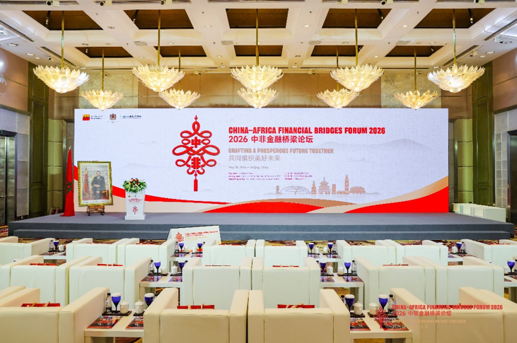
Against the backdrop of the continuous deepening of the Forum on China-Africa Cooperation and the launch of China’s 15th Five-Year Plan aimed at expanding domestic demand and stabilizing foreign trade, China-Africa economic and trade exchanges have been steadily growing. As a core pillar of connectivity, finance has become increasingly crucial in breaking down bilateral trade barriers, empowering industrial investment, and deepening all-round cooperation. To further consolidate the foundation of China-Africa financial cooperation, smooth two-way investment and financing channels, and tap into new growth potential for economic and trade cooperation, the 2026 China-Africa Financial Bridges Forum, themed "Crafting a Prosperous Future Together", officially opened on May 20 at Beijing Financial Street. Supported by the Xicheng District People’s Government of Beijing Municipality, the forum was hosted by Attijariwafa Bank, co-organized by the Embassy of the Kingdom of Morocco in China, and strategically supported by the China-Africa Business Council. More than 200 guests, including government representatives, diplomatic envoys, financial institutions, and business leaders from China and Africa, gathered at the venue. Focused on empowering economic and trade cooperation through finance, they explored new opportunities for two-way investment between China and Africa and discussed practical and collaborative development paths.
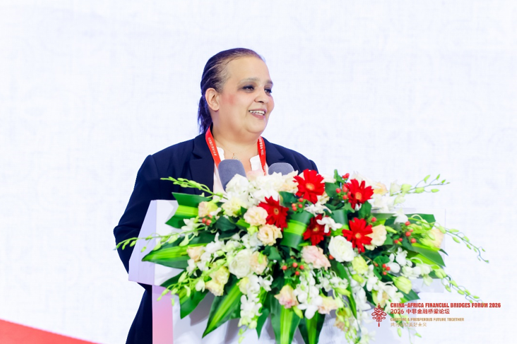
The forum was presided over by Ms. Btissam DAKKOUNI, Chief Representative of Attijariwafa Bank in China. In her opening remarks, Ms. Dakkouni elaborated on the contemporary significance of the forum. She noted that Beijing has long been the core platform for global China-Africa economic dialogue. Today, China-Africa cooperation has moved beyond the stage of exploring potential, reshaping the economic development landscape of Asia and Africa through practical measures such as regular trade exchanges, cross-border capital flows, joint infrastructure development, and two-way talent exchanges.
She introduced that since entering the Chinese market, Attijariwafa Bank has maintained in-depth and regular cooperation with domestic financial institutions, industrial and commercial enterprises, and industry chambers, providing comprehensive financial support for cross-border investment and trade financing between China and Africa. Going forward, the bank will continue to focus on China-Africa economic and trade finance. Leveraging its network of over 8,000 branches across 27 countries worldwide, including 15 African nations, it will continue to build a stable and efficient bridge for China-Africa financial cooperation.
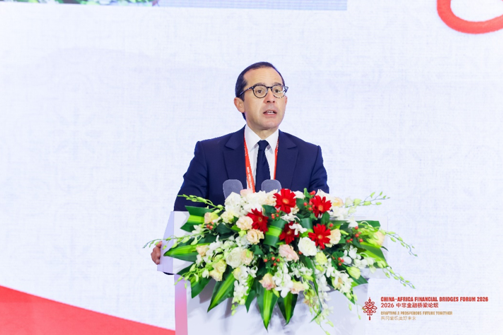
Youssef ROUISSI, Co-CEO of Attijariwafa Bank, delivered a keynote speech. He pointed out that the China-Africa Economic Corridor is one of the fastest-growing cooperative economic belts globally, with strong momentum in economic and trade cooperation. Statistics show that China-Africa trade volume reached USD 348 billion in 2025, a year-on-year increase of 17.7%. China has remained Africa’s largest trading partner for 16 consecutive years. Notably, starting from May 2026, China will implement a full zero-tariff policy for 53 African countries with diplomatic relations, releasing significant policy dividends for upgrading and expanding China-Africa economic and trade cooperation.
As a leading comprehensive financial institution with a century-long presence in Africa, Attijariwafa Bank made an early foray into the Chinese market. It launched RMB-denominated financial services as early as 2014, establishing a dedicated Africa-Asia Corridor business department and a China service team to provide full-chain supporting services including policy consultation, trade financing, project investment and financing, and capital market services. Mr. Rouissi emphasized that Morocco, located at the crossroads of Asia, Africa and Europe, boasts a unique geographical location, sound economic development, stable business policies, complete infrastructure, and holds 70% of the world’s phosphate reserves, making it a core investment destination in Africa with great potential. Going forward, the bank will leverage Morocco’s gateway advantage to support more Chinese enterprises in expanding into Africa, while facilitating the connection of Africa’s high-quality resources and specialty products to the Chinese market.
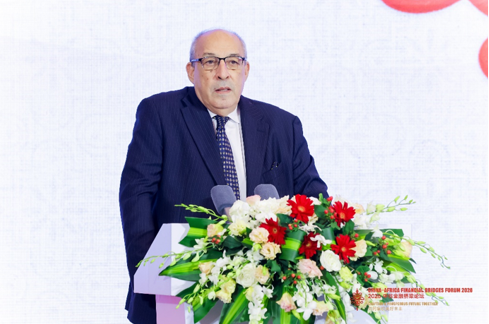
Abdelkader ANSARI, His Excellency Ambassador of the Kingdom of Morocco to China, attended the forum and delivered a speech. He stated that 2026 marks the 10th anniversary of the establishment of the China-Morocco Strategic Partnership. Over the past decade, the two countries have enjoyed solid political mutual trust, fruitful economic and trade cooperation, and close exchanges. Currently, China is Morocco’s third-largest trading partner globally and its largest in the Asia-Pacific region. China’s cumulative investment in Morocco has exceeded USD 10 billion, with more than 120 Chinese enterprises operating in Morocco. Relying on the three pillars of political mutual trust, economic and trade cooperation, and people-to-people connectivity, China and Morocco have achieved a number of key outcomes in areas such as signing diplomatic memorandums, mutual visa exemption, and joint development of new urban industries. He stressed that Morocco is a pivotal hub for China-Africa cooperation. Local financial institutions have rich experience in operating in Africa, providing robust financial support for Chinese enterprises expanding into Africa. He called on all parties to join hands to advance China-Morocco and China-Africa cooperation to a deeper level.
Wang Li, Chief Supervisor of the China-Africa Business Council, interpreted the new strategic opportunities for China-Africa cooperation against the current development trends. She noted that 2026 is not only the first year of China’s 15th Five-Year Plan, but also a crucial year for implementing the outcomes of the FOCAC Beijing Summit and advancing the Ten Partnership Initiatives. In the first four months of this year, China’s total import and export volume with African countries reached RMB 885.34 billion, a year-on-year increase of 19.4%, ushering in a window period for rapid development of China-Africa economic and trade cooperation.
It is reported that the China-Africa Business Council has been engaged in China-Africa economic and trade services for nearly 20 years, serving over 4,000 enterprises. It has facilitated cumulative investment and reinvestment in Africa exceeding USD 22 billion, helping create more than 1.8 million local jobs in Africa. Going forward, leveraging its four service platforms—matching services, rights protection, capacity building, information research—and a commercial mediation mechanism, the council will continue to provide one-stop, full-process services for China-Africa business cooperation, deepen collaboration with Attijariwafa Bank and other institutions, and ensure the implementation of various cooperation projects.
Feng Kai, London Stock Exchange Group APAC Regional Contributors Manager, analyzed new trends in China-Africa cooperation from a capital investment perspective. He introduced that over the past two decades, China’s M&A investment in Africa has accounted for 10.2% of the global total, making China the world’s third-largest source of investment in Africa. Currently, China’s investment structure in Africa is continuously optimized, gradually shifting from traditional energy and resources to emerging sectors such as new energy, critical minerals, infrastructure projects, and local manufacturing. Notably, renewable energy infrastructure in Africa has become a new investment hotspot, with a total market size of USD 773.4 billion from 2020 to 2025. Egypt, Morocco, the Democratic Republic of the Congo, and South Africa are the core host regions. He suggested that China-Africa cooperation should move beyond the single project construction model, building integrated solutions that integrate policy, capital, construction, operation, and localization to consolidate the foundation for long-term cooperation.
Aziz EL KHYARI, Casablanca Finance City Business Development & African Cooperation Director, highlighted the advantages of the local financial hub and business environment. He stated that Casablanca Finance City is Morocco’s flagship African financial gateway. Boasting a sound business ecosystem, stable policies and exchange rates, it consistently ranks first in the African Financial Centers Index. The financial city has free trade agreements with 55 countries worldwide, and its airport offers direct flights to the capitals of 33 African countries. Enterprises headquartered here enjoy multiple preferential policies, including five-year tax exemptions, free cross-border capital flows, and flexible employment of foreign staff. At present, many Chinese institutions, including Bank of China and Huawei, have established regional headquarters here, making it an ideal base for Chinese enterprises to expand into Africa and radiate to European and American markets.
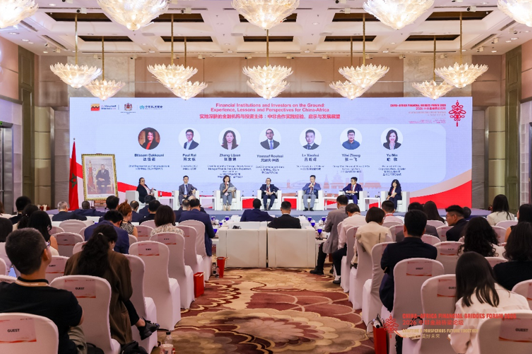
A thematic roundtable discussion was held concurrently during the forum, conducting in-depth exchanges on China-Africa financial innovation, industrial investment practices, and future prospects. Representatives from financial institutions and industrial enterprises, including Bank of China, China-Africa Development Fund, China International Capital Corporation, JA Solar Technology, and Gotion High-Tech, shared frontline practical experience. Financial institution representatives stated that they will continue to improve their service networks in Africa, promote RMB cross-border settlement services, and leverage capital market tools to help Chinese and African enterprises reduce costs, increase efficiency, and implement projects. New energy enterprise representatives expressed optimism about Morocco’s geographical, resource, and policy advantages, planning to accelerate localized production in Africa with the support of local financial institutions to achieve mutually beneficial industrial cooperation.
The forum reached a number of cooperation consensus. All parties will implement concrete measures focusing on facilitating trade financing, precisely connecting key projects, and upgrading enterprise service capabilities, injecting financial vitality into the high-quality development of China-Africa economic and trade cooperation. Meanwhile, the forum officially established an institutionalized and long-term operation model, building a dedicated cooperation platform for policy communication, project matching, and outcome implementation between China and Africa, to continuously empower all-round practical cooperation between the two sides.
热门内容推荐