Tibet Unlocks Major Copper and Chromite Reserves to Strengthen China’s Critical Mineral Security
The Ministry of Natural Resources has released significant new mineral exploration outcomes in Xizang, delivering substantial reserve growth for copper, molybdenum, silver and chromite resources and reinforcing China’s supply capacity of strategic minerals.
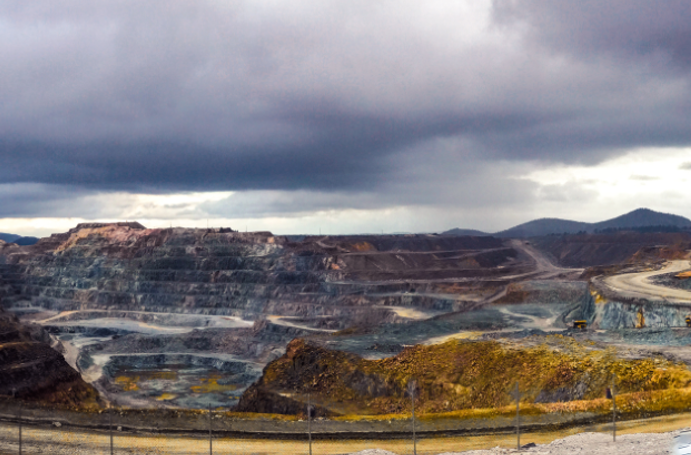
Exploration work at the Yulong Copper Mine in Jiangda County has identified additional resources including 1.3142 million tonnes of copper, 107,700 tonnes of molybdenum and 793 tonnes of silver. The total verified reserves of the Yulong mining complex now stand at 7.534 million tonnes of copper, 459,000 tonnes of molybdenum and 3,048 tonnes of silver. As one of China’s largest and most economically valuable porphyry-skarn polymetallic deposits, the mine currently produces over 150,000 tonnes of copper metal annually.
New breakthroughs have also been achieved in chromite exploration across Xizang. The Luobusha mining area has added 738,300 tonnes of chromite reserves. The Dongqiao region has seen the first systematic evaluation of sedimentary chromite deposits, with 1.1463 million tonnes of associated chromite resources newly confirmed.
Copper is internationally recognised as a vital energy transition mineral, underpinning traditional manufacturing, new energy industries and advanced material development. China ranks among the world’s top producers and consumers of copper products, accounting for more than half of global copper consumption. Insufficient domestic reserve endowments and rising global demand have kept the copper market under long-term supply pressure.
Continuous reserve expansion in Xizang helps ease domestic supply tensions and stabilise the industrial and supply chains of critical minerals. The Qinghai-Xizang Plateau holds over two-thirds of China’s copper resources and retains vast exploration potential, reshaping the country’s domestic mineral development layout. Four ten-million-tonne-level copper bases have taken shape in the region, with an estimated resource potential of 150 million tonnes, laying the foundation for world-class mineral resource clusters. New copper reserves discovered in Xizang within the first four years of the 14th Five-Year Plan period have reached 29.6 million tonnes, while the total growth from the national strategic mineral exploration initiative has hit 48.25 million tonnes in five years.
Chromite serves as a core raw material for ferrochrome production, widely applied in high-end metallurgy, aerospace equipment and marine engineering manufacturing. China faces severe chromite shortages, with its global reserve proportion below 1 per cent and high reliance on external supply. The Luobusha deposit, with total verified reserves exceeding 10 million tonnes, is China’s largest and only operational chromite mine.
Targeted exploration policies are being rolled out to improve resource utilisation. China has formulated targeted development plans for chromite resources and incorporated specialised exploration arrangements into national geological surveys. Systematic mineral surveys and block optimisation are being advanced across Xizang, Xinjiang and Inner Mongolia to tap prospective chromite deposits.
Updated regulatory frameworks further support industry development. The revised Mineral Resources Law took effect in July 2025, with supporting regulations reviewed and approved recently. Improved mining rights management and development mechanisms mobilise market enthusiasm for mineral exploration, steadily upgrading the country’s critical mineral security guarantee capabilities.
热门内容推荐