China Charts Systematic Path for Smart Economic New Form to Fuel High-quality Growth
China is advancing the development of a new smart economic form as a core driver of high-quality economic transformation and new productive forces cultivation, following clear top-level policy deployments for industrial upgrading and technological innovation. The year’s government work report has for the first time proposed fostering a new smart economic form, while a late April meeting of the Political Bureau of the Communist Party of China Central Committee further rolled out the comprehensive "AI Plus" initiative, refined smart economic development arrangements, and improved artificial intelligence governance systems.
Evolved from the digital economy, the new smart economic form stands as an advanced economic iteration reshaping global industrial competition and underpinning steady economic growth. Against the backdrop of China’s critical economic transformation phase, this emerging model has become an essential approach to accumulating new growth momentum and unlocking industrial potential.
Unlike traditional growth models reliant on limited tangible production factors such as labour, capital and land, the smart economy takes data and algorithms as core innovative production elements. Featuring non-competitiveness, near-zero marginal costs and strong industrial penetration, these elements deliver exponential improvements in total factor productivity rather than linear growth. Through in-depth embedding of AI technologies into full industrial chains covering research, manufacturing and operational management, the new form enables automated knowledge application, intelligent decision-making and flexible production, effectively breaking traditional growth bottlenecks.

The ongoing "AI Plus" initiative is restructuring China’s industrial logic and optimising the modern industrial system. It dismantles cross-industry barriers to facilitate integrated and collaborative innovation across primary, secondary and tertiary industries. Traditional sectors achieve cost reduction, efficiency improvement and model upgrading through digital and intelligent transformation, while strategic emerging industries including smart chips, large AI models and autonomous driving maintain robust growth. The dual progress of optimising traditional stock and expanding emerging industrial increments strengthens industrial resilience and propels domestic industries toward the middle and high ends of global value chains.
Data-driven resource allocation also substantially enhances national economic circulation efficiency. Smart logistics, intelligent finance and industrial internet platforms bridge information gaps between supply and demand, cut transaction, inventory and search costs, and eliminate resource mismatches. Such precise matching mechanisms drive the national economic cycle toward higher accuracy and efficiency.
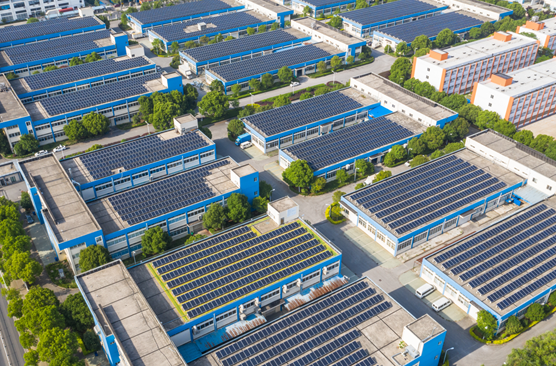
The new smart economic form also balances regional coordination and green development. Free from geographical constraints, it empowers underdeveloped regions to participate in global intelligent industrial division through computing infrastructure construction and online service economy development. The coordinated development of computing power and clean energy drives the layout of data centres in western regions rich in green power resources, converting ecological advantages into digital economic strengths, narrowing regional digital divides and supporting low-carbon sustainable development.
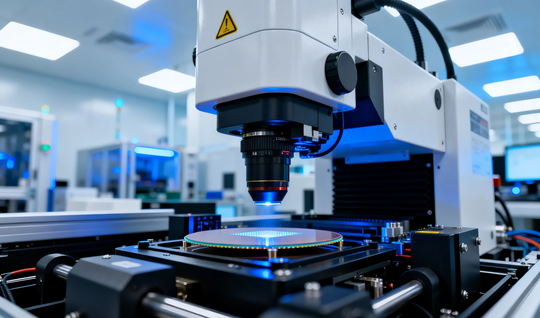
As a systematic project, smart economic advancement requires coordinated efforts across technological innovation, industrial integration, ecological construction, infrastructure support and institutional improvement. China will prioritise original technological breakthroughs in next-generation large models, general intelligent agents and high-performance computing chips, pooling national sci-tech resources to tackle core algorithm and chip challenges. It will build a self-dependent technological system covering chips, frameworks, models and applications to consolidate industrial security and competitive edges.
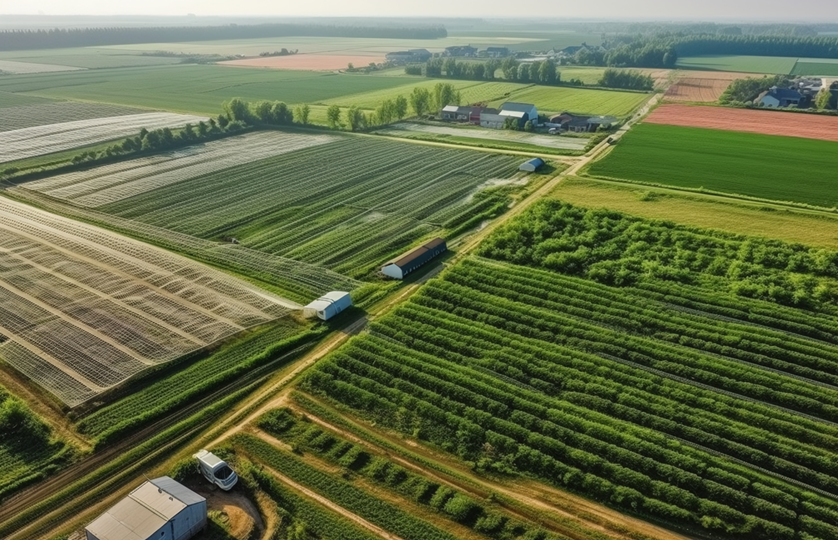
Continuous efforts will be made to translate technological advantages into industrial value. More benchmark AI application scenarios will be cultivated in intelligent manufacturing, healthcare, urban governance and modern agriculture. A closed-loop mechanism featuring scenario-driven innovation, data iteration and value enhancement will be established to promote replicable industrial integration models.
China will further optimise the innovation ecosystem by building collaborative communities of enterprises, universities and research institutions, and developing professional AI industrial parks and open-source communities. Targeted improvements in computing infrastructure, national computing scheduling systems and standardised multi-modal datasets will eliminate data silos. Optimised regulatory frameworks and talent cultivation systems, alongside improved AI governance mechanisms, will sustain the healthy, orderly and long-term development of the smart economy.
热门内容推荐