China Advances Regulation of Waste Power Battery Recycling Amid Accelerated Retirement Wave
Xinhua News Agency reports that a new interim measure on the recycling and comprehensive utilization of waste power batteries for new energy vehicles has recently come into effect. Jointly issued by six ministries and commissions including the Ministry of Industry and Information Technology, the measure implements full-life-cycle supervision of power batteries, marking a shift in China’s waste power battery recycling industry from policy-driven to a dual-driven model of market and regulation.
As China’s new energy vehicle industry develops on a large scale, an accelerated wave of power battery retirement is approaching. Official data shows that China’s new energy vehicle production and sales both exceeded 16 million units in 2025, accounting for more than half of domestic new car sales, and the output of waste power batteries is growing steadily, with an estimated 1 million tons to be generated annually by 2030.
Across China, local regions are leveraging their industrial advantages to introduce supporting policies, layout industrial projects and innovate development models to seize the high ground in the green circular economy. Sichuan, the province with the largest number of motor vehicles in southwest China, saw the number of new energy vehicles in Chengdu exceed 1 million in 2025 and is expected to witness the first large-scale retirement of power batteries in the next two to three years. To regulate industrial development, Sichuan issued an interim measure for the province in May 2025, the first provincial-level normative document specifically governing this field, which takes the lead in cultivating a provincial "white list" of comprehensive utilization enterprises to drive industry upgrading.
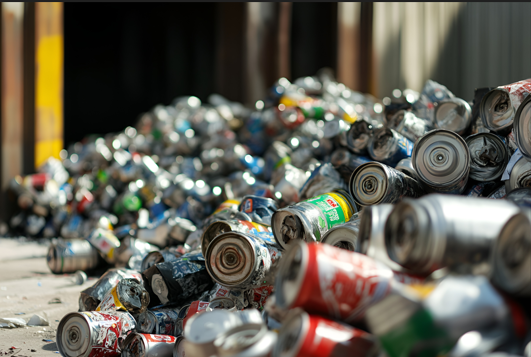
Jingmen in Hubei, a national circular economy demonstration city and the largest power energy storage battery production base in Hubei, has provided sustained policy support for the industry. As early as 2023, Jingmen introduced a policy offering a subsidy of 50 yuan per ton of recycled and utilized waste power batteries. In February 2025, it issued another implementation plan, aiming to build an advanced national demonstration base for waste battery recycling and utilization with a comprehensive utilization capacity of over 1 million tons by 2030.
Guangdong, relying on the Pearl River Delta industrial cluster and regional coordination with eastern, western and northern Guangdong, has initially formed a development pattern featuring policy guidance, market leadership, technological support and regional linkage. With the implementation of the new interim measure, a new ecological system for the power battery recycling industry, based on regulation, supported by technology and guided by the market, is taking shape rapidly in the province.
Leading enterprises and scientific research forces are working together to promote the industry’s transformation from extensive recycling to refined utilization and from single-point breakthroughs to full-chain development. In Sichuan, a benchmark enterprise operates the province’s first full-process waste power battery recycling production line with an annual processing capacity of 20,000 tons, realizing integrated operations from battery disassembly to valuable metal extraction and deep processing. Joint laboratories established by universities and enterprises are also focusing on core technologies such as material regeneration and pollution control to accelerate the transformation of scientific research achievements.
In Jingmen, multiple leading enterprises have gathered to build a full industrial chain for waste power battery recycling. One key enterprise has invested 1.066 billion yuan since 2022 to launch two recycling projects, processing 52,000 tons of retired batteries in 2025. The total capacity of built and under-construction waste battery recycling facilities in Jingmen has reached 364,000 tons per year.
Guangdong has explored distinctive paths in recycling model innovation and industrial park agglomeration. Some enterprises have opened up a closed-loop chain from car sales to battery retirement by relying on 4S store networks, while industrial parks in Shaoguan have gathered 52 related enterprises to form a complete chain from recycling and disassembly to material regeneration, with the characteristic industry output accounting for over 90% of the park’s total in 2025.
Despite the promising prospects of the industry, common challenges remain, including the large market share of informal workshops and high cross-regional transportation costs. Relevant suggestions have been put forward to address these bottlenecks, such as introducing transportation subsidies and linking new energy vehicle subsidies with standardized recycling. With the in-depth implementation of the interim measure and continuous improvements in policies and technologies, the huge potential of waste power batteries as an "urban mine" will be fully released, injecting strong momentum into the development of the green circular economy.
热门内容推荐