China’s Cement Industry Faces Weak Demand and Price Decline in Q1, Seeking Transformation for Stable Development
In the first quarter of this year, China’s cement industry generally showed the characteristics of "weak demand, falling output and price, and widespread losses" compared with the same period last year. Data from the National Bureau of Statistics shows that the country’s cumulative cement output in the first quarter reached 301 million tons, a year-on-year decrease of 7.1%, and the decline expanded by 5.7 percentage points compared with the same period last year. The industry is now in a critical period of in-depth adjustment and transformation, with enterprises focusing on stabilizing prices and striving for profits to cope with market challenges.
Downstream demand in the cement industry remained weak in the first quarter. In March alone, the national cement output was 123 million tons, a year-on-year decrease of 21%, which was about 34.8 million tons lower than the same period last year, and the cumulative output was the second lowest level in the same period in nearly 17 years. Zhongjing Database confirms that the monthly cement output in March 2026 was 123.0983 million tons, consistent with the data released by the National Bureau of Statistics.
Regionally, except for the southwest region, cement output in all other regions of the country decreased to varying degrees. As core cement consumption areas, East China and North China saw double-digit declines in demand, which had a significant impact on the national total cement demand. In particular, East China’s cement output accounted for 35.15% of the country, and its decline of more than 11% was the primary reason for the drop in national cement output.
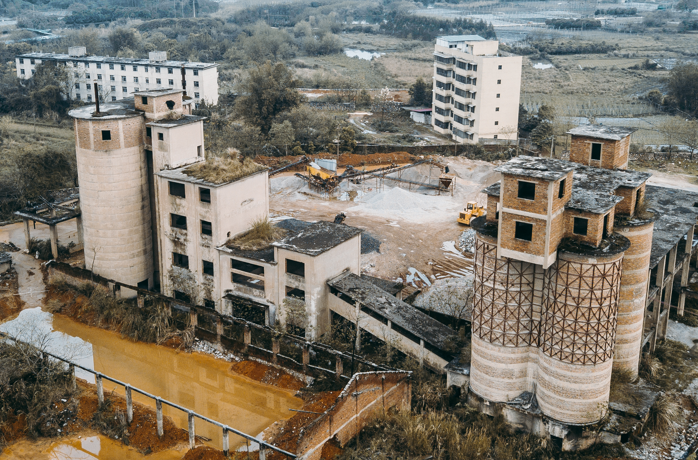
While demand declined, the supply side of the cement industry failed to shrink sufficiently, leading to a gradual increase in inventory. Digital Cement Network monitoring data shows that the inventory capacity ratio of the cement industry in the first quarter was 62%, 4 percentage points higher than the same period last year. Most regions formulated and implemented peak-shifting production plans, but the overall implementation intensity in some core markets was insufficient, resulting in prominent supply-demand imbalance.
The domestic cement market price also showed a downward trend under pressure in the first quarter. Digital Cement Network reports that from January to March this year, the average transaction price of 42.5-grade cement bulk landing price in the national cement market was 343 yuan per ton, a decrease of 54 yuan per ton or 14% compared with the same period last year. Prices fell month by month in the first quarter, falling below the lowest point of last year, putting most cement enterprises in a dilemma of break-even or loss.
To cope with the downward pressure of demand, the cement industry has taken the initiative to "slim down". The Ministry of Industry and Information Technology stated that in the first quarter, the cement industry reduced and withdrew nearly 30 million tons of production capacity through capacity replacement, which directly reduced market supply, eased the pressure of high inventory, and curbed "involutionary" competition where cement prices fell below the cost line.
Many cement enterprises have also optimized their structures through capacity replacement and technological upgrading to hedge against price declines. Jinyu Jidong Cement Group has carried out special transformation on cement grinding systems to improve efficiency and save costs, and built a new industrial ecological chain of "cement + aggregate + mortar + commercial concrete" to enrich its product matrix. It plans to promote precise peak-shifting in non-heating seasons and continuously stabilize output and increase prices in 2026.
The cement industry is expected to show a narrow shock adjustment trend in the second quarter, with a slight improvement in output and price compared with the first quarter but weak overall recovery momentum. Enterprises will continue to focus on keeping the price bottom line to avoid large-scale losses. Moving forward, the industry will focus on compliance operation, green low-carbon development and innovation-driven development, promote the transformation from "quantity expansion" to "quality improvement", and lay a solid foundation for stable and high-quality development.
热门内容推荐