Global Auto Innovation Shifts East: China Leads as Tech Hub and Joint Venture Game-Changer
Recent months have witnessed a series of landmark moves in China’s auto industry, signaling a profound shift in the global automotive innovation landscape and a complete rewrite of the 40-year-old "market for technology" joint venture logic. On March 31, the last fuel-powered Land Rover Range Rover Evoque rolled off the production line at Chery Jaguar Land Rover’s factory, replaced by the new cross-border new energy brand "FREELANDER".
Almost simultaneously, the first jointly developed model by Volkswagen and Xpeng rolled off the production line. Mercedes-Benz announced the upgrade of its Shanghai R&D center from a regional technical branch to a global innovation hub, while BMW Group directors visited Great Wall Motors to discuss in-depth technological cooperation. These intensive developments clearly show that the global auto industry’s innovation map is shifting eastward.
China’s auto tech firms, once hidden behind automakers as secondary suppliers providing algorithms, chips and sensor solutions, have now moved to the forefront. Leading players such as Momenta, Horizon and Huawei’s affiliated Yinwang Intelligent Technology have made remarkable breakthroughs. Momenta’s City Navigation Assisted Driving (NOA) function is now featured in over 160 mass-produced models, adopted by luxury brands including Audi, Mercedes-Benz and BMW.
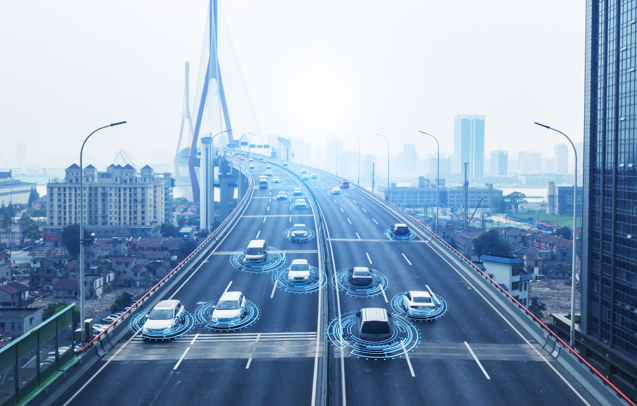
Horizon, listed on the Hong Kong Stock Exchange in October 2024, has seen growing shipments of its Journey series chips, attracting partnerships with Chery, Changan and Volkswagen to maintain its leading position in China’s in-vehicle intelligent computing platforms. Huawei’s "Qiankun" intelligent driving brand covers the full price range from below 200,000 yuan to million-level luxury cars, with its Harmony Intelligent Travel Alliance expanding to five brands.
China Daily reported that transnational automakers are undergoing a second "entry into China", shifting their focus from "made in China for China" to "developed in China for the world". Audi launched its new luxury electric brand AUDI two years ago, with its first model E5 Sportback integrating intelligent four-wheel drive, Doubao-powered voice assistant and Momenta-developed intelligent driving solutions. By March 2026, the model had ranked among the top three in its segment.
Mercedes-Benz has built a comprehensive R&D network in China with over 2,000 researchers by April 2025, upgrading its China R&D strategy to "in China, for the world". Similarly, BMW has established its largest R&D system outside Germany, Renault upgraded its China R&D center to a global technology export hub, and Toyota created a unique Chinese chief engineer system.
Transnational automakers are also deeply integrating with China’s supply chain and digital ecology. Mercedes-Benz signed an upgraded strategic cooperation agreement with ByteDance in September 2025, while BMW partnered with Huawei Terminal to develop an intelligent application ecosystem based on HarmonyOS. Reverse joint ventures have become a key route for Chinese automakers to go global.
Xpeng is accelerating its European layout with Volkswagen’s local channels, while Leapmotor, through its joint venture Leapmotor International with Stellantis, has expanded its business to 40 countries and regions, with cumulative exports exceeding 100,000 units by February 2026. China Electric Vehicle News noted that this two-way cooperation is driving China’s auto industry’s transformation from a "world factory" to a "global auto technology source".
热门内容推荐