CNOOC Accelerates Deep-Sea and Deep-Earth Exploration for Energy Security
What resource treasures lie beneath the 5,000-metre-deep stratum? Where will the next “Deep Sea No.1” gas field be found? As “deep-sea, deep-earth and polar exploration” is written into the outline of the 15th Five-Year Plan, a series of cutting-edge technological research tasks, including discovering typical deep-sea habitats and tackling equipment for deep-earth and mineral resource exploration, have been put on the agenda.
China National Offshore Oil Corporation (CNOOC) is speeding up its exploration journey to unlock the mysteries of ultra-deep waters and ultra-deep formations. Recently, the corporation successfully drilled its first deep-water high-pressure development well, marking another step forward in its deep exploration efforts.
Generally, deep sea below 1,500 metres is classified as ultra-deep water, and formations buried deeper than 4,500 metres are ultra-deep layers. Advancing into these areas requires strong technical and project support, which CNOOC has been accumulating in recent years.
People’s Network reports that since the 14th Five-Year Plan period, the number of deep drilling wells by CNOOC has increased fourfold, with the maximum vertical drilling depth exceeding 5,000 metres. China has also become the third country in the world, after the United States and Norway, to possess independent development capabilities for deep-water oil and gas resources.
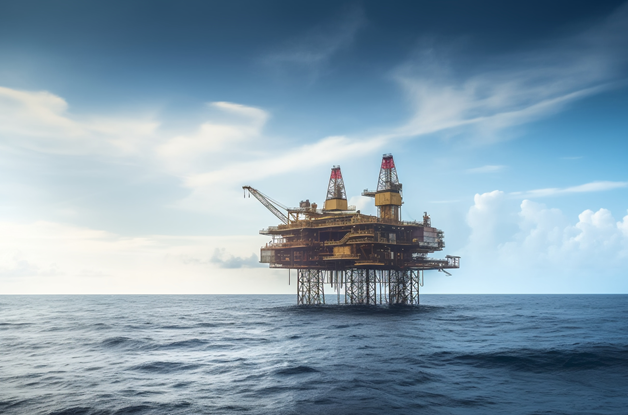
Over the past five years, CNOOC has made frequent discoveries of 100-million-tonne oilfields and 100-billion-cubic-metre gasfields in complex areas such as deep clastic rocks, buried hills, deep water and ultra-shallow ultra-deep water. “At present, CNOOC has fully entered the era of deep and ultra-deep exploration, and continues to tackle key technologies in ultra-deep water,” said Lai Weicheng, Chief Geologist of CNOOC Research Institute.
A notable change is that the success rate of offshore deep exploration by CNOOC has increased significantly during the 14th Five-Year Plan period, approaching the average success rate of offshore shallow exploration. This leap is supported by comprehensive improvements in oil and gas exploration theories and technologies.
Wang Jianhua, Chief Geophysicist of the Exploration and Development Research Institute under CNOOC Research Institute, admitted that China’s deep-water oil-bearing structures are “innately inadequate” compared with similar overseas blocks. “The most direct comparison is the thickness of oil-bearing reservoirs—reservoirs tens of metres thick are precious to us,” she said.
In 2024, CNOOC broke through traditional geological theories and high-resolution shallow exploration technologies, discovering the world’s first ultra-deep water and ultra-shallow 100-billion-cubic-metre gasfield, Lingshui 36-1, near the canyon channel where the “Deep Sea No.1” gasfield was found. This discovery has further expanded the cognitive boundary of ultra-deep water oil and gas exploration.
CNOOC has accelerated the implementation of integrated exploration and development in recent years. In the discovery of the Bozhong 26-6 metamorphic rock buried hill oilfield, development work started immediately after the exploration well found some oil and gas reserves, shortening the exploration and development cycle significantly.
To achieve high-precision imaging of deeper formations, CNOOC has accelerated the independent R&D of geophysical equipment. The domestically developed marine towed cable seismic exploration system “Haijing” has completed 6,552 square kilometres of 3D seismic data acquisition, capable of penetrating nearly 10,000 metres below the sea surface.
China National People’s Congress Network notes that deep-sea and deep-earth exploration is an important part of fostering new productive forces and safeguarding national resource security. Entering the 15th Five-Year Plan period, CNOOC will carry out large-scale secondary collection of 3D seismic data, continuing to develop new technologies and equipment to break through key bottlenecks in ultra-deep water and ultra-deep exploration, laying a solid foundation for building a maritime power and ensuring energy security.
热门内容推荐