New Round of Price Hikes Hits Tire Industry: Raw Material Fluctuations Drive Cost Pressures
A new round of price increases has swept China’s tire industry, with more than 80 tire enterprises issuing price adjustment notices collectively since March. The general price increase ranges from 2% to 5%, among which Tengsen Rubber has raised the prices of all its products by 10%, the largest increase in this round of adjustments, Securities Daily reported.
The core driver behind this round of tire price hikes lies in the sharp fluctuations in upstream raw material prices. Data monitored by Zhuochuang Information shows that since March, driven by the continuous rise in the prices of core raw materials such as synthetic rubber and carbon black, the production cost of domestic tires has been rising steadily. Closely linked to international crude oil, synthetic rubber has seen the most significant increase — the monthly average prices of styrene-butadiene rubber and cis-butadiene rubber rose by about 12% month-on-month and 22% year-on-year in March, becoming a key driver of tire cost increases.
As an important filler, carbon black prices surged by more than 13% month-on-month in March due to the rise in coal tar prices and stricter environmental protection policies. Guo Juan, an analyst at Zhuochuang Information, told Securities Daily that under the dual pressure of rigid cost constraints and market supply-demand game, tire enterprises have a strong willingness to raise prices, and the industry’s price increase expectation continues to heat up.
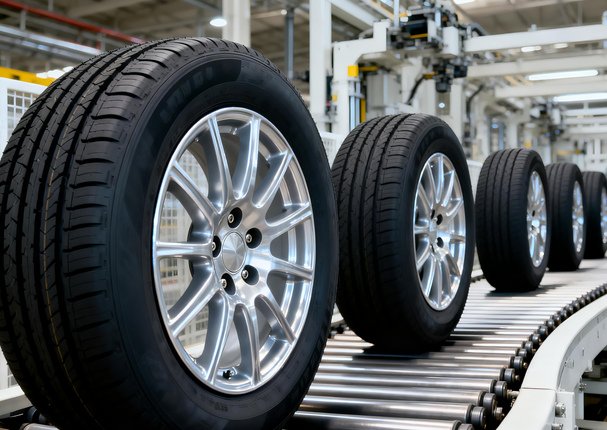
Kaiyuan Securities recently released a research report pointing out three major characteristics of this round of price hikes: first, a wide coverage, involving both foreign giants and local leading enterprises; second, a complete range of categories, including passenger car tires, all-steel radial tires, light truck tires, inner tubes and flaps; third, an intensive adjustment rhythm, with the period from April to early May as the centralized implementation period.
Huo Hongyi, founder of Numantra Business Strategy Consulting, said in an interview with Securities Daily that this round of price increases is driven by both costs and profit recovery considerations. "Since the second half of 2024, the continuous rise in raw material prices has seriously squeezed industry profits, and tire enterprises really need to raise prices to ease cost pressure," he noted.
Huo Hongyi added that the cost pressure in the tire industry has spread from raw materials to other fields. For example, in logistics, the uncertainty of international shipping prices and the rise in domestic transportation costs have significantly affected enterprises with a high export ratio; the upgrading of environmental protection requirements has also prompted enterprises to continuously increase investment in updating waste gas treatment equipment and waste recycling equipment.
Notably, despite the frequent issuance of price increase notices by enterprises, the terminal retail prices have not risen synchronously. Guo Juan said that the current tire market price hikes show an obvious feature of "active announcement but delayed implementation". The core reasons are the lag in the price transmission cycle and the dual pressure from spring order meeting promotion policies.
A dealer engaged in the sales of domestic brand tires told Securities Daily that the price increase at the upstream factory in April and May is a foregone conclusion, and the cost of goods for dealers is rising. "We have to digest the previous inventory while coping with new price purchases. We dare not hoard goods blindly, nor do we want to face cost out of control due to continuous price increases."
Yuan Shuai, Deputy Secretary-General of the Zhongguancun Internet of Things Industry Alliance, said that this round of price hikes is both an opportunity for the tire industry to get out of the profit trough and the start of a new round of reshuffling. Only enterprises that can balance cost transmission, market share and long-term development can gain an advantage in future competition.
热门内容推荐